Glimmer of hope for troubled nation as militia groups agree to disarm
The news offered a glimmer of hope the same day clashes at a campaign rally left at least one person dead and underlined tensions in the Central African nation.
Voters will replace a transitional president and parliament that have led the country since a 2002 peace agreement that ended fighting in most of the country, though not in the east.
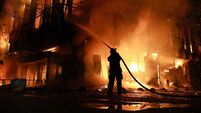
Yesterday’s violence followed a fire of undetermined origin at a camp for militiamen attached to one of the main presidential candidates. There appeared to be no serious injuries, though most of the shacks in the camp were destroyed.
Gunfire broke out outside the stadium in Kinshasa where the candidate was holding a rally when word reached the crowd there of the fire at the camp, where militiamen lived with their families. Reporters saw at least six people wounded at the stadium, and said police were firing tear gas.
One witness, Jose Kavata, said he saw a mob outside the stadium grab a police officer and set fire to him, killing him.
Candidate and former rebel leader Jean-Pierre Bemba was just approaching the stadium when the melee erupted. He later addressed the crowd inside.
In announcing eastern militiamen were handing over their arms, Kemal Saiki, a spokesman for the 17,600-troop peacekeeping force, said: “Anything that contributes to peace in Congo is good news.” But he said other armed groups still exist in eastern DRC.
General Mbuayama Nsiona, the commander in charge of army operations in Ituri, said the three eastern militia groups that have agreed to disarm included one led by Peter Karim, whose agreement had been previously announced.
Gen Nsiona said about 500 men led by Cobra Matate also were laying down arms, as were members of the Congolese Revolutionary Movement, a coalition formed in December and accused of most of the recent attacks.
UN and Congolese forces have been trying to quell violence in the east that aid groups say contributes to the deaths of some 1,000 civilians daily, most through disease or hunger.
Thousands of rebel and militia fighters have joined the military under a post-war, transitional administration, but unknown numbers still fight in the countryside.