Thousands flee as fighting shatters ceasefire

REBELS took control of a key bridge at Liberia’s capital yesterday in fighting that shattered a day-old ceasefire, sending thousands of families fleeing in a city desperately short of food, water and shelter.

Thousands flee as fighting shatters ceasefire

Separately, West African foreign ministers meeting in Dakar, Senegal promised to deploy two Nigerian battalions to Liberia within days a vanguard of what ministers said should be a 3,250-strong international force to bring peace to the devastated nation.

Explosions boomed in the capital, Monrovia yesterday, one day after rebel leaders announced a unilateral ceasefire. "This morning we're still under attack," Defence Minister Daniel Chea said after a night of shelling and gunfire. "It's still raining round after round of mortars."

As for the rebels' ceasefire pledge, Mr Chea said, "I'm not impressed at all."

By midday, rebels took and crossed the city's Stockton Bridge, Lieutenant General Roland Duo said. Controlling the bridge opens northern suburbs to the rebels, putting them in position to cut off the road to the main airport and encircle the capital.

Civilians fled northern neighbourhoods as government forces fought to repel the rebel advance. Women clutching children ran east, away from the fighting, in heavy rain.

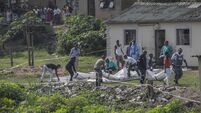
Aid workers were cut off from the city's cemeteries by the battles, so they buried victims of fighting in Monrovia's beaches, shovelling corpses into the sand under driving rains.

More dead lay uncollected in the streets.

Fighting has pushed hundreds of thousands of civilians into Monrovia, swelling the normal population of one million. Battles since Saturday have cut the overwhelmed city off from food and water, with rebels taking the port where aid warehouses are filled with food.

Near the US Embassy, where at least 10,000 people have crowded hoping for safety, vendors yesterday sold individual cups of flour and corn meal from stolen World Food Programme bags. Merchants said fighters looted the bags from port warehouses and then sold them.

Dozens of people in wheelchairs gathered in front of the embassy, chanting, "We want food! We want food!"

The US Embassy remains staffed and heavily guarded by American forces, and is the key hope for residents of this nation founded by freed American slaves in the 19th century.

"I used to go beg in the streets but now there is nobody outside," said James Sando, an 18-year-old polio victim. "That is why I came to the embassy, to tell them if they can't give us peace that they must give us food."

Families used any lulls in fighting to search for food.

Aid workers said yesterday they were logging 350 new cholera cases a week, and expected the epidemic to surge.

Three US ships with 2,000 Marines and 2,500 sailors aboard were moving toward the Mediterranean Sea and awaiting orders. President George W Bush has made any deployment of US troops conditional on the departure of President Charles Taylor, a former warlord indicted for war crimes in Sierra Leone. Mr Taylor has pledged to accept Nigeria's offer of asylum but only after peacekeepers arrive to ensure an orderly transition.

Rebels derided Mr Taylor's latest departure pledge. "Taylor is just bluffing," rebel spokesman Kabineh Ja'neh said. "You know how many times he has said this kind of thing? We'll make sure he leaves."

More in this section

Cookie Policy Privacy Policy Brand Safety FAQ Help Contact Us Terms and Conditions

© Examiner Echo Group Limited