Fighting against invisible enemies
The opening sentence from Charles Dickens' A Tale of Two Cities was written about London but in another era. But no 10 words could more neatly describe the two extremities of ecstasy and anguish experienced in one place within the space of barely 20 hours.
On Thursday morning, London seemed dizzy with the great prize it had captured from under the nose of Paris the previous day. As commuters travelled into central London, the newspapers they read were blanketed with coverage of London's successful bid to host the Olympics in 2012.
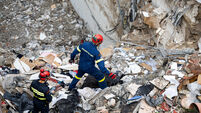
The full eclipse of that moment of joy for Britain's capital city could not have been more complete. In a pattern that has now become leadenly familiar, four bombs detonated without warning on the city's public transport system with familiar consequences scores of ordinary people indiscriminately slaughtered; hundreds more injured. As an exercise in polarity of human emotion, you only had to compare Friday morning's headlines and heart-rending photographs with those of the day before.
Thursday: London Olympic Gold for 2012.
Friday: London's Day of Terror.
Within minutes of the explosions, just about everyone was working on the assumption that it was the work of al-Qaida. They bore all the hallmarks of such an attack. There were no warnings. There was a series of co-ordinated explosions. They struck at soft targets as they had in Madrid and Bali this time on crowded trains and buses. More worryingly, there was some evidence that one of the bombs was detonated by a suicide bomber. If that were the case, it would have been the first in a Western city since 9/11.
Its timing was also highly significant in propaganda terms. It happened as the eight most powerful leaders in the world were gathered for the G8 summit in Edinburgh, within a day of the London Olympics 2012 bid winning out in Singapore. And in its wash, it deflated and deflected a lot of the good that had been achieved by the Live 8 concerts last weekend.
But for the timing (the attack in Madrid took place just before the Spanish general elections), this attack bore all the hallmarks of the March 11 one two years ago.
However, a lot of assumptions have been made over the past day or two that have a basis that is questionable under any rigorous analysis.
For one, when responsibility is ascribed to al-Qaida, what exactly is meant by that? For the term 'al-Qaida' hardly describes an organisation any more. And certainly not one with the structures and singular purposes of other terrorist organisations such as ETA and the IRA. Yes, there are points of comparison. The extremists who carried out the atrocity are certainly organised into cell-like structures, that leaves them hermetically sealed from infiltration. It's clear that Thursday's co-ordinated attacks took months of intricate planning, involving as many as 20 activists.
But to think of al-Qaida as an organisation with clear ties linking the British-based terrorists with Osama bin Laden and Ayman al-Zawarihi is misconceived. One thing that US military retribution did achieve after 9/11 was removing any 'base' that bin Laden might have had in Afghanistan.
At most nowadays, his role is that of a figurehead to Islamic extremists.
Cells are created in a country with only tenuous links or no links at all with others. Al-Qaida is less an organisation, more of a warped philosophy. When the IRA almost wiped out the British Cabinet in Brighton in 1984, it darkly warned that it only had to be lucky once.
The grim reality is that terrorism and asymmetrical warfare can never be defeated in the way the enemy can be over-run in conventional warfare. Intelligence, enhanced security, infiltration or military invasion will never give you a clean-out hand in the so-called 'war on terror'.
The response to such terror needs thinking more expansive than simple military and security responses.
Ultimately, some form of dialogue, some kind of alternative process, must be explored. But unlike Northern Ireland, South Africa, even Israel and Palestine, it's like speaking with ghosts. Bertie Ahern put it in a nutshell yesterday: "It's very hard to do something like that with a group like al-Qaida, who don't follow any norms of people putting forward any kind of a political project."
This will be as long, difficult, scary, and intractable as the Cold War.

CONNECT WITH US TODAY



Be the first to know the latest news and updates