SPECIAL REPORT: Sarah was loved at home, but abused in foster care
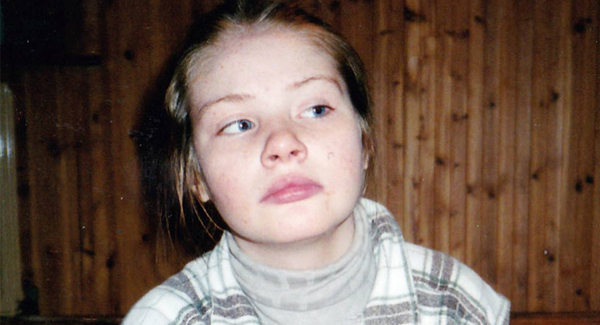
AS a young girl, she smiled. She played, she hugged, she loved.
But she couldn’t speak and cannot tell what happened to her. Though she is a loved member of her family, when she was born, doctors told her parents that she would be a ‘vegetable’.
Severely brain damaged from birth, learning the most basic functions was extremely difficult for her.
She was a beautiful girl, who, despite the label of being disabled, felt the full love of her family.
But the girl who has come to be known as ‘Sarah’ would suffer some of the most horrific sexual abuse, before the age of 12, in the foster home at the centre of the Government’s latest Commission of Inquiry into the ‘Grace’ case.
“One girl, non-verbal, had been raped anally with implements over a prolonged period of time. All of this had been medically attested and confirmed. The young woman cannot be operated on today, because so much damage was done that to do so would threaten perforation of her bowel, which might kill her,” is how Waterford TD, John Deasy, described what happened to Sarah.
As a survivor of that abuse, Sarah, who is now 37, strives to fully engage each day, despite living with constant pain, because of the damage done to her bowel by those who were supposed to mind her at her most vulnerable time.
Despite having been in the home for a time with Grace, and having been subject to the most disgusting neglect and abuse, the Government initially sought to exclude Sarah’s case from the terms of the inquiry.
The chaos that surrounded the original terms of reference, and the subsequent U-turn by Minister Finian McGrath, meant more trauma was suffered by Sarah and her family at the hands of the State.
This is their story.
PAIN AND FRUSTRATION
The youngest of three children, Sarah’s birth was not easy.
“She had a terrible birth and the brain damage she sustained was forever life- altering.
“The first few years were very difficult for Sarah, as she struggled to relearn the basic-infant development skills she had lost through her traumatic birth. She often cried in pain and frustration,” her sister says.
“Sarah suffered terribly in the early years. She was terribly frustrated, but even then, as an infant, she continued to show enormous determination to learn and achieve,” her mother adds.
“There was no hope given by the professionals. They said she would never walk, or anything. Sarah did, and much, much more,” her mother says.
“While, today, Sarah strives to live an ordinary life, like any other 37-year-old, at birth the diagnosis given was that she would be a ‘vegetable’. This is very much a reflection of how people with disabilities were viewed, and treated, at that time.
“The person is disabled, therefore seen as less human and, therefore, needs to be removed from society, removed from the family.”
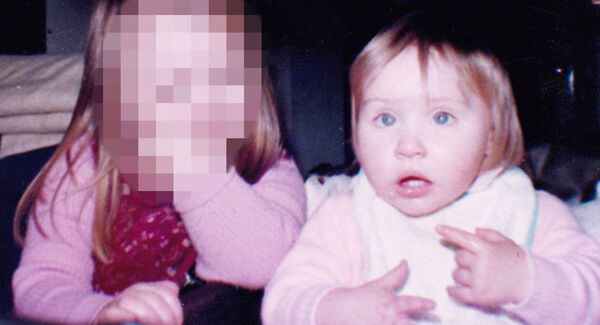
Things escalated. Paid professionals failed in their role and duty of care, leaving young children abandoned in foster homes.
The family live in rural Ireland. So when it became clear that Sarah would need special help, her mother began the search for a suitable school. But this proved incredibly difficult.
“There was no appropriate support or information for families, from the Health Board, at that time. Any professional support and intervention was sourced and paid for privately, by us, Sarah’s family,” her mother says.
They found a school 2.5 hours’ drive away. This offered Sarah the best opportunity to learn and grow. Every morning, Sarah’s mother would pack her six-year-old into the car for the long trek. Sarah’s community supported her, with local mothers taking turns to drive and collect her.
“She was six when she started in that school. After months of searching, I felt I had located the best place in the South-East. But it was only a day service, a school. Eventually, Sarah got allocated a place in the school on a temporary basis. I was so relieved, as I was coming under pressure to put her into a long-term, institutionalised residential setting, which I resisted,” her mother says.
“The daily commute was horrendous for her and, yet, she was beginning to flourish in learning and development,” she adds.
That daily, 80km odyssey continued for two years, until Sarah, overcome with exhaustion, collapsed.
“She was just exhausted from the travelling. I remember, she came home one evening on the bus, and she just went to the floor. She was gone with exhaustion. So, then, I had to decide what was I going to do that was best for her. I still wanted her to go to the school, because I could see she was beginning to thrive there. The school was the right place for her.
“And we had done allergy-testing and we found out food had an impact on her in a negative way, and prevented her from concentrating. Through a new diet and the right learning environment, Sarah was beginning to bloom. She was developing her skills in school, learning new things all the time,” Sarah’s mother says.
So, when Sarah collapsed, her mum knew she needed to do something to change the conditions around her attending the school. There were still no other options for her, other than to attend the school.
“So Mam started looking at respite options for during the week, so Sarah could stay close to the school and lessen her daily travel time. Mam sourced a family based close to the school, which would offer Sarah a homely environment, while away from us,” says Sarah’s sister.
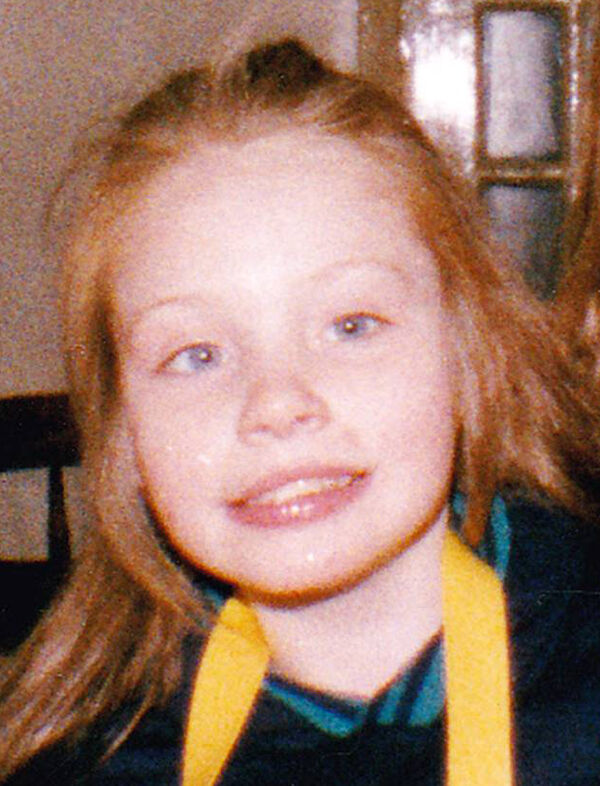
But, then, the HSE said they had a placement, a foster placement, and that they wanted Mam to go with that, because it was a HSE-approved placement”.
This placement was the foster home at the heart of the Grace scandal.
It was a small building, with no more than three bedrooms, in the rural South-East.
If you passed it, you would never imagine the savagery that went on there for 20 years.
Sarah’s family had no clue of the dangers to which she was about to be exposed.
“Sarah started staying there a few days during the week. However, when Mam encountered some huge health issues, which required surgery and hospitalisation, the placement was extended.
“Unfortunately, we had no extended family locally, who were interested in offering us support through this difficult time. So, as a family unit, we were extremely isolated. Dad was running a business, with two small kids that weren’t able to help out. So, that is when Sarah went down to the foster home on a longer-term basis,” her sister says.
FAMILY IN CRISIS
“As a family, we were in crisis. We were exhausted, scared, and alone. Mam had nowhere else to go. With no other choice, Mam was approaching it as ‘this has to work’,” Sarah’s sister says.
“This was it, take it or leave it. We presumed it was safe. One of the decisions I made, at the time, was, and it was in my head, that if it was approved by the HSE, then it was safe, and, most importantly, Sarah would be safe,” says her mother.
“That was my priority. I never imagined that she would be in jeopardy,” she adds.
But, for the first time, Sarah’s family describe what being in the house was like and also describe the foster family, who are the subject of the shocking abuse allegations.
“It was a tiny little place, with steps up and down. The woman appeared very friendly. On reflection, now, she was over-friendly,” says Sarah’s mother.
“She was very welcoming and sweet, seemingly,” adds her sister.
“The social worker, when we went down, they were a close combination, herself and the foster mother. The social worker was reinforcing how amazing a place it was,” she adds.
But they recalled as unusual how few people they ever saw at the house.
“I used to call down there, but there was never anybody there. The other little girl, Grace. I used to meet Grace, but never any of the others,” Sarah’s mother says.
“I think the foster family were very strategic. Mam always had to ring before she went there. And your time was your time and that was it. It was very controlled,” she adds.
But there were no outward signs of anything wrong.
“Because, if there were, Mam wouldn’t have left her there,” says Sarah’s sister.
But not long after, things began to change and not for the better.
“When Sarah came home, she would be upset. There were other issues, including bruising here and there, from time to time,” her sister says.
“As her parents, they continued to inquire with the school and were actively involved in raising any issues around Sarah’s care. However, I feel it is important to remember it was a different time in Irish society, where families were totally governed by the professionals and they were always given a logical reason for the bruising — it was this or that — to deflect attention,” says Sarah’s sister.
Alarmingly for the family, although they didn’t know it at the time, discussions at official level had begun to question whether the bruising to Sarah was happening at her family home or in the foster home.
“But what we subsequently heard was that meetings were happening, at which the foster mother was saying/claiming that the bruises were happening at home, here. That Sarah was getting up on a tractor. Sarah would never go near a large vehicle, due to the noise, she would be running away,” says Sarah’s mother.
“So, what we discovered later, when we got the documentation, there was a clear pattern of covering up by the health board. They were writing documents about visits and interviews with Sarah’s parents that never took place, to explain the issues raised by her family.
“These events never happened. Sarah was never on a tractor, as she is terrified of any farming vehicles or industrial equipment. She simply would never go near them,” her sister adds.
But, then, the most dramatic and horrendous event happened. It rocked the family to its core.
One Sunday, when Sarah’s brother and sister had gone with their Dad to the seaside nearby, she and her mum were playing hide and seek in their living room, the same room where this interview took place.
A CERTAIN PHRASE
During an innocent game with her mother, Sarah, on the utterance of a certain phrase, adopted a sexual pose and took down her knickers. It was clear that Sarah, a girl of prepubescent years, and non-verbal, had been schooled by her abusers.
“One Sunday, the kids were gone with Daddy to the water. I was here and we were playing hide and seek and she was laughing and happy. Then, I just said certain words...and Sarah had been schooled and here in front of the fireplace. It was my worst nightmare,” Sarah’s mother says.
In shock, she did not know what to do.
Sarah’s mother continues: “A friend of mine came into see me. She always came to see me on a Sunday. She came in and she looked at me and said ‘you are very upset’ and I said ‘I am’.
“I asked her would she go into Sarah in the next room and asked her would she mind saying these words. She went in and said those same words and Sarah did the same thing. That was the day. She was a qualified nurse. It was an awful, awful day, to be honest.”
That night, struggling to come to terms with what had happened, Sarah’s mother decided she would bring her to the doctor the next day.
“We sat down then and we talked, and we decided that I would go to my doctor the next morning.
“They examined her, because they thought she may have been penetrated through the vagina and, obviously, we know now it was through the bowel.” Deeply concerned, Sarah’s mother went to her school and raised concerns.
She asked the teachers to repeat the phrase that had caused Sarah to act out the night before. They did and, once again, Sarah adopted the same pose and took down her pants.
With no other options, Sarah, for her safety, left the foster placement and hence could not continue in the school.
Sarah’s mother remained focused on finding her the best supports.
Sarah was then offered a place up North, by the Health Board. Unfortunately, due to a lack of suitable, safe-learning environments in the South, Sarah was forced to live there for four years, away from her home and family.
When she eventually did secure a place back down South, the problems with her bowel became acute.
Her bowel function was worsening and there was no reason for it. She had a healthy diet, because of allergy-testing. “That is why we couldn’t understand why she was deteriorating. We then brought her to the hospital to be investigated. That is when I got confirmation that the bowel had been damaged by the abuse,” her mum says.
Today, 20 or so years on, Sarah lives in her own home, next door to her parents and siblings.
Through a lengthy process of engagement and negotiation, Sarah and her family have recently secured individualised funding for her from the HSE.
This has enabled Sarah to move into her own home, to feel safe and secure within her own community, surrounded by those who know and love her. She has both paid and family support and lives a self-directed life.
Through her family, Sarah works with the HSE to ensure her voice is heard in a meaningful way.
Despite her bravery and willingness to keep going, her bowel problems are so severe that she needs constant medication.
“We are not sure the full deterioration of her bowel. So, every day, we work with Sarah, looking at the signs she gives us, her communication through her facial expressions and her general health.
“But it is a combination of a really strict diet, as much exercise as possible, and huge amounts of medication, both prescribed and non-prescribed, to support her to live as healthy and pain-free as possible.”
Her mum adds: “At present, there is no long-term surgical solution or intervention that will fix Sarah’s bowel. We now believe it is so badly damaged, the wrong intervention could potentially worsen her condition.
“We will continue to engage in the process of looking for ways to support Sarah to live with this condition, and we will continue to search for options and opportunities to repair her bowel to enable her to live a pain-free life. While Sarah suffers daily, she continues to work with us and inspires us through her amazing resilience.
“There are times she is in bed, because she is so unwell, and she can’t engage with her day. The damage to her bowel is more of a barrier to her living her life in a full and meaningful way than her disability will ever be. Sarah wakes up every day and she keeps going. She continues to show her drive and hunger to make the most of her life, despite what she suffers,” she adds.
I ask her mum what she thinks of Sarah today, given all she has gone through and suffered. “She is my daughter and I am so very proud of her and all she has achieved. I love her so much.
“Sarah is the most incredible human being I know. It is not fair, what she has been through. But her resilience to fight all that is amazing,” she says.
Despite everything, she continues to strive to live her life on her terms.
CONNECT WITH US TODAY



Be the first to know the latest news and updates