Vera Pauw’s future in balance ahead of World Cup review
From a cacophony of noise and adulation to deathly silence, Vera Pauw is aware but bewildered that her tenure as Ireland manager is hanging by a thread
Vera Pauw’s future in balance ahead of World Cup review

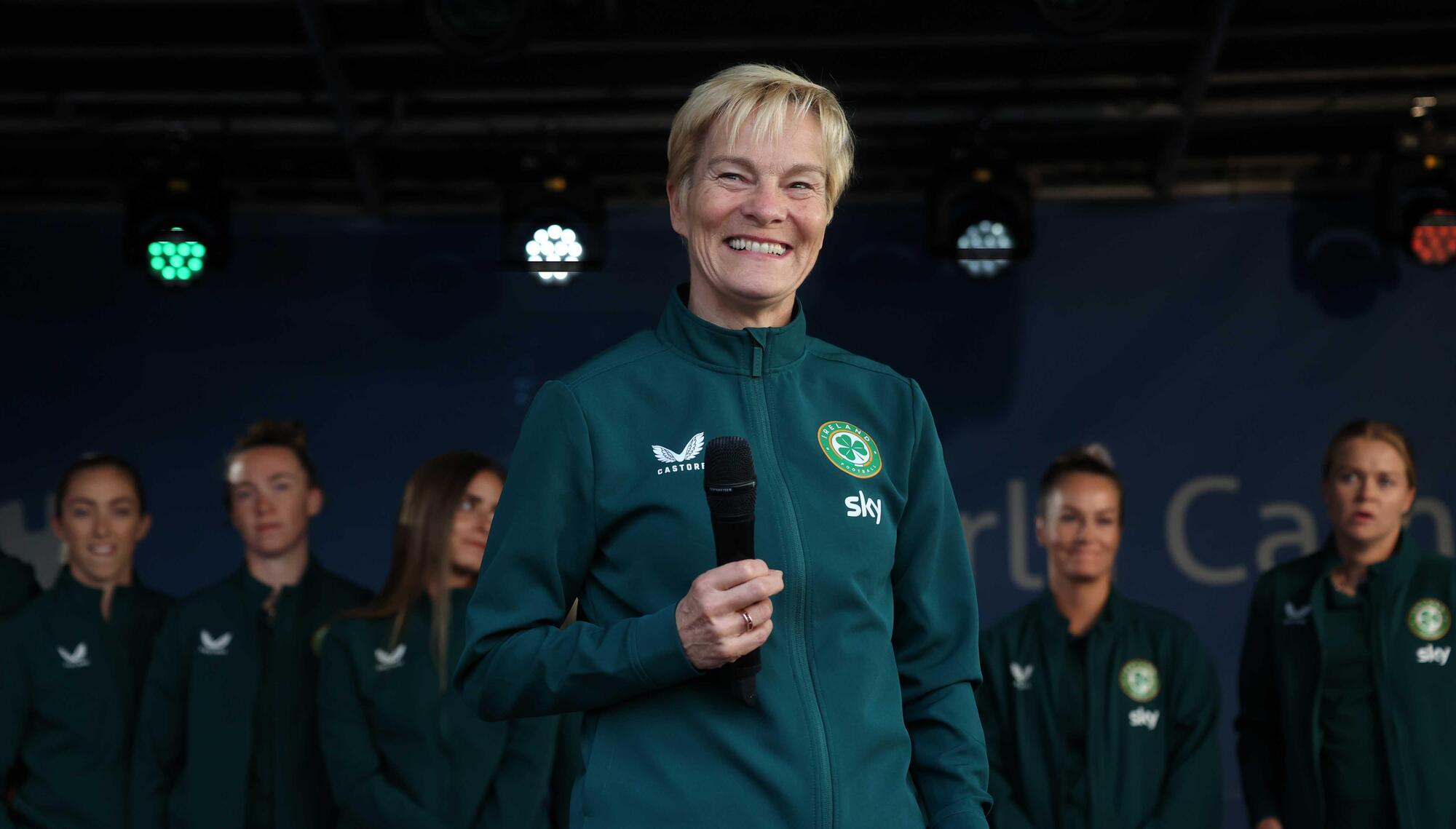
IN THE BALANCE: Ireland manager Vera Pauw during the team's homecoming event in Dublin. Pic: Sam Boal/RollingNews.ie

From a cacophony of noise and adulation to deathly silence, Vera Pauw is aware but bewildered that her tenure as Ireland manager is hanging by a thread.

On Tuesday afternoon, the 11 directors of the FAI will listen and watch a presentation delivered by Marc Canham.

The much-awaited report conducted by the association’s head of football by interviewing mostly players and staff hasn’t yet been shared with those board members.

Ostensibly, the review will encompass the entire campaign of the Women’s World Cup.

That begins with the opening qualifier against Sweden in September 2021 and concludes at the final whistle of last month’s tournament stalemate with Nigeria. Events around the subsequent homecoming in O’Connell St might even be squeezed in.

At the heart of this exercise, evidently, is the continuity of Pauw in the post.

There would be little debate about the merits of offering the now out-of-contract Dutchwoman an extension for the upcoming Nations League and Euro qualifiers were the assessment based on the opening two thirds of that scope.

Pauw had overseen a first-ever tournament qualification for Ireland, a World Cup featuring just 12 European teams no less, and her team went a year without conceding a goal until breached in April by a USA team seeking a third global crown on the spin.

Her eccentricities were tolerated in the same way as Jack Charlton’s, minor inconveniences from a foreign manager who’d added the missing ingredients to a team of underachievers.

On football criteria alone, the unprecedented feat of surpassing the qualification watershed ought to have triggered an immediate contract renewal.

Yet eaten bread is soon forgotten and all that.

Fresh in the minds and ears of Canham, along with chief executive Jonathan Hill, will be a slew of controversies and the feedback from a rump of senior players who’ve lost faith in the managerial team.

The public perception of a content camp soon dissolved once the veneer was removed in tandem with the team’s slump.

Tension dominated the air before they’d trekked to Australia, captain Katie McCabe’s frustration apparent in her hometown of Tallaght when the farewell friendly against France was hijacked by deeper accusations from Pauw’s ill-fated year in charge of US club Houston Dash.

An emotional Pauw confessed the cloud would shadow her indefinitely — as the players could attest — but the manager’s vow to launch legal action after the World Cup eroded some of the sympathy she might have gained from the FAI for the episode.

Within the squad too was a sense of bafflement at the method of culling players from the final squad in UCD, plus bringing a fourth goalkeeper rather a rookie among the training trio, yet the chasm escalated once the flight reached Down Under.

Claiming the players feared for their bodies in the behind-closed-door ‘friendly’ against Colombia marked the first in a series of gaffes that served to only broaden the divide.

It might be attributable to Dutch directness that she justified the rigid back-five formation on the slowness of her defenders but those veterans heard loud and clear what their boss thought of them.

Nine of the 26 players in Oz were the wrong side of 30, already conscious of their age without it being publicly ventilated to defend the manager’s traditions.

They were reflected in the training drills players found repetitive and what they deemed confusion around tactics and substitutions. Lucy Quinn’s withdrawal at half-time against Canada for Abbie Larkin befuddled them at the resumption.

McCabe’s clash with her manager as the World Cup odyssey neared closure in Brisbane only amplified the fractures, prompting a defence more akin to attack.

It was time to go home but not before Pauw entertained a few thousand awaiting in Dublin city with a jig. Not the most striking example but more ammunition in the misalignment. All there’s been since is a void from Dublin to Amsterdam.

Board members will be educated on the findings of Canham’s probe. He, like Hill, was there to see it unravel 17,000km away and will be asked to bookend his legwork with a recommendation to either stick or twist.

The team play next in three weeks this Saturday, a first-ever senior international at Aviva Stadium against neighbours Northern Ireland.

Suggestions are that those teetering on the retirement tightrope are awaiting an outcome to decide their futures.

What the board must balance is blocking out the noise around the reigning RTÉ manager of the year by doing what’s right and reasonable. Their executives already blew their chance.

Who are FAI’s board of directors?

Gerry McAnaney (President): Cork resident who is in the final two months of his three-and-a-half year Presidency and was part of the official FAI delegation at the World Cup.

Paul Cooke (Vice-President): The chartered accountant from Waterford is due to be elevated to President at October’s AGM. Wouldn’t be renowned for hunting with the pack.

Roy Barrett (Chairperson): It’s been a long goodbye to the FAI’s first independent Chairman who flagged his resignation in January. Pauw will have nothing to worry about if he’s consistent with team managers.

John Finnegan: Represents the amateur football wing at the top table and hails from the Munster FA. He’s expected to succeed Cooke as VP, prolonging his reign at the epicentre.

Joe O’Brien: Experienced legislator who could be unseated at the upcoming summit but has an interest in the women’s game and attended the recent homecoming event.

Niamh O’Mahony: The most recent addition to the board from the football half of the structure, the Cork woman can relay input from the supporters’ arm, the constituent who proposed her nomination.

Catherine Guy: Was one of the three initial independent directors, the legal eagle has encountered Pauw in her duties and travelled to Sydney for the World Cup opener.

Robert Watt: The most senior civil servant in the country combines his deep thinking with sharp analysis and is a man of independent mind. Could bring a different dimension to the debate.

Liz Joyce: Together with Barrett and Joyce, the HR guru came to the FAI at a time of crisis in early 2020. Her take on employment practices in the modern era promises to be fascinating.

Packie Bonner: Head of the International and High Performance, he’s probably already been briefed on the deteriorating relationships in the camp. Bonner’s football nous will be relied upon.

Maeve McMahon: The latest addition as director since June 29, the Limerick native was selected for her commercial acumen but does hold a sporting background. She’ll know how to play fair.

ie logo

Women's World Cup 2023

ie logo

Women's World Cup 2023

Your home for all the latest news, features, opinions and analysis on the Women's World Cup and Ireland's historic debut appearance.

WWC logo

More in this section

Sport

Newsletter

Latest news from the world of sport, along with the best in opinion from our outstanding team of sports writers. and reporters

Cookie Policy Privacy Policy Brand Safety FAQ Help Contact Us Terms and Conditions

© Examiner Echo Group Limited