Igor Biscan: 'Survivor is too strong a word for myself. It’s not that serious being a footballer'
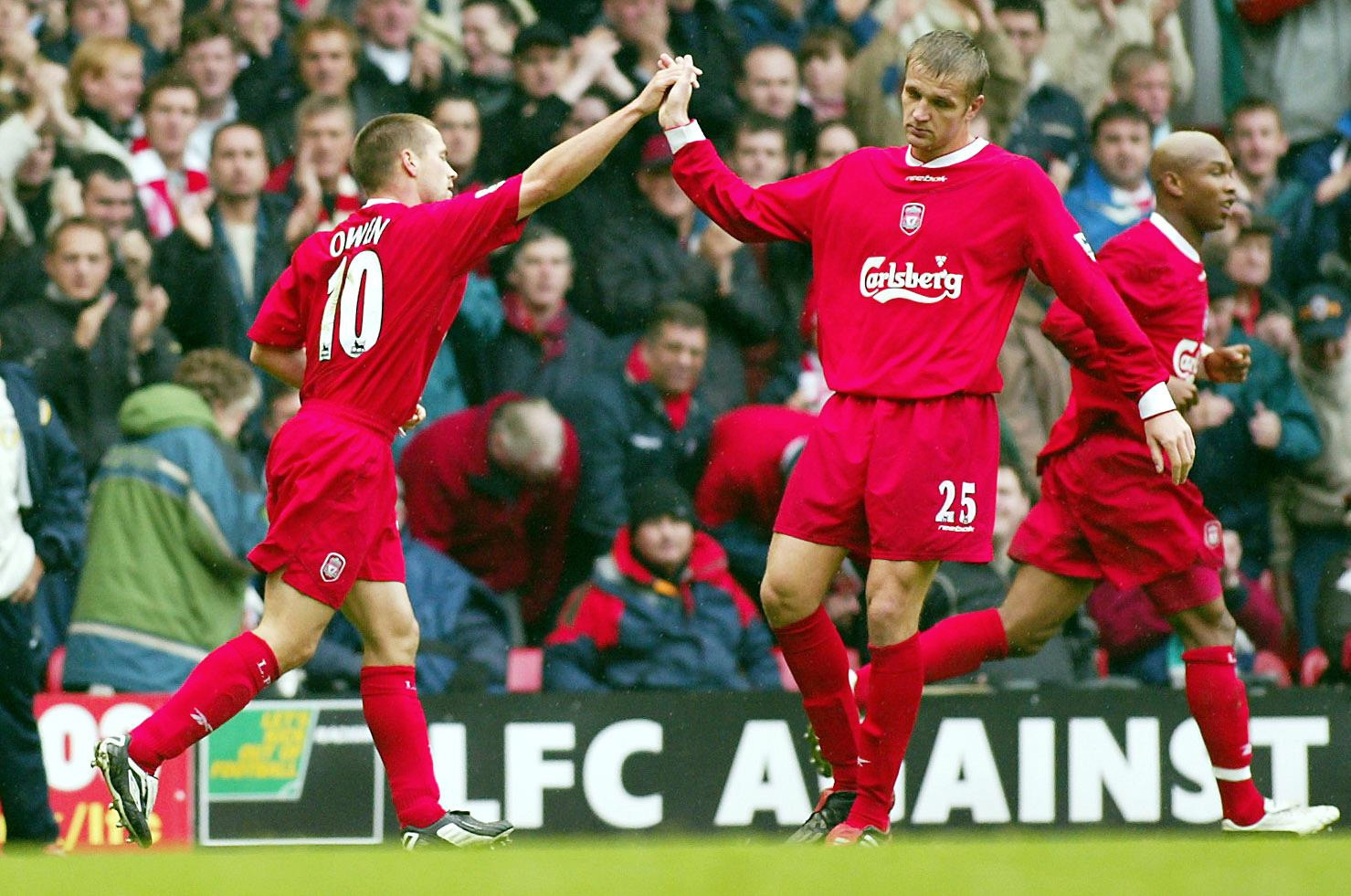
Liverpool's Michael Owen (left) celebrates scoring with team-mate Igor Biscan after scoring against Leeds United during a 2003 Premiership match at Anfield. The Croat played 118 times for the Reds. Picture: Dave Thompson
Everything seems so matter of fact with Igor Biscan.
Even now, 20 years after his first season at Liverpool, and with a Champions League winners’ medal to his name, he is not the type to romanticise or indulge in revisionism about his four-and-a-half years on Merseyside.
“I know at times the fans didn’t want to see me in the team. There were other players, and they were better than me. That is ok. That is the reality of the situation.”
Deciphering fact from fiction can be difficult. Various online reports suggest Juventus, Barcelona and AC Milan were among the clubs vying for his signature as he rose to prominence as captain of boyhood club Dynamo Zagreb by the age of 21.
“I don’t know if that’s true,” Biscan says. “Liverpool were following me and they decided they would take me. That’s it. It was not the most pleasant feeling because it really makes you realise you are doing a job which requires sacrifices.
“But when a club like Liverpool come, there is no other thing to do than go. You are excited, happy and proud. It is a strange feeling. It is positive mainly but at same time you have to leave all your friends and family.”
The Croatian didn’t speak English when Houllier deemed him worthy of taking a £5.5 million gamble, labelling the transfer as a “double risk” but explaining his reasoning for the move. “The price isn't low. We are aware of that, but we are living in an era of football where you have to buy the potential because the finished article is too expensive,” the Liverpool boss said at the time.
“We are trying to build a team and we now have a side that is starting to blossom. Igor will be part of that.”
He picked up the language by watching films and listening to music. “Whatever was popular at the time,” Biscan deadpans.
Rather aptly, Castaway with Tom Hanks was the number one film in the UK for his first month at Liverpool in January 2001, while Destiny Child’s ‘Survivor’ was top of the music charts as Houllier led the club to an historic treble of League, FA and Uefa Cup glory.
“No,” Biscan insists. “Survivor is too strong a word for myself. It’s not that serious being a footballer so I wouldn’t use that word.
He recalls realising “after the first few seconds of training” that Steven Gerrard was a special talent, and while the former captain was far from complimentary about his sending off in the 2004 Uefa Cup against Marseille, labelling Biscan “a tit” in his autobiography, the Croat still retains cult hero status among Liverpool supporters. His contribution along the way to that famous Champions League triumph over AC Milan the following season hasn’t been forgotten.
“SuperCroatIgorBiscanUsedToBeAtrocious” was emblazoned on one flag in Istanbul and it perhaps sums up well the love/hate nature of the relationship between the club’s supporters and a litany of signings around the turn of the century that failed to take Liverpool back to the summit of the English game, but still delivered sporadic, memorable success.
“I felt like I always had their support, they were loyal and are special fans. It’s only when you are part of the club you realise how much,” he adds.
Aged 26, Biscan looked to be coming to the fore with his displays in the last 16 against Deportivo La Coruna, the quarter-finals with Juventus and that infamous semi-final defeat of Chelsea when Luis Garcia’s “ghost goal” at Anfield booked a place in the final.
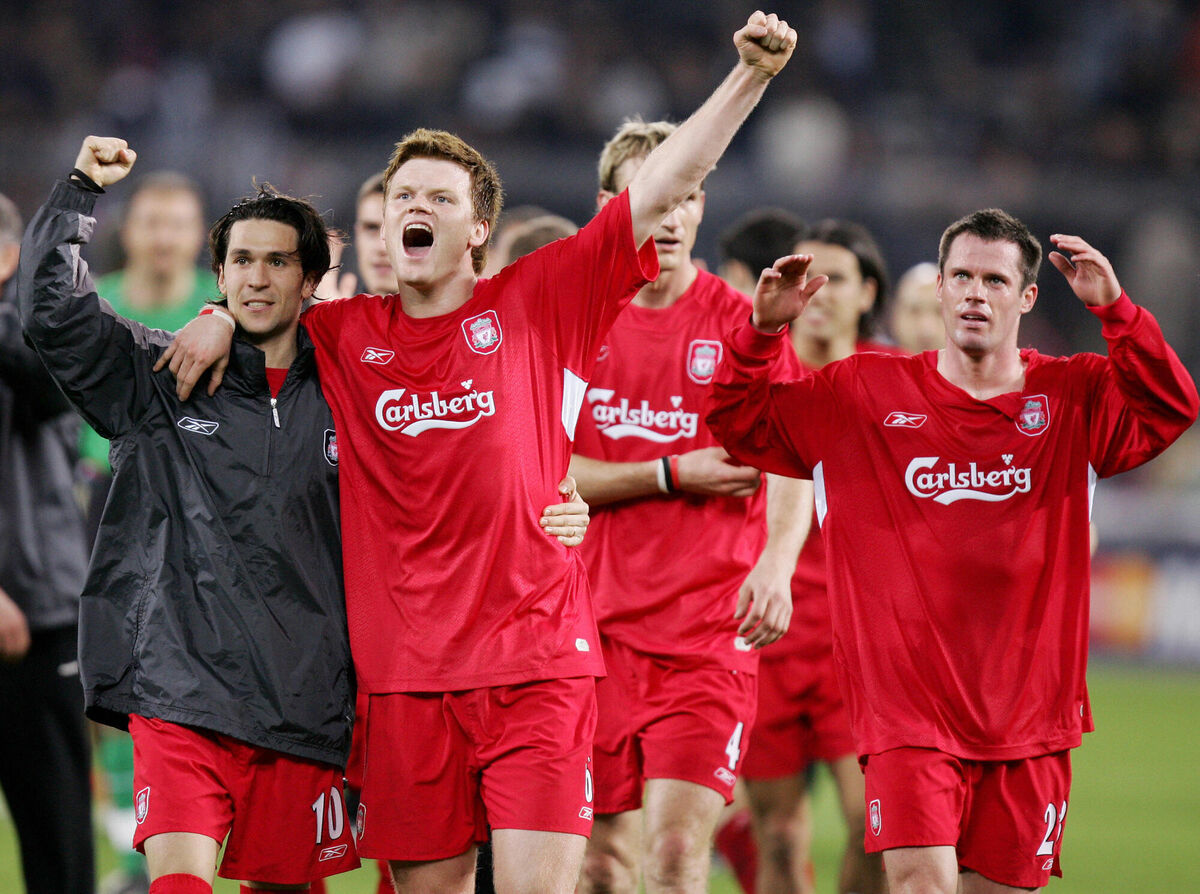
“That was an emotional night. Incredible and honestly unbelievable,” Biscan recalls. “That was my best season.”
It came after his perseverance paid off. Rafael Benitez had told him he could leave the club prior to the campaign, Crystal Palace and Wigan Athletic were both keen, but Biscan declined. “I said I would stay and fight for a position.”
His versatility in midfield and defence helped him notch up 118 appearances but he was left on the bench for the biggest game of all.
“I felt a bit sorry for him really. He was on the bench in the final so he‘s got a Champions League medal. He played as big a part as anybody,” Carragher later said.
There is no lingering resentment for Biscan, who is now in charge of Croatia’s U21s and tries to take some of the lessons learned at Liverpool into this stage of his football life.
“That game was such an important game that I didn’t even think about myself. The story was not about me. I was not even somebody that would automatically be in the team.
“You’re still happy anyway because you are in a final and preparing yourself to play a part if the team needs you, if the coach needs you.
“It’s disrespectful to say you should play over a teammate if that is the decision that has been made. There are so many stories from that game that have already been told but I don’t really have anything new to say about it.
“As an athlete you always need to think you could do a better job. This is a normal thing to say. If I am honest, I would say I could always do more.”
CONNECT WITH US TODAY



Be the first to know the latest news and updates