The big interview with Alan McLoughlin: After football comes real life
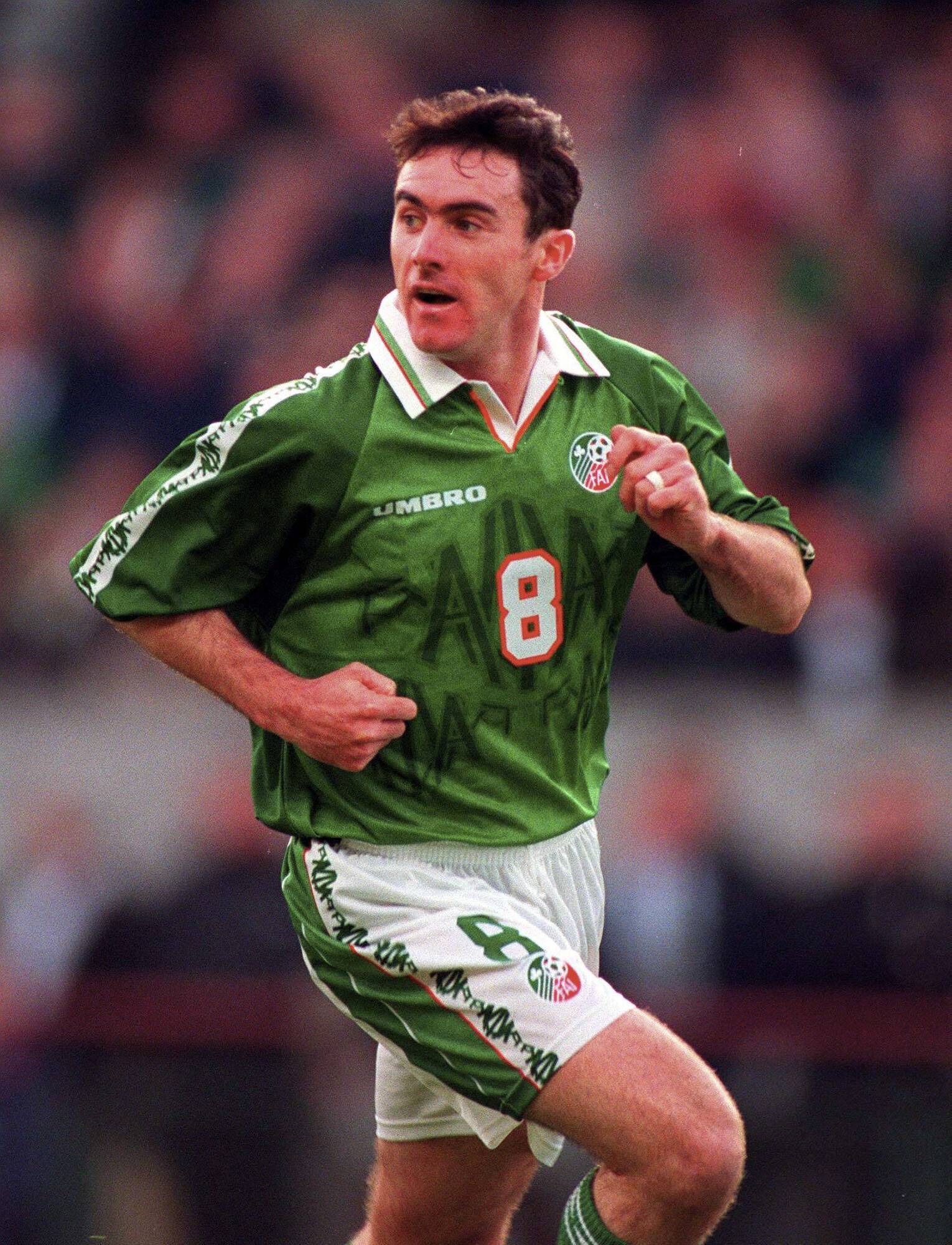
Alan McLoughlin of Republic of Ireland during the FIFA World Cup 1998 qualifying match between against Iceland. Picture: Brendan Moran/Sportsfile
LITTLE red spots. When Alan McLoughlin begins his story and book he tells you about little red spots.

Invariably some of them concern that night in November 21 years ago thatâs synonymous with him and that heâs synonymous with. The tension that engulfed Windsor Park that night was like no other any Irish sports ground or occasion has known but to help break it and perform in it McLoughlin and his teammates fell back on that old reliable of the dressing room, black humour. Sitting on the bench, McLoughlin turned to his close pal, backup goalkeeper Alan Kelly. âOh, my God!â âWhat is it, Macca?â
âThat little red spot on your forehead... I think, is it?... Oh, God... A sniper must have you in his sights!â
Instead the only sharp shooting done that night was by a couple of former Swindon Town team-mates. Seven years earlier when a 19-year-old McLoughlin was living in digs, having just been let go by his hometown club Manchester United, Jimmy Quinn would regularly bringhim over to his house and family for Sunday dinner. Only moments after McLoughlin had come off that bench heâd shared with Kelly to replace Ray Houghton, Quinn had rifled the ball into the Republicâs net.
Then four minutes later, and with just 13 minutes to go, McLoughlin replied with a glorious strike of his own. Heâd instinctively readied himself to chest and volley, thinking of some more red spots, this time from the old training ground at United. Every Tuesday and Thursday after training, heâd stay on by himself volleying balls against multi-coloured spots on the wall of the clubâs indoor gym. Bottom left was a red spot.
âI say now to the kids [at Portsmouth, where he coaches], itâs about zoning in,â he says, pouring you some tea. âOtherwise you might catch the odd one and itâll fly in, but thereâs no reliability or consistency there. Itâs about technique, practice, perseveration, patience. A lad might think, âHoly shit, I canât use my left foot.â Itâs not about that. Do it again. Do it again. Thatâs what I did. I knew that time [in Windsor] because I had done it so many times off that wall.â
After he pulled the trigger, McLoughlin would trigger something else. While the few Republic supporters in the crowd might have been too fearful to cheer, every other Republic supporter everywhere else rapturously jumped and roared, to the point 21 years on they can still remember where and how.
McLoughlin himself couldnât contain his pleasure. It was his first goal for his country. For someone whoâd prided himself on being a goalscoring midfielder, it had been too long. Thatâs why he so animatedly was clenching his fist and roaring into the dark air, and why afterwards he could softly smile as much as seethe with Jack Charltonâs press conference remark that McLoughlin had finally âjustified his existence for the last few yearsâ in the squad. Then he tells you about some more red spots, only these have nothing to do with that night in November and everything to do with his very existence on this planet.

A little over two years ago McLoughlin went to a urinal in Fratton Park after coaching the club U14s to a win over Wimbledon AFC. Heâd felt strangely lethargic earlier that day only to fight it off but as he looked down there were red spots in his urine. Later that night in hospital it was as if, as he puts it, he was âpissing jamâ. Those big red spots were blood clots. There was a tumour in his right kidney. He had cancer. It tells you a lot about Alan McLoughlin that when he first heard the doctor say the C word, McLoughlin was the one who after the pregnant pause said, âIâm sorry.â The doctor quizzically looked at him; wasnât that supposed to be his line? âItâs just, â added McLoughlin, âit must be terrible having to break that sort of news.â
There is a humility, dignity and sincerity about McLoughlin you rarely encounter, especially among former international footballers. As likeable and as personable and as charming as most of Jackâs Army were, they invariably still tend to give off an air that theyâre more important than you whatever about being better than you. There is not a hint of that about McLoughlin. The Great Equaliser sees you as an equal, all the more so since the threat of death was such a leveller.
âI think Iâve changed as a person in terms of being a bit more serious about things and appreciative of things,â he says. âMaybe I was just plodding along in life and everything was ticking over but that scare brings things to the forefront. And it wasnât so much about me. I think I was more frightened about, God forbid, if anything happened to me, how would my wife [Deby] be able to cope with it? My two girls? My mom and dad? Youâd be more protective of everyone else. But then youâd have other dark thoughts. What would your funeral be like? Who would attend? Who wouldnât you want there? All these silly things would be going around your head and would be kept in your head.
âIn that way, the book has helped. Maybe I needed to speak to someone. As great as the NHS in Britain is, it can only go so far. Thereâs that whole stage and process after the treatment and having someone to talk to about it.
âBecause I didnât want to be telling Deby about a lot of those fears. I was trying to be strong, positive. I had got upset once before with Deb processing all what had happened and she pulled me to the side and said, âLook, pull yourself together, the girls donât want to see you upset, they need to see you strongâ, so that did pull me up. But youâre doing that for the outside. Inside youâre worried, anxious, so speaking about that with [ghostwriter] Bryce [Evans] helped unburden a lot of that.â
After having the tumour removed, McLoughlin would undergo serious medication. A close friend of his and Debyâs, Shelly Chamberlain, had passed away with cancer the day previous to his operation. To help others avoid the same fate, he volunteered to take a test drug, Sorafenib, for a three-year period. It would have side effects. His feet would swell and ache, his skin would dry, his hair would fall out, his blood pressure would rise.
Heâs much better now. Heâs looking well, no older than his 47 years. His hair has grown back, on his head, even under his armpit. He still has issues with his stomach. âI could be okay and next thing I have to go to the toilet sharp. At home everyone knows why dad has disappeared so quickly and luckily I havenât yet been caught having to make such a hasty exit at the training ground.â

But for the past six months or so he can go to the toilet without the huge anxiety of worrying whether or not thereâll be any more red spots in his urine. He can scan the framed newspaper on the wall, let his mind drift and relax about other things. Away from the urinal heâll still have the odd fearful thought â âwhile thereâs been nothing since, itâs always there nagging at the back of your head how quickly it came beforeâ â but his head is less restless than it was. He tries to and tends to live in the moment as much as possible, loving his coaching and family and life itself.
Heâd a contented childhood growing up on Maine Road, the son of two Irish parents. In school he was in the same year as Noel Gallagher. At the time the older Oasis brotherâs musical talent wasnât obvious though his rock ânâ roll attitude was. âWe were both into The Jam and wanted to have fishtail parka jackets,â says McLoughlin, âbut my mom and dad wouldnât have been happy to going around in one whereas itâs well documented Noelâs family situation wasnât as stable or strict.â
Gallagher and McLoughlin would often go together to watch City on the same street McLoughlin grew up, but as friendly as they were, they werenât close enough for McLoughlin to confide to Cityâs most famous supporter that he himself was really a United fan. At 15 he became a United player. After performing well for a local schoolboys team, he was snapped up by United youth coach Eric Harrison.
McLoughlin would impress Harrison enough to make him youth team captain for two years over a side that also included David Platt. Such was the surplus and quality of midfielders at United at the time, they were both moved on, but Platt and McLoughlin would revive their careers enough to both feature at Italia â90.
Itâs a tournament McLoughlin recalls fondly, even if it started off shakily enough. Some Ireland veterans like Mick McCarthy initially viewed him as something of a usurper even though McLoughlin himself had no idea at the time his promotion to the squad had coincided with the popular Gary Waddock being sent home. But then John Aldridge broke the ice and welcomed him in and by the tournamentâs end McLoughlin felt among a band of brothers, McCarthy included.
A year after McLoughlinâs own debut against Malta, another Irish midfielder made his debut in another friendly against Chile. Roy Keane takes almost a perverse pleasure in having few friends in football but for a good while Alan McLoughlin was one of them.
Just as McLoughlin took time to look out for Keane in his fledgling years with Ireland, Keane would reciprocate it as McLoughlinâs club career was winding down. At 32 he was sold by his financially-stretched old club Portsmouth to Wigan. It meant leaving his family home down south in Swindon, and to a certain extent and for a certain time, his family. Keane, sensing how vulnerable and lonely McLoughlin was, would regularly invite him over to his family home in nearby Cheshire. When Keane was under siege coming home from Saipan, McLoughlin offered him similar refuge. Keane declined but was grateful.
A little bit later they had a brief moment of tension as McLoughlin was disappointed at a reference in Keaneâs first autobiography that not being born in Ireland he was one of several players ignorant of the history and dynamics at play in Windsor Park that night in November. But that was settled when Keane rang to explain any such reference was just some artistic licence from ghostwriter Eamon Dunphy.
Four years ago McLoughlinâs path crossed Keaneâs again when Keane brought Ipswich Town to Fratton Park. Keane was the away manager while McLoughlin was doing radio work for the local Portsmouth station. After the game McLoughlin popped down, the pair smilingly exchanged greetings before Keane was swept away by the rest of the media herd, waving bye to McLoughlin as he went.
Itâs the last time theyâve seen one another, even given McLoughlinâs sickness, but heâs still appreciative of the support Keane gave him at another testing time.
As much as his love for Deby is effusive in the book, their marriage was on shaky ground when he left for Wigan. After almost a decade living in Portsmouth Deby had thought they could finally move back to her hometown of Swindon. But McLoughlin wouldnât. Wigan were offering more money which would help his pension scheme. More so, Wigan were offering more football.

âI think itâs a testing time for all professional athletes when theyâre coming near the end of their careers. We had two young girls. You realise: Shit, I probably donât have enough money to sustain this lifestyle for the next 30 years, what am I going to do? What qualifications have I got? None; I only know football. And to keep saying âOh, itâs okay, weâll be okayâ doesnât wash. Iâd missed out on the Premiership and the big money where if theyâre sensible three years playing should mean theyâre financially okay for the rest of their lives. Thankfully we got through it and it shows if you love somebody youâll ultimately get through all the crap.â
His career kind of petered out, through injury. After a couple of unspectacular seasons at Wigan, there was another at Rochdale. Then he signed up for a spell with non-league Forest Green. By then he was working part-time in civilian jobs, before heâd be a civilian altogether. At times it was reminiscent of that scene in The Wrestler, where Mickey Rourkeâs Randy âThe Ramâ Robinson embarrassingly denies heâs himself when spotted working in a supermarket butcherâs shop by a fan. McLoughlin concedes he felt like donning a wig or fake moustache or a sombrero so he could shuffle off unrecognised.
âAt Forest Green we werenât paid for the summer so I worked during our six weeks off,â he further explains. âSo I go in to pick up a parcel and the chappie there is a big Swindon Town fan. And he asks what am I doing? And I tell him Iâm doing this to tick over before the football starts back. And he says âOh, youâre not working [full time]?â Then he jokes, âOh, you can come working for me if you want, delivering!â âAnd I go, âOkay!â I said it off the cuff, but it wasnât until the next day when he invited me in and was explaining the job that I said, âShit, maybe I shouldnât have said that to him.â But I couldnât turn him down now because for one it would seem like I was belittling the job that he was doing. So I went in and of course thereâs a buzz around the security factory parcel place even though itâs only 6am. âMy God, Alan McLoughlin is going to work for us. Swindon Townâs first million pound player, he must be struggling.â To this day I can still remember to a man them all turning around to look at me while I put on my uniform.â
It helped that also suiting up was the late Alan MacDonald, another former pro who had played in Windsor that night in November. So did the fact that some of his co-workers kindly gave him a few out-of-town assignments to begin with where he would be less likely recognised. Still, it was all a shock to the system. âIt suddenly hits you, footballâs finished, real life has to start.â
He would work in a number of other jobs before heâd return to football as a coach with Portsmouth underage teams. Six months after his successful operation then, he would be promoted to first team coach, a position he still holds 18 months on.
Itâs a job as well as a club he loves but heâs aware of how transient anything in football is. âI know itâs a sackable role. I didnât go in thinking âThatâs it, Iâm in here forever.â Iâm here until we get sacked and if and when we get sacked, weâll take it on the chin.â
Itâs how heâs handled most things in life. Being moved on by United. Being played out of position by Southampton after his big-money move there. Never getting another chance to play at the highest level in England. But heâs handled it because he knows heâs had so much else to be grateful for. Getting signed by United, getting to captain their youth team. Scoring a winning goal in Wembley for Swindon in the promotion play-off; becoming a Portsmouth legend, a club that now provides him with a fine job in the game he loves.
And then there was Ireland. He was much more than a single night playing for them, rather a decade showing up for them. Although in the three years prior to Windsor Park he never kicked a single ball in a competitive game for the Republic and would barely kick another for them over the next two as well, in all would play 42 times for his country, 24 times as a starter. Heâd be voted their best player of 1996 and be a starter throughout the 1998 World Cup qualifiers.
Though, of course, in the public consciousness, heâll always be that one night, that one moment. And heâs more than fine with that.
âHow many people get to have said it about them âI still remember where I was when you did thatâ?â
âI know myself Iâm bigger than that moment â because I earned that moment. There were times when I could have said Iâd a hamstring injury and gone on holiday instead of an end-of-season tournament in America but I didnât. I turned up. Because it was special and anyone who thinks it wasnât is deluded. Even flying into Dublin today and coming into town it would remind you of when weâd get the escort into the big games in Lansdowne. Turning to face the flag. Will I get another cap? Can I get to 10, 15, 25, 30? It was something you could never get enough of, it was an experience you wanted for as long as you could, something I didnât want to miss.â
He kept turning up. And especially turned up one night in Belfast.
It could have been his epitaph. Thankfully it isnât.