Final Hillsborough report ends investigation with no consequences
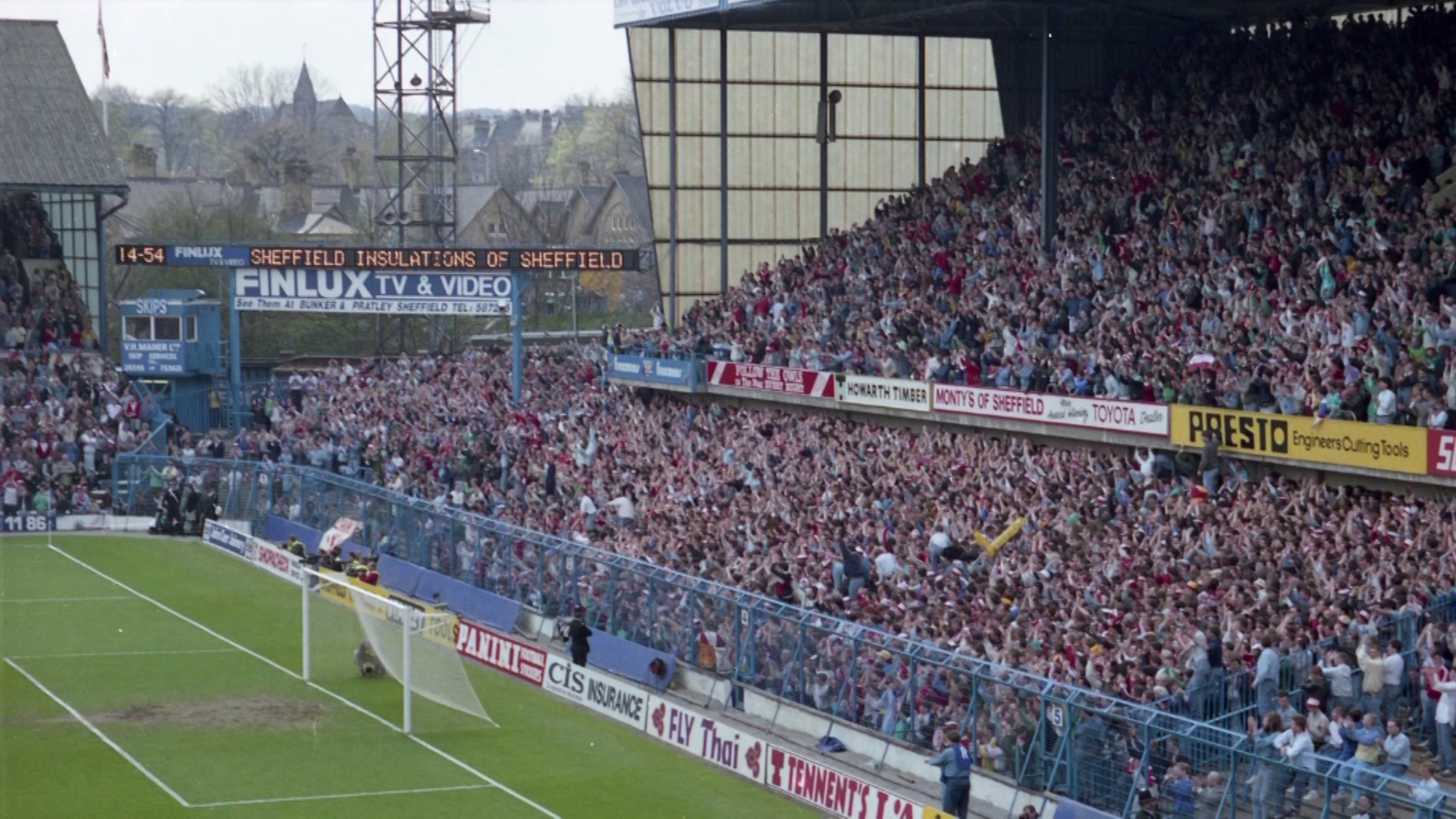
The West Terrace of Hillsborough stadium on that day in 1989.
When the Independent Office for Police Conduct published the final report on its mammoth investigation into the Hillsborough disaster, the response from bereaved families and survivors was conflicted.
Some of the IOPC’s findings could be regarded as historic, in particular that 12 former officers would have had cases to answer for gross misconduct, including Peter Wright, the chief constable of South Yorkshire police at the time of the 1989 disaster.
But the passage of time, 36 years, since the alleged failings is so great that all the officers have long retired – or, like Wright, are dead – meaning nobody will face any disciplinary proceedings.
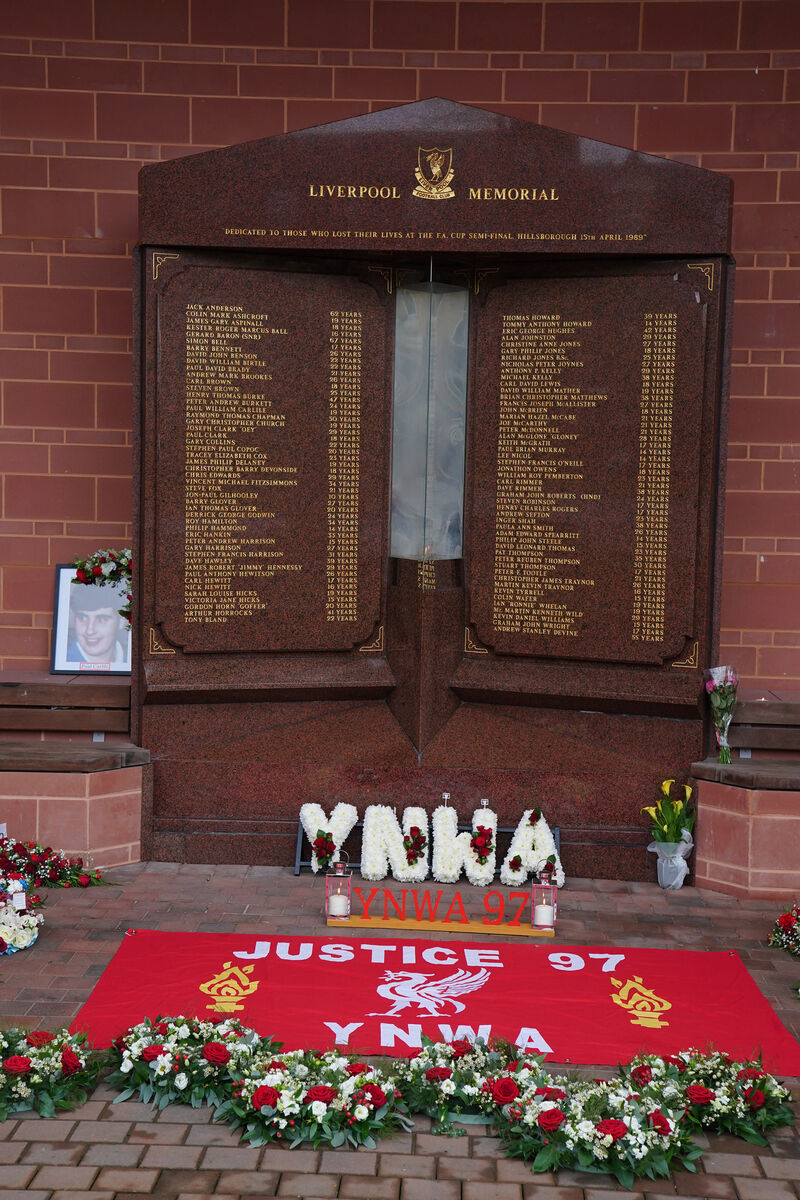
The report ends the decades of inquiries, investigations and a generational fight for justice, with the conclusion that 97 people were unlawfully killed, but nobody has been held accountable.
Charlotte Hennessy, who was six when her father, James, died at Hillsborough, said she welcomed the findings. “While some conclusions are disappointing, we respect that the process was investigated and accept the element of closure.”
That passage of time since the terrible crush at the FA Cup semi-final between Liverpool and Nottingham Forest at Sheffield Wednesday’s Hillsborough ground is emphasised by the IOPC’s own long-running process.
In letters sent to families detailing the gross misconduct cases, the IOPC noted the people who made the original complaints after the investigation was launched in 2012. Some were fathers whose children were among the 97 people killed. They have since died themselves, before knowing of these outcomes.
Leslie Jones, the father of Richard Jones, who died with his partner Tracey Cox, made a series of complaints against the South Yorkshire police match commander, Ch Supt David Duckenfield. Phil Hammond, who lost his son, Philip, and Barry Devonside, whose son Christopher died at Hillsborough, had made complaints against Wright.
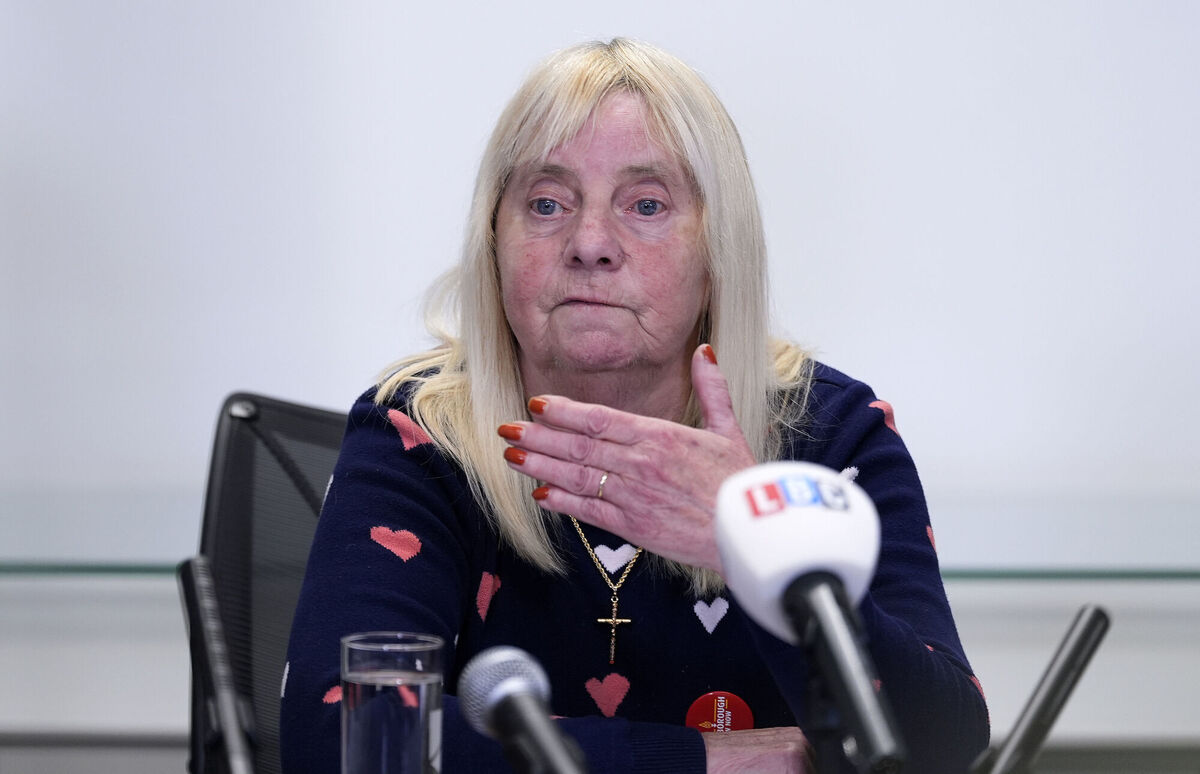
Steve Kelly, a committed member of the families group that relentlessly campaigned for the introduction of the “Hillsborough law” duty of candour, pointed out that he was now 72. “This has taken up exactly half my life – 36 years since my brother Mike died,” he said. “I’m quite confident and hopeful that the Hillsborough law will be a deterrent in future to gross negligence and gross misconduct, and to cover-ups.
“I do the work in honour of our Mike and the 97, for their good names, and so that they are always associated with goodness. But anything to do with Hillsborough takes a piece of you away, and it gets harder with age.”
In the 1980s, Wright was a toweringly powerful police chief, having led his force’s brutal policing of the miners’ strike and the collapsed prosecutions of 95 miners arrested at Orgreave in 1984, now the subject of a further public inquiry.
The IOPC has found Wright would have faced a gross misconduct case for seeking to minimise his force’s culpability for the Hillsborough disaster and deflecting blame on to Liverpool supporters. The false narrative of drunkenness and misbehaviour mounted against the victims – people who had been plunged into the hellish crush owing to South Yorkshire police failures – traumatised a generation and forced families to spend the years since their loss fighting for the truth and justice.
Bereaved families and survivors of the disaster have expressed some bewilderment and fury at the IOPC’s conclusions that nobody except Wright would have a case to answer over that blame-shifting effort, which the families have always described as a cover-up. The watchdog argues that no other officers were breaking the law or conduct rules, because they were entitled to “present the force’s best case” to Lord Justice Taylor’s inquiry into the disaster.
That involved the South Yorkshire force denying responsibility, blaming victims and withholding crucial evidence they saw as detrimental to their case. But in his report, published four months after the disaster, Taylor saw through all that, identified police mismanagement as the principal cause and criticised the police for seeking to evade blame. His clear findings have ever since provided a contrast with the miscarriages of justice that nevertheless followed and lasted decades.
Many of the people who died at Hillsborough, and who survived, were teenagers, because it was cheap to watch live football in the 1980s: £6 for a terrace ticket at an FA Cup semi-final. In 2012 when the new investigations began, many survivors engaged with the IOPC as formidable adults, doing their own prodigious research into the police malpractice and making official complaints.
Although the watchdog has upheld some of those complaints, survivors have also been exasperated at the limitations of the findings, particularly relating to the West Midlands police, which was appointed to investigate. Survivors have always complained that the officers who interviewed them as traumatised teenagers were hostile, and apparently intent on cementing the case that supporters were to blame.
The IOPC has concluded that this was not systematic, and that it was “appropriate” for the officers to ask survivors questions about whether supporters had been drinking. However, the senior West Midlands officers – assistant chief constable Mervyn Jones and DCS Michael Foster – were named for gross misconduct cases, for allegations that they “failed to investigate South Yorkshire police effectively” and were “biased against supporters in favour of South Yorkshire police”.
The report heavily criticises the criminal investigation into South Yorkshire police led by Jones and Foster, saying its scope was “extremely and inexplicably limited”, and that the file sent to the director of public prosecutions was “inaccurate”, “selective” and “included repeated references to the behaviour of supporters and how much alcohol had been consumed”.
It also discloses that the IOPC referred Jones and Foster to the Crown Prosecution Service in January 2017, to decide “whether both should be charged with the criminal offences of misconduct in public office and perverting the course of justice, in relation to the West Midlands police criminal investigation”. Both former officers are recorded to have denied any wrongdoing or bias.
The CPS decided in March 2018 that there was a lack of evidence showing that Jones or Foster deliberately hindered the original criminal investigation. “Whilst there was found to be some cause for concern in the actions of both suspects,” the CPS said, “there is insufficient [evidence] to reach the high threshold required to prove a criminal offence.” It was beyond the scope of the police watchdog to investigate why the director of public prosecutions decided in August 1990 not to bring any criminal charges against anybody for the loss of what was then 95 lives at a football match. The first inquest went ahead in Sheffield in November 1990, at which the South Yorkshire police again advanced the case of deflecting blame, alleging misbehaviour by Liverpool supporters.
Ultimately the jury returned the verdict of accidental death, which became the focus for the families’ traumatising and exhausting years of campaigning for justice. In 1993, high court judges refused the families’ application to quash the inquest verdict.
The IOPC report chronicles how no police disciplinary cases came to be brought, not even against Duckenfield for the notorious lie he told football officials as the disaster was developing: that Liverpool supporters had forced open an exit gate. The South Yorkshire police told the Police Complaints Authority, the former watchdog, that the force “did not feel disciplinary action was appropriate in respect of any of the complaints”.
The PCA mostly accepted that, but recommended disciplinary proceedings be started against Duckenfield and the deputy match commander, Supt Bernard Murray, for neglect of duty. But, the IOPC report records starkly: “South Yorkshire police did not do so.”
Duckenfield took early retirement on medical grounds in October 1991, which meant he could not face disciplinary action. The PCA determined it would be “unjust and inappropriate” to pursue the charge against Murray in the absence of his superior officer, a decision that meant no officer faced any disciplinary proceedings.
In the story of how the first inquest verdict came finally to be quashed in 2012, it is crucial to note that it took a non-legal process to break the deadlock. The Hillsborough Independent Panel was a group of agreed experts appointed by the government, following the initiative of then Labour ministers Andy Burnham and Maria Eagle, who called in 2009 for all documents relating to the disaster to be disclosed.
The panel’s report in September 2012, principally researched and written by Prof Phil Scraton, blew the justice case open, documented the depth of Wright’s efforts to deflect blame on to supporters, and emphasised medical opinion that disputed the findings of the 1991 inquest.
In December 2012, the high court quashed the verdict, in a breezy hour and a half, after 19 years of agony for the families following the previous court decision to uphold it. The IOPC then announced its ambitious, far-reaching investigation, and a supervised new investigation, Operation Resolve, into how the disaster happened.
That work by Operation Resolve supported the second inquests, held in Warrington from 2014 to 2016. The police yet again advanced the case that supporters were drunk, went to Hillsborough without tickets in large numbers and were late arriving, prompting a battle with the families’ lawyers that became the longest jury case in British legal history.
On 26 April 2016, the jury returned their determinations that the 96 people – now 97 after the death in 2021 of Andrew Devine – were unlawfully killed owing to gross negligence manslaughter by Duckenfield. The jury further determined that no behaviour of Liverpool supporters contributed to the disaster.
This week, Kelly recalled that as “a wonderful moment, a major victory, one of the few we’ve had”. It was celebrated on the day by families, Devonside prominent in the group, outside the court building singing You’ll Never Walk Alone.
After that, the IOPC provided evidence for the CPS to bring prosecutions, but except for Duckenfield’s trials, all the charges were dropped or thrown out before they reached a jury. Duckenfield was acquitted of gross negligence manslaughter in 2019, the legal system leaving families with the everlasting contradiction between that outcome and the unlawful killing inquest determination.
Now the IOPC has wound up its 14-year investigation, with the 12 men named for gross misconduct cases and 110 complaints upheld or cases to answer against former police officers – none of which will ever be heard.
Hennessy, Kelly and other family members said they did welcome the IOPC’s findings, while also being disappointed the watchdog did not go further. Families have been campaigning since 2017 for the Hillsborough law, finally introduced by the government in September after an unexpectedly difficult process, which establishes a duty of candour for police and public officials. The IOPC said it fully supports the new law and if such a duty had existed in 1989 the Hillsborough families “would have experienced a far less traumatic fight for answers about what happened to their loved ones”.
The IOPC pointed out that a series of reforms have been made to policing since 1989, and said Hillsborough law would add a new breakthrough.
Surveying the monumental injustice fought for so many years by the families and survivors, it is striking that no such report, review or reckoning has taken place for the judges or the legal system.
Intense focus has again been put on the police by the publication of this report, but despite a 21-year miscarriage of justice, and nobody held to account for 97 people unlawfully killed, the legal system remains aloof in these historic moments, inscrutable and unaccountable.

CONNECT WITH US TODAY



Be the first to know the latest news and updates