JOHN CAULFIELD COLUMN: Winning title the only way for Wenger to prolong Arsenal stay
Cork City manager — and Arsenal fan — John Caulfield on the changing face of football

JOHN CAULFIELD COLUMN: Winning title the only way for Wenger to prolong Arsenal stay

’What is the difference between modern day football compared to when you played?”

This is a question I’m frequently asked by fans curious to find out my opinion on how players from different eras would fare in today’s game. The simple answer is a great player would thrive in any decade. There have always been geniuses out there.

What has changed are the circumstances in which players perform nowadays — and how they have had to adapt. While football itself has changed immensely through different playing systems and rule changes which have increased the tempo of games, arguably the biggest change has been in players’ preparation and fitness. The modern day player has to keep his body in top condition all year round.

I remember a time when there were still fellas smoking on the team bus and even in the dressing room, not because players were any less committed to their football than the guys nowadays but simply because people didn’t really know any better back then.

With the appliance of science, players are much better prepared in the modern era. Every day at Cork City our players are weighed before and after training, and blood samples are regularly taken. Strength and conditioning, diet and nutrition, and GPS recordings are all part of everyday training sessions. Managers expect no less, nor do the players themselves. And the fans have come to expect it too.

It is often heard said we don’t have the characters now like we had in the older days, but in the modern era socialising and mixing with supporters after games in the pubs is unheard of, as a player’s recovery is the immediate priority within 90 minutes of the final whistle. Now, if you want all your players to socialise together, it has to be organised as what they call a team-bonding exercise, in the way that Pep Guardiola did by bringing his Manchester City players to see ‘La La Land’ last week.

Another big change is that current players have to deal with constant feedback about their performances through many forms of media which never existed in the past. This has also, I’ve observed, made players much more protective of their privacy. Nowadays, with camera phones and instant access to Twitter, it doesn’t take much for a footballer in a pub who might be innocently having one drink to find himself portrayed as being ‘out on the town’. Consequently, I find players are much more cautious about being out in public these days, the irony being, as a rule, they actually tend to be a lot more disciplined anyway in their lifestyles.

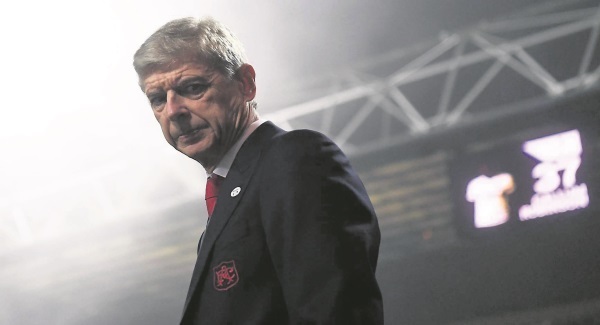
The man who probably did more than any other to revolutionise attitudes to player preparation in England is Arsenal manager Arsene Wenger. I have always had a grá for the Gunners, ever since I watched enthralled as a kid when they won the 1971 FA Cup in their away strip of yellow and blue by beating Liverpool 2-1 in a famous final at Wembley.

Despite being an avid League of Ireland supporter, through my teens and 20s I was lucky enough to be able to attend many games in North London through an uncle of mine who lived close to Highbury. From Charlie George to Liam Brady, Tony Adams to Ian Wright, and Thierry Henry to Alexis Sanchez, many great players turned out for Arsenal over the years, but I think there can be no doubt the club’s greatest manager has been Wenger. It is incredible he is still at the same club after 20 years, not least when you consider the mounting media pressure — and to a lesser extent supporter disenchantment — he has had to endure in recent times. I am a big fan of Wenger who was virtually unknown in England when he arrived from Japanese football in 1996. Off the pitch, his ideas on fitness and diet were a game-changer — players initially found his innovations alien but now they’re just the norm — while, on the pitch, he transformed the image of Arsenal with his philosophy of total football. His early success had Gooners thinking they were in fantasyland as they swooned at his ability to unearth diamonds from across Europe and turn players with potential into world class talents — the likes of Vieira, Petit, Henry, Bergkamp spring to mind.

Without spending big money, Wenger always seemed to be one step ahead of his rival managers and then, where others would have complained, he showed dignity and class by refusing to blame the club for budget restrictions as he oversaw the move from Highbury to the Emirates. However, due to the massive monies being now invested in the English top flight, coupled with all the clubs being able to tap into a global scouting system, Wenger’s advantage over the rest has petered out.

He has been widely criticised for choosing not to spend big or pay big even though the finances are now there but his most acute problem, in my opinion, is that the top players who want to come to England now perceive Chelsea, City and United as the big three.

Wenger and Arsenal no longer have that kind of appeal or that kind of aura.

To his credit, he has always delivered top-four finishes and qualification for the Champions League but the mood within the club has changed and now, surely, a first league title in 13 years would be the only way to prolong his stay.

I would love if he could do it but the smart money says his team will fall short again. Arsenal can still play great football but they are bedevilled by a soft centre.

Over the last three of four years when the crunch has come, they haven’t had leaders like Tony Adams, Martin Keown or Patrick Vieira to get them over the line. Wenger hasn’t been able to sort that out.

The incident against Burnley when he was sent to the stands and pushed the fourth official — that was just total frustration because he thought the game was gone.

At the death, a typically impudent Sanchez penalty won the match but If it had ended 1-1 everyone would have been coming away saying, ‘typical Arsenal’. Wenger just lost his cool because it looked like they’d thrown away two points.

As things stand in the Premier League title race, it’s hard to back against Chelsea although their upcoming games against Liverpool, Arsenal and Tottenham will be decisive.

Of the chasing pack, Spurs won’t be too far away, I feel, but if Chelsea can win, say, two out of those three games against their closest rivals, they’ll be impossible to catch.

More in this section

Sport

Newsletter

Sign up to our daily sports bulletin, delivered straight to your inbox at 5pm. Subscribers also receive an exclusive email from our sports desk editors every Friday evening looking forward to the weekend's sporting action.

Cookie Policy Privacy Policy Brand Safety FAQ Help Contact Us Terms and Conditions

© Examiner Echo Group Limited