The Premier League bubble that won’t burst
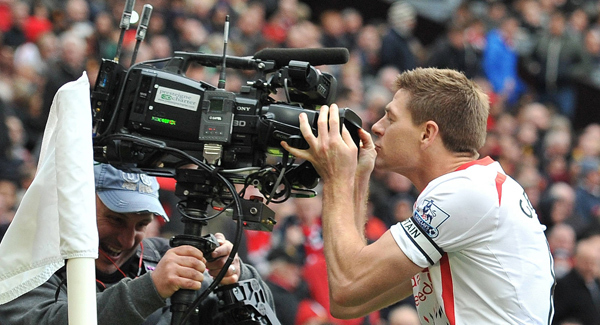
Science tells us a bubble, the kind that West Ham fans see fade and die every year, is fragile and ready to pop at any moment. Evaporation of its water content, contact with dry air or a dry surface, or even a little wind turbulence normally lead to its rather predictable demise.
Economists, meanwhile, define an economic bubble as a ‘time when asset prices appear to be based on implausible or inconsistent views about the future – leading to trade in high volumes at prices that are considerably at variance with intrinsic values’.
Almost every country in the West has experienced the phenomenon at some stage, including of course Ireland; and in pretty much every instance the boom has been followed by bust. The bubble, inevitably, is destined to burst.
So how come the value of football television rights in England continues to ignore those commonly-accepted principles, even though many fans feel the prices paid are both implausible and at odds with the sport’s intrinsic values?
The €6.9 billion deal announced this week stunned experts, coming in at almost €1.5bn more than analysts were expecting; and it meant, in the words of Premier League chief executive Richard Scudamore that ‘Burnley are now economically bigger than Ajax’.
That’s a remarkable statement when you think about it: and there’s no doubt there has never been a better time to be a Premier League member — or to be one of those pushing for promotion at the top of the Championship where, incidentally, clubs as small as Bournemouth and Brentford are among the contenders to join that economic elite.
But the question nagging away at every fan, every football owner, every administrator remains: can football really defy logic by proving that not every bubble is destined to implode?
An informal survey of football journalists covering the Chelsea-Everton match in midweek – a more cynical and questioning audience would be hard to find – came up with a surprisingly unanimous opinion: they all agreed it could.
“You know, quite honestly I can’t see a time when it is going to burst,” said Claire Lovell, who reports for Reuters.
“I used to think it would, but at the moment there are no signs of that happening. As long as the money comes into the league then the top players follow, the interest from around the world increases and the more valuable it is to television. It’s self-fulfilling.
“I would say the biggest danger is the end user; the Sky customer who has to pay a monthly fee for the package. How much longer will they be willing to pay more each year to watch Premier League football on television? Perhaps that will be the tipping point; but it certainly won’t happen just yet.”
Simon Johnson, Chelsea correspondent for the London Evening Standard, has seen the riches of the Premier League up close at Stamford Bridge where the club has been transformed over the last decade by the arrival of billionaire Roman Abramovich — and by rising television revenues that now means the club is no longer entirely reliant on their owner’s benevolence. He too sees little chance of the financial merry-go-round stopping any time soon.
“This debate has raged every time a new TV deal has been announced and yet the desire to watch Premier League football never shows any sign of diminishing,” he said.
“The more money given to the Premier League, the more likely quality players from around the world will be attracted ; and that makes it an even more desirable product.
The television companies can’t allow subscription fees to get out of control, but one suspects there will always be enough people willing to pay to see their team in action from the comfort of their own home.”
Of course football reporters are not necessarily business experts and rarely have too much of an eye on the movement of the financial markets. But the opinions of those in the press box is matched by analysts who follow the game in the City pages rather than the sports section.
Austin Houlihan, Senior Manager in the Sports Business Group at Deloitte, is adamant the sport has no need to panic about the future value of football given the remarkable rise in prices since the formation of the Premier League.
He said: “In 1991/92, the season before the inception of the Premier League, top-flight clubs generated less than £15m (€23m) in broadcast revenue.
That shows how far it has moved, and we see no signs that the ‘media rights bubble’ is going to burst any time soon, as some have predicted regularly over the last 20 years. Top-tier domestic league football continues to be highly attractive to Pay-TV, delivering subscription-driving content through 10 months of the year.”
Identifying the kind of circumstances that could prove the experts wrong is an interesting exercise in clairvoyance, especially as football has not only survived but flourished over the course of at least two economic recessions in the UK. But perhaps technology may be the spark that eventually lights the fire.
It seems likely, for instance, that streaming on the internet is the real future for the way fans consume football – it already is for Generation Z who are deserting television in their droves; and some predictions suggest almost 50 per cent of media viewing will be online within the next 10 years.
That figure, in fact, may be underplayed rather than exaggerated – so even though the Premier League insist they are on top of illegal streaming and the rise of Vines, the demands of internet audiences used to paying little or nothing for their regular football fix could prove a long-term problem.
Kevin Rye, spokesman for Supporters Direct, a pressure group set up to help Supporters Trusts gain influence in the running of clubs, believes football’s future is now tied to events which it has almost no control over.
“I think what people have to realise is it’s not just about football any more, it’s about entire communications packages,” he said.
“The companies bidding are giants in the Quad Play market – they want to provide broadband, fixed line, internet and mobile – and football just fits into that. From that point of view it’s not about when the football bubble bursts – we’re asking the wrong question.
"It’s about when that communications market levels out and what happens then. Perhaps the money will continue to rise – I don’t think we have even touched the sides in terms of delivering football on the internet or via Apps. There is considerable growth still to happen in that area.
“But to be honest, I have been a spokesman for Supporters Direct for 11 years now and I don’t think in all that time we have ever said that the sums being paid into football are the big issue. What concerns us is how that money is spent and distributed. That’s where our attention should be focused.
"The real problem is that the entire governance of the game doesn’t function properly. The FA is a collective of interests rather than a governing body able to make the kind of decisions we really need to change the game for the better.”
That is a debate worthy of an entire feature of its own. But in terms of financial stability, English football looks safe enough.
The new money arriving from Sky and BT dampens concerns over Financial Fair Play and not only allows top clubs to spend more on both wages and transfer fees but also gives them a significant advantage over other leagues in Europe where FFP, which requires clubs to spend only in relation to their income, will bite harder.
The prospect now is that the Premier League will be far better placed to tempt players from La Liga, for instance; and, as others have pointed out, if the big names arrive – the Bales, Ronaldos and Neymars – then the television bidding war can only intensify.
Perhaps the most salient point from the press box at Stamford Bridge in midweek came from former Tottenham Hotspur striker Garth Crooks, now reporting for the BBC.
“You have to ask whether this will end at all,” he said. “I honestly thought the bubble had burst five years ago when the figure reached £1bn a year. But I was wrong.
“If you ask me when it will burst, I can’t answer – I’m not an economist. But I have to say I’ve looked at America – at the NFL, NBA, NHL and at baseball – and over there, year on year, they are still earning more than our guys are, and the NFL still brings in more television revenue. So when it comes to it, football is still not the richest sport in the world.
“Whatever happens, I don’t see the bubble bursting soon — and that’s a point of view I hear increasingly in the game now. People weren’t saying that five or 10 years ago, I think we all thought it had to end. But we’ve all been proved wrong.”
So there it is, a surprisingly uniform answer from those who make understanding the Premier League their business. It seems Premier League football is, for the foreseeable future at least, a very lucrative bubble with a very thick skin. It would take something extraordinary, something unforeseen, to finally burst it.

CONNECT WITH US TODAY



Be the first to know the latest news and updates