The club that Alex built
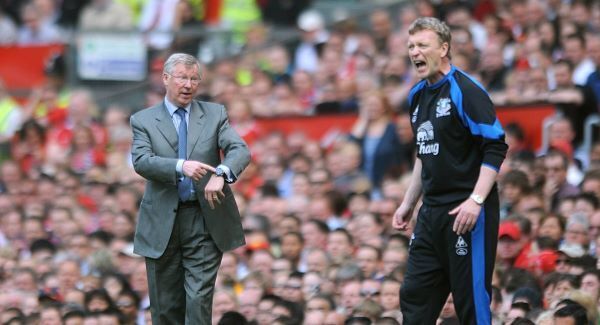
It’s not just Manchester United who are entering a new era — the very landscape of club football in England will be forever transformed.
That the retirement of a 71-year-old should prompt such seismic shock tells you all you need to know about what a vital force the Scot has continued to be nearly 27 years after he came south from Aberdeen to Manchester.
It’s fitting that a serial winner should go out at the top, at least domestically, Ferguson’s retirement coming at the end of another title-winning season for the club he has taken to unprecedented heights. The temptation when trying to take the measure of the scale of what he achieved at Old Trafford is simply to reel off a list of the glittering prizes Manchester United gathered under his watch, all 36 of them.
And when you do that, his longevity at the club seems rather more like a matter of plain common sense than the thing of wonder it has become in these days of increasingly disposable gaffers. To give just one startling point of comparison: in the time that one man has ruled the roost at Old Trafford, Real Madrid have gone through 24 managers.
But then, if it ain’t broke, why fix it? Once Ferguson proved he had the Midas touch, the club would have been foolish to do anything other than abide by the sage advice that you should always stick with the winners.
No, the real key to unlocking the secret to Ferguson’s incomparable reign at Old Trafford is that the club were prepared to stick with him when he was anything but a winner, at a time, indeed, when they seemed to be regressing under his faltering stewardship.
When Ferguson joined United on November 6 1986 the club had gone 19 years without winning the league. Under Ron Atkinson, they were second from bottom of the old English First Division, having been spanked 4-1 by Southampton the night before the United board made their move for the Scot.
In his first season at Old Trafford, Ferguson steadied the ship, United finishing 11th. The year after that, it was a case of close but no cigar, as United finished second to Liverpool, the arch rivals Ferguson famously wanted to “knock off their f***ing perch”. But the following season United were back to an 11th place finish and the season after that — 1989/90 — they actually ended up two places further adrift again, in 13th. Crucially, the board didn’t cave in, not even when, as Ferguson put it, the team hit “rock bottom” in September ‘89, enduring a 5-1 hiding from Manchester City at Maine Road. “After the game,” he remembered in his autobiography, “I went straight home, got into bed and put the pillow over my head. A sense of guilt had engulfed me and I knew I was going to have to dig deep into my resources.”
But things would get worse before they got better. United didn’t win a single game from late November through to the end of December and by the time an FA Cup third round game away to Nottingham Forest came around in January of 1990, the conventional wisdom had it that defeat would signal the manager’s departure. Ferguson has always maintained this was not the case, citing an eve of match conversation with Martin Edwards in which he quoted the chairman as telling him: “Even if you lose it won’t cost you your job.”
Yet, Ferguson was also enough of a realist to understand that the victory which United went on to claim at the City Ground, through a now historic Mark Robins goal, was pivotal. “Only a fool would deny that, without the series of events triggered by that victory, the pressure to sack me might eventually have become irresistible,” he conceded.
That sequence of events went on to include an FA Cup triumph in 1990, the European Cup-Winners Cup in ‘91 and sixth and second place finishes in the league before the long title drought finally ended in 1993, Ferguson learning on the golf course that victory had been confirmed with word that closest challengers Aston Villa had lost to Oldham Athletic.
On Sunday Press duties in those days, I was in Old Trafford the following night as United officially brought home the silverware, their 3-1 win over Blackburn Rovers almost relegated to a sideshow in an atmosphere of unconfined joy. An odd but abiding memory I have of the game’s aftermath is of having to shuffle sideways in the crowded men’s loo next door to the press box to make space for someone else — and then being startled to realise that the newcomer standing right beside me was none other than Matt Busby.
Later, I managed to corner a happy Ferguson for a few words on my own. Ferguson was delighted that Busby had been there to see United win the league for the first time since the grand old man’s team of Best, Charlton, Law and the rest had done it in 1967, but I’m sure none of us who were present that night 26 years on could have predicted United’s latest manager would go to achieve success of a kind that would eclipse all who’d come before him at the club.
Yet, even in the dark days of his early troubled time at Old Trafford, Ferguson had been busy laying the groundwork for long-term progress, not least in his decision to radically overhaul United’s scouting network, an innovation whose success is best measured by simply name-checking a few of those fledglings who would go onto to become household names: Giggs, Scholes, Beckham, Butt and the Neville brothers.
Nurturing young talent, Ferguson has said, was the aspect of management which always gave him the most pleasure. But, though hardly infallible on the transfer market, another of his outstanding assets was an eye for the talented individual who could help shape or even transform a team, coupled with a fierce determination to get what he wanted once he’d made up his mind: think of Leeds being relieved of Eric Cantona or Roy Keane being poached from under the nose of Kenny Dalglish, right up to the acquisition this season of Robin van Persie, the player who did most to ensure that the manager would be able to sign off on a winning note.
But above all, there was Ferguson’s belief in the supremacy of the team. “Tactics are important but they don’t win matches,” he said in Managing My Life.
“Men win football matches. The best teams stand out because they are teams, because the individual members have been so fully integrated that the team functions with a single spirit.”
And when that spirit is also a reflection of the spirit of the leader — intelligent, passionate, hard-working, ruthless at times, and imbued with a raging will to win — what you get is the dominant club of the Premier League era.
But not the dominant club in Europe. If Ferguson has one major regret, I suspect it’s his failure to land a third Champions’ League, although he’s entitled to point out that it was arguably the best football team side in the world — Barcelona — who denied United twice, first in Rome in 2009 and then, with almost contemptuous ease, at Wembley two years later.
But this is hardly the time to dwell on what might have been. What was is stirring enough. Even those journalists who fell foul of his temper know the football world will be a much duller place without Fergie and his rants, tiffs and watch-tapping.
And in an era when too many football clubs seem governed by panic rather than patience, how pleasing it is to reflect on that fact that Alex Ferguson came and went, all in his own good time. Little wonder that, in his valedictory statement released yesterday, and amid all the references to quality players and memorable victories, there was this: “In my early years, the backing of the board and Sir Bobby Charlton in particular, gave me the confidence and time to build a football club rather than just a team.”
And, in the end, that may be his own, and Manchester United’s, greatest testimonial.

CONNECT WITH US TODAY



Be the first to know the latest news and updates