Maurice Brosnan: Rugby is just one of several sports grappling with jargon
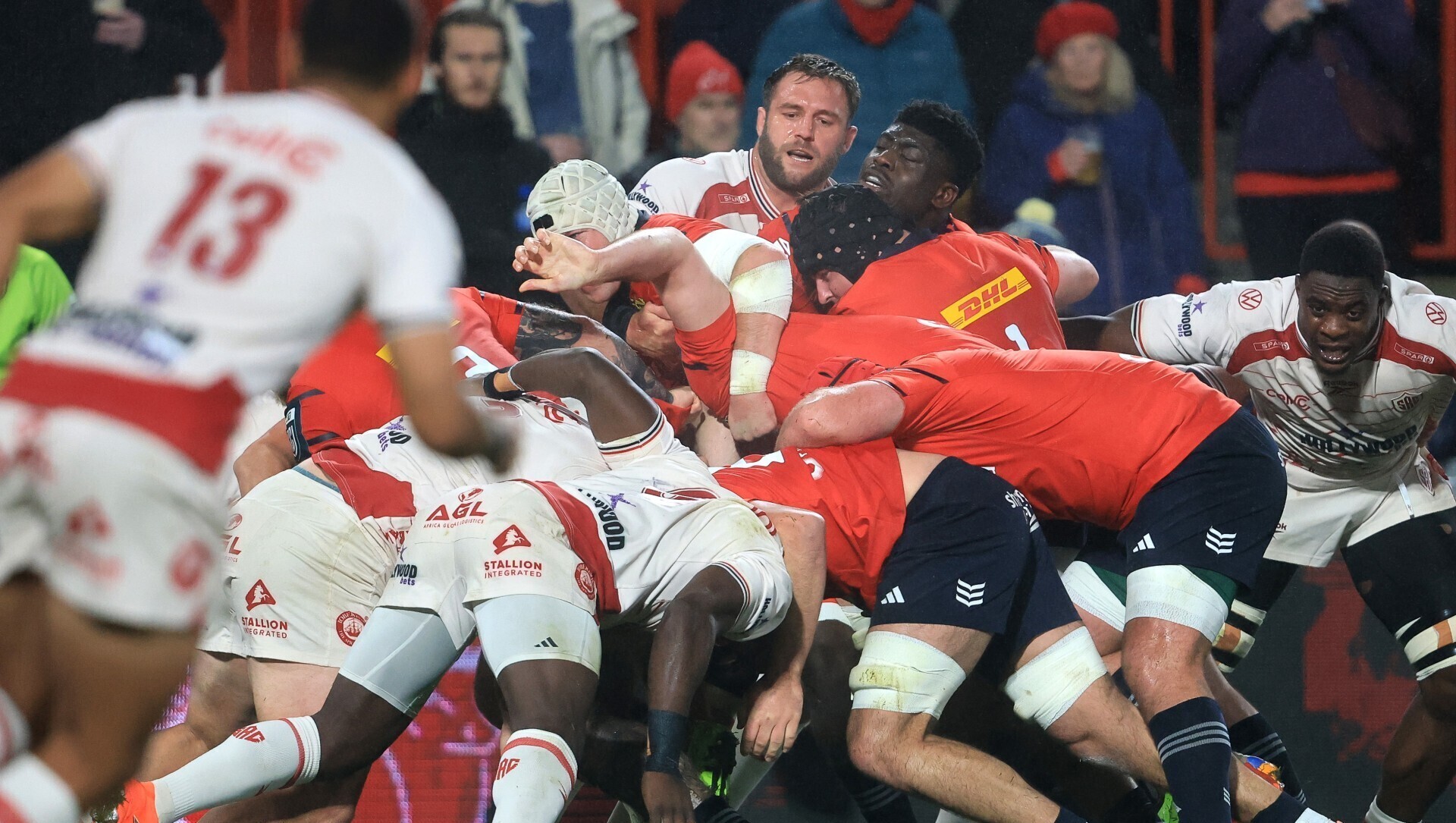
DARK ARTS: A view of a scrum during the recent Munster and Hollywoodbets Sharks clash on Halloween. Picture: INPHO/Bryan Keane
Pick any meaningful rugby match in 2026. For the purposes of this article, take the first half of Leinster’s recent win over Munster at the Aviva Stadium and listen to the terminology in those 40 minutes alone.
Doglegs. Unpick the lock. Front-door pass. Rush defence. Seesaw attack. Soft edges, soft shoulders and the belly of the 15s. Poachers, jackals, even the blindside wobble. Ok, we made that last one up.
You get the point. Few sports carry the array of jargon that rugby does. On co-commentary for that inter-pro were two sensible former players, Simon Zebo and Ian Madigan. Both are skilled operators who know the sport and are capable of illuminating it for the watching audience.
The problem is that audience. Here lies the paradox: one of the most complex invasion games on earth also draws a vast and casual viewership. In the gap between the diehards and the blow-ins lies a permanent tension.
Ireland's Six Nations victory over England earlier this year attracted an average audience of 898,000 and reached a peak of over 1 million. A significant URC game would do well to amass a fifth of that. What is the share of them that couldn’t tell a dogleg from a dog’s dinner?
A dogleg, just in case, is a structural flaw in the defensive line when players are misaligned, creating gaps for the attacking team to exploit.
It should be said, the sport is aware of its need to explain itself. Mic-ing up referees is the most obvious example. In a game governed by so many laws and sub-clauses, NOT RULES, explaining decisions as they happen is vital.
Sam Larner is the author of . Like many people drawn to analysis, reading Moneyball was a formative moment. His book is rugby’s answer to this growing genre. It opens in unconventional fashion: with a full glossary. The idea came from his editor, who considered the range of people who would sit down and watch a game, each framing it through their own lens.
“A lot of the time, those people wouldn’t want to say, I don’t know what this is called or I don’t know what that is,” he says.
“But once you tell it to them, they would be happy to know it. What I wanted to do was to not assume knowledge because I have had a lot of conversations with people in pubs or fans of the game, where their knowledge is less.
“I am more of a football fan now but as a kid I wasn’t particularly, but I still knew what 4-4-2 was; I knew what a false nine or Tiki-taka was. Whereas my dad, before the book, he wouldn’t have known what a pod was and he was watched the game for 60 odd years and played it for 30 years.”
Rugby is far from the only guilty party in the sporting sphere either. Gaelic football and hurling are rife with offloads, backdoor cuts, pressing triggers, pivots and transitions.
“It is difficult because there is nothing wrong with using the right terms, but I think more people need to realise that a smaller percentage of people who watch or listen actually know what those terms mean than you might otherwise anticipate.”
Even so, despite the eye-rolling that often greets the jargon, much of it comes from players-turned-pundits and is the working language they use in training.
Read More
There is value in knowing how coaches talk and think. Their job is to condense ideas into shorthand that players recognise instantly.
Language also evolves. We find new ways to say old things. It can be a benefit to have precise labels. And there is also probably something unhealthy about being so insular that a new word becomes an affront.
An easy test is to ask what word should be used instead in each instance. If the alternative is clunkier, longer or less precise, then the term is probably fair.
The best communicators are those who can connect one end of the audience to the other. There are now niche media personalities that have built up a loyal following by patiently breaking down the game to their followers, gradually bringing them along for the ride.
At the same time, the first rule of communication is KISS. Keep it super simple. Rugby, too often, does not.
In the days after Munster’s costly Champions Cup defeat to Toulon last January, assistant coach Denis Leamy was still unable to explain what the final controversial penalty was actually for. Toulon’s late kick saw them lose 27-25. What was the offence? Who was it against?
“A number of the players have asked me as well in terms of what is the story, and look, hands up, I don't know what the penalty was for,” he said.
Referee Karl Dickson’s explanation at the time was simply “taking the space”. It is one thing to talk in a way that alienates those far removed from the white lines; it is another to baffle those within them.
Such confusion does the players, the watching audience and the wider game no good.

CONNECT WITH US TODAY



Be the first to know the latest news and updates