Peter O’Mahony represents most unquantifiable of qualities
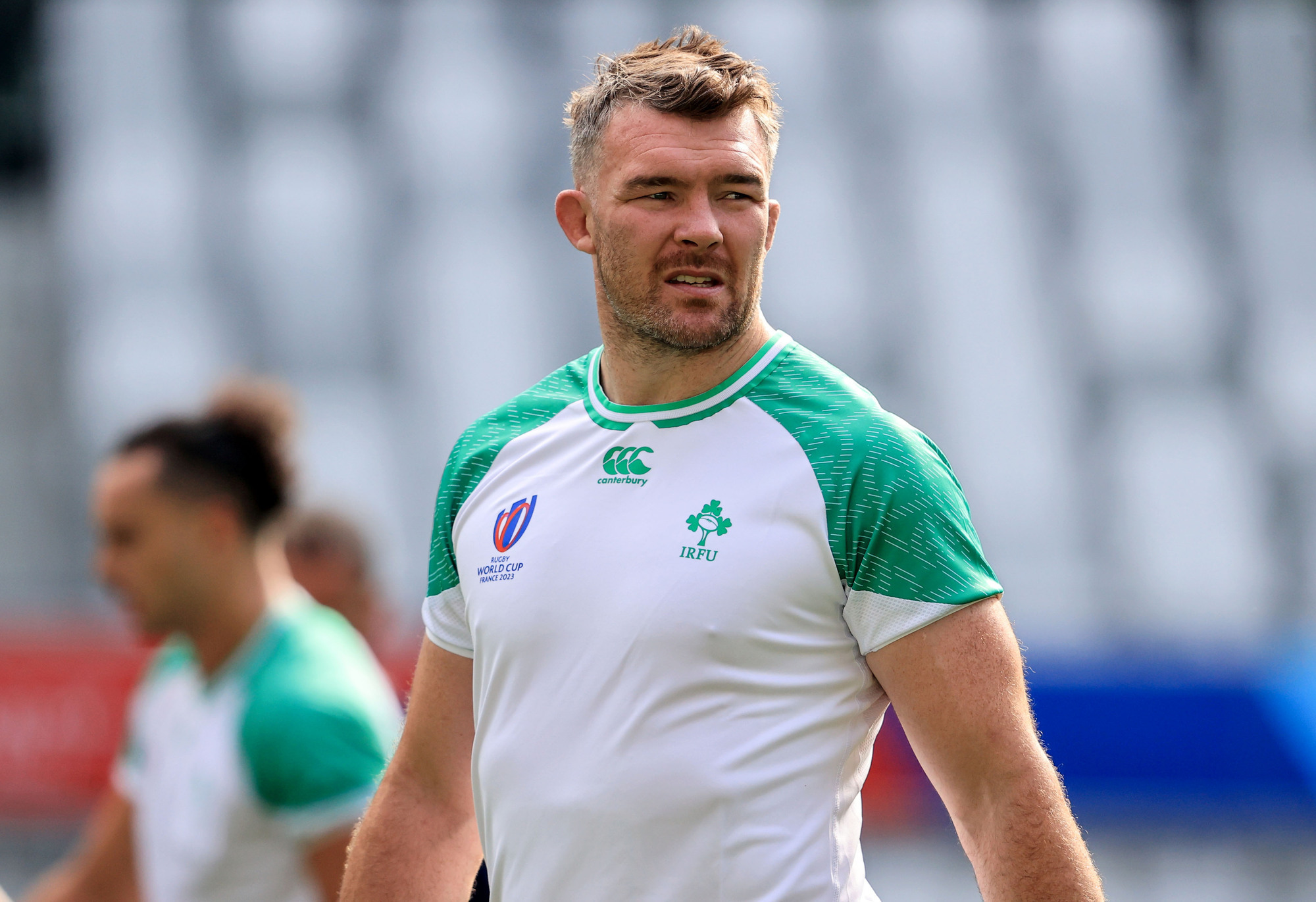
At the end of the 2019 World Cup group stages, Joe Schmidt took aim at enduring criticism of Peter O’Mahony’s performances
KEY COG: Peter O'Mahony during Ireland's captain's run in Bordeaux. Pic: INPHO/Dan Sheridan

KEY COG: Peter O'Mahony during Ireland's captain's run in Bordeaux. Pic: INPHO/Dan Sheridan

Rewind back to the moment before impending disaster. At the end of the 2019 World Cup group stages, Joe Schmidt took aim at enduring criticism of Peter O’Mahony’s performances. The numbers didn’t add up. His season included a long list of underwhelming stats.

And still he was consistently picked. For Schmidt, it was all about what he sees. His code was that of Tony Montana, another torching innovator who spectacularly flamed out in the end; the eyes did not lie.


“He brings leadership and experience, he's a very effective lineout operator for us,' explained the then Ireland head coach before they bowed out in the quarter-final. “Part of it is the structure, the way that he ends up across the width of the pitch. He tends to be playing in the wider channels and therefore he is not as involved as some of the other players who are closer in.

“I think stats always tell part of the story, but they don't tell the complete picture. And, for us, there are things he can add that we think will be really important.” 

Ultimately, Schmidt boiled it down to big moments. O’Mahony produces them at an astonishing rate.

When Ireland win, they are integral. Defeats tend to dumb down post-game reviews. The scoreboard and the surface-level stats dictate the assessment. No one is a testament to that more than the Munster stalwart. 

In the Six Nations before Schmidt’s praise, Ireland were wiped by Wales 25-7 in Cardiff. O’Mahony was castigated in certain player ratings for contributing a meagre two tackles and two carries. The full context washed away in a dispiriting showing.

That was a Welsh Grand Slam built crushingly on defence. They were tied as the lowest try-scorers but booted their way to the title. Ireland had significantly more possession, 75% in the second half.

They couldn’t find space and were reluctant to offload wide, limiting the flanker’s influence on that side of the ball. The side’s tackle success rate was almost identical. His performance was substandard but broadly the issue on the day was structural.

The margins that define the back-row’s contribution were still evident in that match. Securing the ruck after a Tadhg Beirne jackal. Reacting quickest to claim the ball after James Ryan disrupted a Welsh lineout. Speeding away out wide as Ryan failed to give the pass later on. Crucial moments on another day.

More often than not, he rules those moments. O’Mahony is not a key tool in an effective machine; he is the force of energy that keeps it churning. Who could forget the heroic dive to deny Ben Smith a New Zealand try in 2018? Deserved Man of the Match, despite finishing with the second-lowest tackles of any starting forward, eight with three missed.

Against the same opposition last year, he did everything from rib Sam Cane to successfully execute a 50:22. It is over a decade since Michael Lewis popularised the sports archetype of the No-Stats All Star. At the time he focused on the NBA’s Shane Battier. He had no shiny stats and general managers absolutely adored him. They told Lewis over and over again of his immense value: “The most abnormally unselfish basketball player he has ever seen…helping the team in all sorts of subtle, hard-to-measure ways that appear to violate his own personal interests.” 

That framing deals with the external perception. Internally, teams abide by different terms. So much of modern rugby is quantifiable and captured by numbers. The vast majority of that is generated by forensic post-match analysis and consumed by a select few at the top table. What falls to the general public is crumbs of a much broader repast.

That is not to say basic key performance targets are discarded. Several pro teams do pair their own data with Opta’s feeds. There are some reservations about their parameters, but at least they are applied uniformly across competitions. It can assist load management as well as highlight longevity.

For example, Peter O’Mahony logged 1443 minutes last season. Caelan Doris was at 1390, Beirne 1387, Jack Conan 1226 etc.

In that field, the only thing worse than inaccurate stats is wrongly interpreting them. The devil is in the detail so they must go deep. Today if you throw out the term ‘stats-man’ in conversation with most key personnel, they cringe. Performance analysts have an extensive brief, including thorough data. The rest of us rarely have access to them.

That feeds the feast and skews the debate. In February, after Ireland comprehensively overcame Wales, Virgin Media’s Matt Williams pointed to O’Mahony’s influence (nine tackles, five carries) and the fact he was “very quiet.” 

"Iain Henderson is there,” he said. “The question has to be asked, for next week - does O'Mahony come back to the bench? Do you put Henderson into the second row and move Tadhg Beirne to 6?” 

A few days later, Derek McNamara of data and analytics provider React broke down the fixture based on his detailed analysis. They track every ruck, player involvements in defence and attack across numerous subcategories.

“People would have said O’Mahony had a quiet game and didn’t play that much,” he told OTB. “We can actually see he is involved in nearly everything. Carrying, rucking, hugely instrumental in the lineouts, tackling, blocking, defensive lineouts, a little passing. The point is he had an immaculate game, he didn’t have any mistakes in the entire game and no one is talking about it. Come on, lads. Give credit where credit is due.” 

There will always be truthers and deniers. Determined to twist the stats to suit their stance. Even if they only tell part of the story. Even if they tell the wrong story.

After the summer series, leading analyst Tom Savage, of Munster-focused site Three Red Kings, waded into an online debate about Ireland’s MVP. The case had been made that O’Mahony’s stats proved a lack of substance.

TRK agreed. O'Mahony had the lowest carrying efficiency of the starting back row on a metre-per carry basis, the lowest number of completed passes, the lowest number of defenders beaten and the fewest offloads across all three tests. He had been poor. The evidence was overwhelming, case closed.

Then came the kicker. An apology, there had been some mistake. Those were actually the stats of 2022 World Rugby Player of the Year Josh Van Der Flier.

x

More in this section

Sport

Newsletter

Sign up to our daily sports bulletin, delivered straight to your inbox at 5pm. Subscribers also receive an exclusive email from our sports desk editors every Friday evening looking forward to the weekend's sporting action.

Cookie Policy Privacy Policy Brand Safety FAQ Help Contact Us Terms and Conditions

© Examiner Echo Group Limited