Letter from Marseille: Scotland are fearing to dream once more
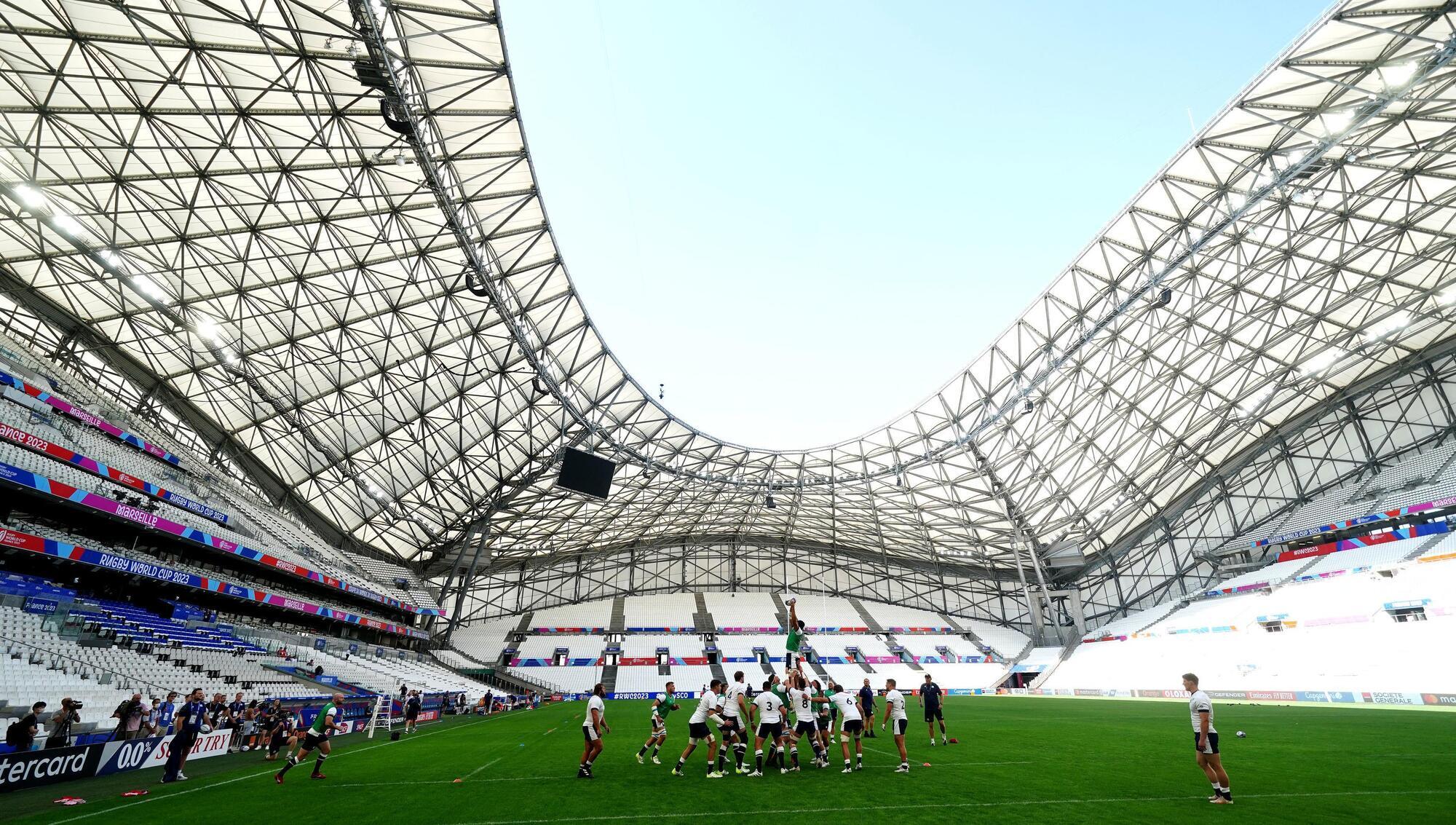
DREAMING BIG: Scotland players during the captain's run at the Stade de Marseille. Pic: Mike Egerton/PA Wire
One of the most painful and indelible memories scorched into the Scottish sporting psyche – even for those who were too young to witness it first hand – was the overblown build-up followed by crushing failure of the national football team at the 1978 World Cup.
Ahead of departure for the Argentina tournament, a crowd of 30,000 attended a rally at Hampden Stadium where the players were paraded around the pitch in an open-top bus – a weird kind of pre-departure welcome home event – with the ebullient team manager Ally MacLeod declaring that he’d cleared a place in his wardrobe for his World Cup winner's medal.

“We're on the march with Ally's Army; We're going to the Argentine; And we'll really shake them up; When we win the World Cup; ‘cause Scotland are the greatest football team,” pronounced the lyrics of the team’s official tournament song.
Looking back now, it was almost inevitable that it would all go so terribly wrong, with Scotland slumping to a 3-1 loss to unheralded Peru in their opening match, then having winger Wille Johnston sent home for failing a drugs test, before they drew 1-1 with even less heralded Iran. The footage of MacLeod, head-in-hands, with the derisive taunts of the Tartan Army ringing in his ears, became the enduring image of that campaign.
In their final pool match, a wonder goal by Archie Gemmell – perhaps the most iconic ever scored by a Scotland player – helped beleaguered Scotland to a 3-2 win over eventual finalists Holland, but it wasn’t enough to prevent an early exit from the tournament on goal difference. MacLeod and his players returned home with tails tucked between legs. Their only tangible achievement from the trip being a legacy launched which has haunted Scots teams at overseas tournament for the intervening 45 years.
Which brings us to another World Cup prologue, four years ago. It was a different-shaped ball and the levels of hubris on display were not quite so spectacular, but the general pattern was painfully familiar, with some encouraging build-up performances generating a hype which was enthusiastically encouraged by the team management, and ultimately proven to be unfounded.
I remember sitting in the Ireland team hotel in Yokohama, Japan, on the eve of their World Cup opener against Scotland and listening to then head coach Joe Schmidt very deliberately parrot all the praise for the opposition which Gregor Townsend had spent the previous few weeks lavishing on his own players.
The following day, Ireland delivered a brutal lesson on the value of keeping your powder dry. Scotland had failed to anticipate that their rivals had also been working hard all summer, and having started from a higher base, Schmidt’s men blew Townsend’s boys away.
It was a harrowing experience. Captain Stuart McInally was left a broken man who couldn’t even manage the post-match press conference and he was dropped to the bench for their final pool match against Japan (another defeat which confirmed Scotland’s early exit). That tournament was the end of the line for a number of senior players including captain Greig Laidlaw, former captain John Barclay, and winger Tommy Seymour.
So, are we going to see history repeat itself – yet again – this Sunday when South Africa in Marseille will provide the opposition? Certainly, there are similarities to 1978 and 2019, and all those other implosions in between.
Scotland have certainly talked a good game coming into this tournament. It is a difficult balancing act because they have to project themselves as a team who truly believe they can match and better the best, without losing sight of the fact that they have won nothing yet apart from a couple of one-off Six Nations and Autumn series games.
Scotland’s form this summer has been encouraging, with home wins over Italy, a second-string French team and Georgia, while in their big test away to France they produced arguably their best performance of the Townsend era. But – and it is a big ‘but’ – they lost that game in Saint-Etienne having coughed up two tries at the start of the second half to fall 17 points behind.
This Scotland side does have heart, fighting their way back into each of their summer games, but the flip side of that is that they are still prone to careless lapses which will be punished by top opposition. As forwards coach John Dalziel observed on Wednesday: “We would like to have a game where we are in front and holding onto that lead, rather than trying to pull things out of the bag, but it [coming from behind] does show huge resilience and players take real confidence out of that.”
So, it feels like the team has developed since 2019, but the proof will be in the pudding. Delivering on the biggest stage of all – against the reigning world champions – would be real evidence that they are now a team of genuine substance.
With warriors like Jamie Ritchie, Rory Darge, Pierre Schoeman, and Zander Fagerson up front, they believe they are better prepared than four years ago to match the physical challenge that will be presented by South Africa (and Ireland), they also believe they have a back-line which can take a mile if given an inch, and they believe they have the courage to fight to the very end.
But can they keep all their plates spinning over the full 80 minutes?
Scotland can win this one. But it would be a huge achievement. Of their squad, only Finn Russell and maybe Darcy Graham would get close to South Africa’s first choice match-day 23, but the whole can be greater than the sum of the parts, and that's what they will need to rely on. They’ve talked the talk – time to walk the walk.