Joe might not agree but ultimately only one stat matters
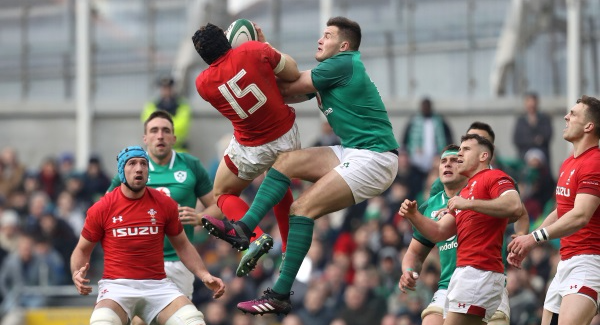
There were few dissenting voices to the positivity that attached itself to Joe Schmidt’s side at the time so Eddie O’Sullivan’s take on the influence of new defence coach Andy Farrell struck a discordant tone.
“I think it’s overrated, to be honest,” he told Newstalk of the Englishman’s influence on the Irish rearguard. “The big take from our defence during the autumn has been our discipline has been extraordinary.
“The idea we have conceded a grand total of 11 penalties in three matches and the opposition have conceded 41 is phenomenal but our defence per se is not particularly good. Our tackle rate is just barely over 80% over the three matches. That’s really worrying.”
O’Sullivan added that Ireland were conceding an average of three tries per game. Others would touch on the exact nature of the Farrell effect as time wound on and Ireland’s habit of coughing up tries does continue to be a concern.
Farrell has been in situ now for 21 games. The near three-tries-per-game ratio has settled down to a more reassuring 2.19 and yet it should be noted that Canada, USA, Japan and Italy have all managed to rack up three in single 80-minute stretches during Farrell’s time.
So have Australia, Scotland, Wales (twice), Argentina and New Zealand, The All Blacks are also the only side to have crossed the Irish line four times in the one day but then planets of others have suffered worse fates than that.
The concern is that Schmidt’s Six Nations-winning sides of 2014 and 2015 conceded a total of seven tries across those 10 games. The current crop has conceded as many in the three Six Nations games.
Wales exposed again the narrowness of the Irish defence with Tom Shingler’s 62nd-minute score a masterclass in the art of landing a killer blow against an overstretched line.

It’s a concern.
“It is, obviously with the runners Scotland have — the Stuart Hoggs, the Tommy Seymours, the likes of Sean Maitland, who are very quick athletes,” said Joe Schmidt. “It’s always a concern. I think we helped [Wales] a little bit.
“We didn’t stay connected. We had guys doing different things and we can repair a lot of that over the next two weeks. It was frustrating against Italy and it was frustrating [on Saturday], albeit with lots of positives about eight tries and five tries [scored].
“What we are creating is keeping us safe from losses but we’ve got to do better than conceding three tries two weekends in a row.”
Schmidt prefaced all that by saying that Farrell “does an unbelievably good job”. Which brings us back to O’Sullivan’s earlier point.
England has conceded less points and less tries than Ireland through three rounds of the championship but Ireland have scored more and their tackle success rate of 89.3% is marginally higher than Wales and the best in the championship.
What no-one can touch them for is discipline. Ireland has conceded just 13 penalties across three games and benefited from 30 transgressions on the part of their opponents. Wales are next in terms of propriety with 18 and then the Scots with 25. England have amassed 32 such black marks.
Possession, or lack of it, goes some way to explaining all that. Ireland has enjoyed over 67% of possession across their three games to date: a serious figure given it’s obviously harder to concede penalties when you have the ball.
Scoring five tries against a side like the Welsh helps, too.
This was the first time Ireland managed more than one try in a Six Nations game against one of Wales, England or France since Schmidt’s first campaign in 2014. They finished first that year, of course.
Ultimately, t

CONNECT WITH US TODAY



Be the first to know the latest news and updates