On the couch with TV3 for the Rugby World Cup
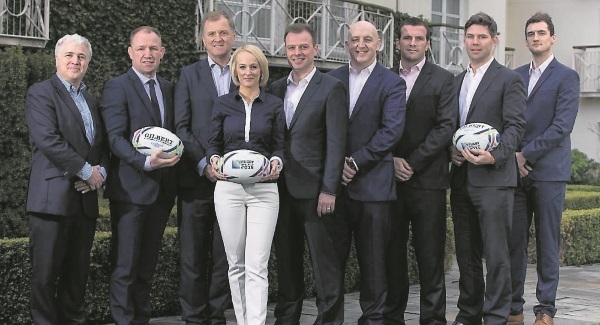
September 1st. A big day. Joe Schmidt has just announced his squad for the Rugby World Cup and an event that had tantalised and teased for so long, through two successful Six Nations campaigns and a summer of low-key but burgeoning optimism, is almost upon us.
Finally.

In Ballymount, off Dublin’s M50, it is just another day in the run-up to an event for which they have been preparing since April of last year when it was announced TV3 had secured the Irish broadcasting rights for what was confirmed as a record sum in this market.
The exact figure has never been revealed, but there is no disguising just how big the tournament is for the free-to-air operation which will broadcast all 48 matches live, unlike in 2007 and 2011 when they and then RTÉ farmed out a slice of the pie.
“It’s a huge event and hopefully one that will capture the imagination,” says Head of Sport Kieran Holden. “Some people talk about this being a relaunch of TV3 and we are throwing as much as we can at this to make it successful. If Ireland has a good World Cup, we will be able to hang on their coat tails a bit and if they have a bad one we will also be hung on their coat tails as well.”

There is no disguising the hope invested in the tournament. Backdrops and adverts for their coverage are dotted liberally around the buildings and the new HD studio is the biggest TV3 have ever utilised for a home-produced production. Long criticised for the quality of their sports sets, the new model (a big, brashy design which is also used for their Tuesday night Champions League coverage) is an obvious improvement with its sense of space and use of intelligent lighting.
Piero Analysis Software, the 3D on-screen graphics used to help analyse the action, has been also introduced. It is all the sort of stuff viewers tend to notice only when it isn’t there or used badly, which is what makes the upgrades all the more crucial.
“We’ve got the toys, all the tricks,” says Holden, but gizmos and gadgets will go so far. TV is about people, first and foremost, and the station has brought in faces behind the scenes as well as front of camera with the sort of ample experience required of what it is like to bring rugby and soccer World Cups to a national audience.
Head of broadcasting Niall Cogley has years of sports broadcasting knowledge from his times with RTÉ and Setanta and numerous others with the specialist technical expertise required across the sector have been targeted and brought on board to cover the six-week duration. Conor McNamara is on loan from the BBC as lead commentator and Stuart Barnes from Sky while the likes of Keith Wood, Matt Williams and Hugo McNeill are experienced pundits who will be joined by new faces including Shane Jennings and Peter Stringer.

Still, there’s no denying the news of TV3’s successful rights bid last year was met with a sense of underwhelming acceptance on various websites and chat rooms, with many harking back to the ’07 tournament which everyone accepts could and should have been covered far better.
Holden wasn’t involved back then. Yet, recently arrived in Ballymount after stints with the BBC and Sky, he was close enough to the action to see the shortcomings and the reaction to them and he makes no bones but that the barbs stung.
Ireland’s implosion under Eddie O’Sullivan on the back of so much pre-event optimism didn’t help the nation’s mood when judging the output, but Holden points out TV3 was not even 10 years old at the time and that lessons have been learned.Six years as a GAA championship broadcast partner have been banked since and they were the host broadcaster for the 2011 Europa League final held in Dublin with the responsibility to beam those pictures around the rest of the continent.
“We talk about Genesis Reports: it didn’t go as far as that, but before we got the rights we learned what we did wrong and what we did right and we are trying to build on that. We are a more mature broadcaster now. We’ve all grown up and we are in a better place than we were in 2007.” There will still be ads. Lots of them, again. As a commercial entity it can’t be any other way - “You have to pay the bills,” says Holden. Yet he promises there will be more than enough time for analysis to live and breath, another criticism of yore.
Day one next Friday will offer five hours of air time with a build-up show, coverage of the opening ceremony, England v Fiji live, and all of that followed by an hour spent looking ahead to Ireland’s Pool D bow against Canada the following day.
Posted by TV3 on Friday, September 11, 2015
“Last time we had Coronation Street and Emmerdale so we were hampered,” says Holden. “We had to do things around that. Someone else was playing the tune and we had to skip to their beat. This time we got the rights and had the schedule so we could put this in before anything else and ask: ‘well, how long do you want to be on?’” The public will answer that, but Holden insists TV3 are ready.
Over to you now, Joe.

Mark Lawrenson recently coined the word superbole, a device that might do justice to the sheer scale of hyperbole Ryle Nugent is capable of come ‘World Cup time”.
In Ryle’s absence, there is no guarantee any commentator will greet kick-off with the words: “It’s time to unleash the dogs.”
Brian O’Driscoll has been signed by ITV alright, but will he have the space to show his stuff, denied BT Sport’s airport hangar studio, complete with half a pitch?
There are people out there who rely on Drico to explain things like jackaling by rolling up his sleeves and threatening to burst his tight trousers. Maybe that’s what jackaling means.
Watching a rugby match nowadays invariably involves long stretches spent watching a man looking up at a big screen, waiting for another man to tell him what to do. It’s much like watching Soccer Saturday, with Merson looking to Stelling for guidance. In theory, the TMO is supposed to help out, but it’s more likely that referees are listening for Donal Lenihan’s typically booming instructions from the gantry, keen to move things along: “Come on, man. How forward is that?”
We have taken it for granted, for too long, that every rugby international would bring us 80 minutes or so closer to a complete understanding of the human condition. To where will we turn without this sort of spiritual and physiological guidance?
Tom McGurk: “Where does defence come from?”
Conor O’Shea: “The human heart.”
We will still be able to watch most matches progress via a long series of aimless kicks downfield. But no longer can we rely on a tense half-time exchange of tactical bon mots...
George Hook: “Those who ignore history live to repeat it.”
Conor O’Shea: “Those who live with history will never achieve anything.”
Is there anyone out there prepared to endure 80 minutes of rugby without first being treated to the sight of Tom McGurk lounging in an arthouse cinema, reflecting on where everything has gone wrong:
“Where have the exotic French matinée idols gone? The days of champagne rugby? La belle France?”