Robshaw developing tunnel vision
“It’s important to remember that back-stabbing to back-slapping is just a heartbeat,” says O’Shea in the board room at Harlequins’ training ground. “That’s sport. The knives are out, but in a second the knives go back in.”
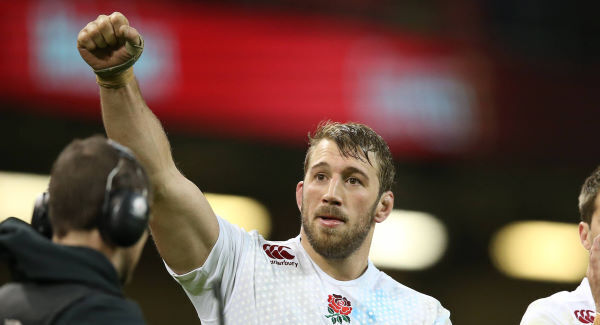
Robshaw knows that better than anyone. Heading into Sunday’s huge Six Nations clash in Dublin, he is seen as England’s inspirational leader, the man who stood up to the Welsh in the Cardiff tunnel.

That is in stark contrast to a couple of years ago, when Robshaw was seen as a potential weak link, a faultline in the England side that could be exploited.
What has happened, say those who know him best, is that everyone else has simply come round to Robshaw’s way of thinking — as they invariably do.
“He is the same Chris I first met five years ago,” says O’Shea. “You’ll meet him in 20 years time and people will have given him accolades as England captain for whatever happens from here and it won’t make any difference. He’ll still be the same Robbo. He’s just a special character. That’s why people follow him.”
Robshaw has certainly not had it easy. He was just five when his father, Alan, died from a heart attack. His mother, Patricia, raised Chris and his two brothers as well as helping to run two nursing homes.
“She has an incredible work ethic and I am sure that does filter down,” Robshaw has said, and it was that work ethic which first alerted Harlequins Academy coaches to a young flanker coming through the ranks at Millfield School, in Somerset.
“He wasn’t the quickest, although he was quick enough,” recalls Colin Osborne, formerly academy manager but now skills coach at Harlequins.
“It was just that he worked and worked and worked, and wherever the ball was he hunted it down in attack and chased the opposition down in defence.
“That is what alerted us to the fact he would succeed as he had that personal drive and was prepared to back it up with hard work.”
Robshaw’s time at Millfield — a school which includes JPR Williams, Nick Mallet and Gareth Edwards among its alumni — was vital.
Aside from the sporting aspect, the school helped him overcome severe dyslexia, a difficulty Robshaw jokes he first became alerted to when he turned up at a toga party dressed as a goat.
“I don’t know if there is any top-level sportsman who hasn’t had to meet with adversity at some point,” says O’Shea. “Chris has spoken about some of the difficulties he had; family, his father, some of his learning difficulties, and injuries. You have challenges and the character people show is what will see them through the other side. Chris has met adversity, used it and it has driven him.”
He has also become remarkably adept at filtering out what Osborne refers to as ‘white noise’.
Twice appointed captain when a change of culture was required (at Harlequins after Bloodgate and England following the 2011 World Cup), Robshaw leads by example, as evidenced by the fact his tally of 45 tackles is 13 more than any other player in the Six Nations.
From being left out of the 2013 Lions squad — “I still think it was abhorrent he wasn’t picked,” says O’Shea — he is now a leading contender to captain the side in 2017.
“Chris is very comfortable in his own skin,” says Osborne. “You have to be comfortable with what you are and understand yourself otherwise you try and listen to every Tom, Dick and Harry, seeking comfort in others.”
“You can chuck garlands on Chris, he simply will not listen,” adds O’Shea. “In him I see the most unbelievable work ethic, the most humble and nice character, the most competitively driven person you will come across. If I tell him those things he will just say ‘forget it’. That humility is what you want.
“He has grown and evolved as a leader. People say now it culminated in how calm he was in the tunnel. England still went 10-0 down but there was no panic with England. He was very, very calm.”
Ah, the tunnel. Perhaps the defining moment of Robshaw’s tenure as England captain so far was the moment when he ‘stood up’ to Wales in the tunnel, refusing to take to the pitch in Cardiff in Round One until their opponents were ready.
It is already being talked about as a statement of intent, a sign that England will not be pushed around anymore.
“People will write books about it and talk about it as a seminal moment,” says O’Shea. “But ask Chris and all he’ll say is, ‘I didn’t want to be out in the cold’.”
Those who were there take it slightly more seriously.
“Robbo handled that brilliantly,” says hooker Dylan Hartley. “He shortened our time on that field environment and that atmosphere, which can distract you and take you away from the rugby.”
Now, though, to Dublin and, as O’Shea points out, a subtle shift in the usual build-up.
“For the first time in a while it’s not all about ‘the arrogant English are coming to town’,” says O’Shea. “You just don’t get that anymore. That team is embodied by Stuart Lancaster and Chris Robshaw. They are humble. They work hard. It’s very strange. As an Irishman, I think it’s terrible!”
Robshaw might have to get used to back-slapping.