Touch of class at heartbreak hotel
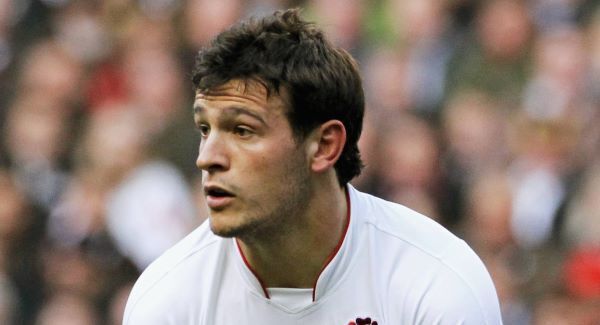
They could only stand and stare as their fate rested ultimately on the video referee.
Brian O’Driscoll would have known exactly how they felt because seven years earlier he had endured the same excruciating scenario in the same city with the same result.
Events on St Patrick’s Day 2007 bore such an uncanny resemblance to the weekend denouement that it was if the rugby gods had decided to stage an action replay and then put the boot on the other foot, sending the Grand Old Man riding off into a silvery sunset.
In the last round seven years earlier, Ireland, just like England at lunchtime on Saturday, had crushed Italy by more than 50 points, which meant France had to beat Scotland in Paris later that afternoon by a minimum of 24 points to claim the honours
Returning to their hotel, the Irish players joined the crowd craning for a view from a television in the lobby of the last eight minutes — an eternity in the Eternal City. Euan Murray’s late try for the Scots meant the title was Ireland’s until a substitute called Elvis ploughed over 39 seconds into red-clock time.
After two agonising minutes of tape analysis, the referee, Craig Joubert from South Africa, was told that the Elvis in question, Vermeulen, had grounded the ball. The French, arms raised to the skies, were champions. The Irish, down and out in Rome, knew they had lost the title in the final fateful minute at Croke Park several weeks earlier when Vincent Clerc picked the Grand Slam out of their pockets with a late winner.
O’Driscoll missed that match because of injury. In Rome, he tore a hamstring to be replaced by an Ulsterman with a degree in theology from the Belfast Bible College. How fitting that Andrew Trimble should reappear alongside him as joint-architects of the title-clinching try, but not before everyone had to be put through the emotional wringer one last time.
Once again a French victory and the cruellest of twists for Ireland rested on the TMO, former Welsh referee Gareth Simmonds, and his verdict on the legality of Damien Chouly’s try. Some officials in recent months had played fast and loose with the forward pass, allowing the direction of the hands to cloud a simple issue.
Simmonds studied the evidence before ruling what the whole of France must have feared and the whole of Ireland prayed would come to pass — that it had gone forward. Where was Elvis when England needed him?
Back in Rome, the Red Rose brigade took it on the chin, refusing to whine or make excuses. Instead head coach Stuart Lancaster immediately congratulated the new champions as “deserved winners” and a fitting finale for “a legend of the game”.
Well done, Mr Lancaster and well said…
There was a time when the monstrosity of the French pack, aided and abetted by permissive refereeing, would terrify opponents into submission.
In the Seventies they had a collection of the toughest, meanest hombres who ever walked the rugby planet.
Gerard Cholley, ex-paratrooper and amateur heavyweight champion, once laid out four Scottish forwards at Murrayfield – before half-time. He has been heard to lament more than once that ‘the violence has gone from the game.’ Alain Esteve, the beast of Beziers, had a black beard, a Rasputin look-alike who seemed impervious to pain as the Welsh Lion Bobby Windsor found out for himself.
“He kicked me in the face once,” said Windsor, a graduate from the old ‘if- it-moves-boot-it’ school.
“When I got the chance, I booted him in the mush as hard as I could. I thought I’d seen the back of him Then I saw him get to his feet and walk back. He turned round in my direction and gave me a wink. And I thought: “Oh f*** me.”
***
Ireland had been crowned champions in Paris before, albeit in somewhat anti-climactic circumstances at the Parc des Princes in 1982.
Ciarán Fitzgerald’s team went there on a Grand Slam, lost the battle (22-9) but won the war as Five Nations’ winners.
Two more of their eight post-war titles have been won in Cardiff (1951, 2009), two at Lansdowne Road (1974, 1985), one in Swansea (1949), one in Belfast (1948).
‘Terrible commotion’ as Moss makes off with the frankfurters in Paris
As post-match Paris shenanigans go, the new champions will have been hard pushed to get up to anything quite as outrageous as the night Maurice Ignatius Keane hit Pigalle for the first time in January 1974.
Upon learning that he would make his debut at the new Parc des Princes the following Saturday, he sank a few pints in the Lansdowne clubhouse — 19 to be exact, according to those who were there.
Despite losing that opening match, Ireland went on to win the title by which time Mossie had decided to warm-up with some early celebrating.
After a fair few of whatever was on offer during the banquet at the Grand Hotel, he headed off on the town thirsty and hungry with the skipper, Willie-John McBride, in tow.
McBride “parked Moss against the wall” and went into a fast-food outlet to negotiate for a bag of chips.
“Moss kept staggering into the shop asking what was happening,” says McBride. “He saw that the guy was also selling frankfurters.”
Keane grabbed one and lurched out of the shop, unaware he had grabbed 45, the other 44 being strung together. There was, as McBride solemnly noted, “a terrible commotion”.
The gendarmerie arrived to find two monkey-suited Irishmen with their backs to the wall, one distinctly the worse for wear. McBride’s diplomacy ensured the frankfurters were reunited with their owners. How many or, more like it, how few is not known…
***
Way back in the good old days when players ate and drank what they liked, the Ireland team would dine amid the chandeliered splendour of the Hotel Lutetia as commandeered by the Gestapo during the Second World War.
Match day didn’t make much difference. Folklore has it that the Dolphin and Munster lock Paddy Lawlor lunched on a three-quarter pound steak and half a bottle of house red before the 1956 match at Stade Colombes.
“Paddy did better than we thought,” said one of his old team-mates. “He lasted until half-time but was useless after that…”
No subs back then.
No wonder Ireland kept losing in Paris but it wasn’t for any reluctance to get into the swing of things. On the night before Lawlor and the lads went down, they were feted at the Folies Bergeres and ended up on the stage.
***
My team of the Six Nations 2014:
15. Mike Brown (England)
14. Andrew Trimble (Ireland)
13. Brian O’Driscoll (Ireland)
12. Jamie Roberts (Wales)
11. Yoann Huget (France)
10. Jonny Sexton (Ireland)
9. Danny Care (England)
1. Cian Healy (Ireland)
2. Rory Best (Ireland)
3. David Wilson (England)
4. Joe Launchbury (England)
5. Courtney Lawes (England)
6. Peter O’Mahony (Ireland)
7. Sam Warburton (Wales)
8. Jamie Heaslip (Ireland)
CONNECT WITH US TODAY



Be the first to know the latest news and updates