French stealing limelight
In the aftermath of the Irish Six Nations scrum debacle at Twickenham in 2012, the cry from all quarters was, where have all the emerging young Irish prop forwards gone? The presence of overseas front rows was seen as a blight on our game and the future looked bleak. Over the last 12 months, however, a number of shining lights have begun to emerge but the ultimate testing ground awaits. Whatever we think of the relative merits of the French and English clubs, the one thing you can take with certainty is that all will carry a potent scrum.
That is why the Heineken Cup provides the ultimate testing ground for the young aspiring prop. This time last season, Dave Kilcoyne was thrown in at the deep end against Racing Metro at the Stade de France. His performance that day was the one that convinced he was ready for the step up to international rugby. Cian Healy was tested younger than most a few seasons ago and having been on the receiving end of some harsh lessons against the likes of Toulouse, emerged stronger for the experience.
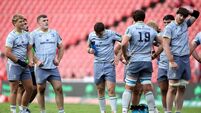
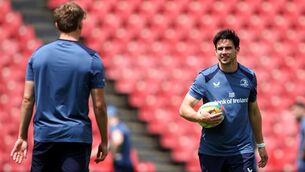
Over the next few months, Munster’s James Cronin, Stephen Archer and possibly James Ryan along with Leinster’s Jack McGrath and Martin Moore will face an examination like never before. How they cope will shape their future. The education they will get over the next few months is worth years on a scrummaging machine. A fresh-faced Marcus Horan, on his debut away to Colomiers back in 1999, performed heroically in an injury crisis on both sides of the scrum in Munster’s first ever Heineken Cup win on French soil. You just knew from that moment he had what it takes. The Heineken Cup has that effect.
For months now we have been drip fed with a constant diatribe on the ills of the Heineken Cup from a plethora of senior figures within the club game in England with the RaboDirect Pro12 sides getting both barrels right between the eyeballs. With off-field European negotiations grinding to a halt, it’s time for the six Aviva Premiership sides in this year’s tournament to show that they too are worthy of their presence in this great tournament. You have to go back to 2007 to find the last English winner and despite qualifying by virtue of a top six finish in their over-hyped domestic league, many of their recent participants have been found badly wanting, even in the pool stage.
Of their six entrants this time out only two, Leicester Tigers (twice) and Northampton, have won the Heineken Cup, ironically all of those in succession between 2000 and 2002. Of the remaining four, Gloucester and Harlequins have achieved nothing of any significance despite being frequent participants. Exeter haven’t been around long enough to be a force while Saracens at least have reached the last four twice.
Mark McCall’s men look serious challengers this time out but despite the propaganda peddled about the English clubs being hampered by a fear of relegation, if you have qualified as a top six side, that should not be an issue. Bottom line, the English just haven’t been good enough to lift the trophy in recent times and that has nothing to do with qualification, distribution of revenue or voting rights in the board room.
Despite their status as back-to-back Six Nations champions, on top of providing 10 starting players for the Lions in their decisive third test win over Australia, regional rugby in Wales is in a state of crisis. Should this prove to be the last ever Heineken Cup as we know it, it is scarcely credible that in its 18 seasons to date, no Welsh side has ever lifted the trophy. Even more damning only Cardiff Blues, in the inaugural decider back in 1996, have contested a final. While the Blues were robbed of another final appearance back in 2009, losing out in that awful penalty shoot by 7-6 to Leicester Tigers, the only serious contender within their three representatives this time out is the Ospreys. Should they fail this time out, one wonders how much longer the likes of Adam and Alun Wyn Jones, Richard Hibbard, Ian Evans, Justin Tipuric and Dan Bigger will hang around. For Welsh rugby to survive and hold the interest of the next generation of supporters, especially with both Swansea and Cardiff now playing Premier League soccer in England, the brightest young stars have to be kept in the valleys.
With Jamie Roberts, James Hook, Dan Lydiate, George North, Luke Charteris and Mike Phillips already having flown the nest, success at international level has proved insufficient to keep their best players at home. The Ospreys have the capacity to change that, despite being placed in a very difficult pool alongside Leinster, Northampton and Castres. Should they fail once again, then it’s only a matter of time before their Lions seek pastures new and Welsh rugby will ultimately suffer.
The fact that people like Maurad Boujellal, Jacky Lorenzetti, and Max Gauzzini became household names in European rugby bear testament to the fact that the age of the benefactor is a live issue in French rugby. A bit like Roman Abramovich at Chelsea, nobody doubts that, despite his lofty status as French national coach for over eight years, Bernard Laporte makes very few key decisions in Toulon without deferring to a man who made his fame and fortune selling comic books.
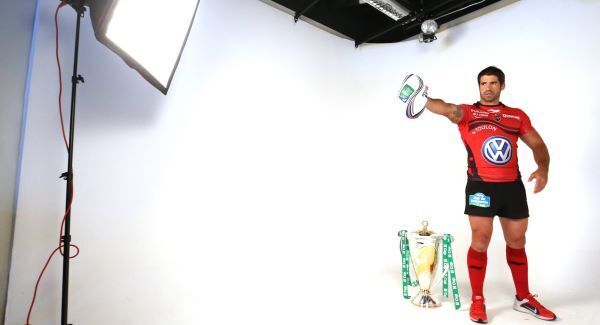
Likewise before Jonathan Sexton and Ronan O’Gara set off for Paris, the man they had to meet was Lorenzetti, a property tycoon reputed to be worth in excess of €700m. These are the men, along with high-profile business men such as Bruce Craig and Nigel Wray in England, who now seek to determine the path of the professional game in Europe. The face of the French domestic game has been altered appreciably by the vast amounts invested in the likes of Toulon, Racing Metro, Clermont Auvergne, Montpellier and Stade Francais in the last few years. Yet it is fair to say Toulon were the first of the financial giants to conquer Europe.
Up to that point, the only French side, apart from Brive in 1998, to lift the Heineken Cup was four-times winners Toulouse. Nobody could accuse Guy Noves’ men of winning on the back of financial clout alone. They offered so much more over the formative years of the tournament and the template for success.
Sadly, now more than ever, money dictates. For that reason alone, especially in this season of poisonous conflict, I would be far more comfortable seeing a winner emerge from one of the more traditional clubs such as Leicester Tigers, Toulouse, Northampton or any of the leading Irish sides. Even Clermont Auvergne whose financial backing rest’s with the local Michelin tyre consortium since its foundation in 1911, would tick the box nicely for me. Yet Toulon with their massive resources remain front runners. In this, of all years, that would not sit well.
CONNECT WITH US TODAY



Be the first to know the latest news and updates