How long before trainers employ S&C coaches for their jockeys?
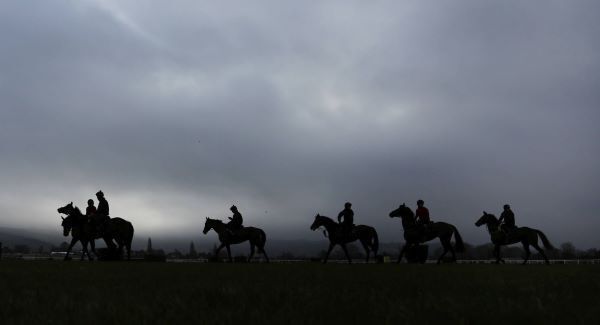
A culture of innate modesty and resilience among jockeys has resulted in a huge under-appreciation of the extraordinary physical demands placed on them.
When the famous roar goes up for the Supreme Novices’ Hurdle at 1.30pm tomorrow, it’s game time.
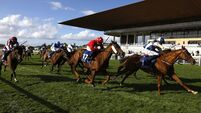
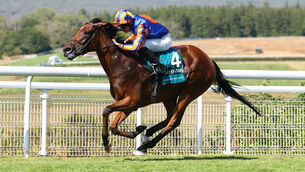
Cheltenham preview nights now a distant memory, jockeys perched three metres above ground travelling at speeds between 45 and 56 km/hr. To manoeuvre a powerful thoroughbred up the Cheltenham hill to success, jump jockeys must be strong, flexible and balanced with high levels of coordination and fitness.
Despite the international popularity of horse racing and its reported worth of €1.8 billion to the Irish economy, we previously knew little about the physical demands placed on jockeys during racing.
That was until the Turf Club and the Irish Research Council came together to fund research into the physical demands placed on jockeys.
From last October to January, physiological race data on heart rate, blood lactate concentrations (both physiological measures of intensity) and hydration were collected from 10 of Ireland’s leading jockeys.
Heart rate was reported from a lightweight strap worn around the chest while blood lactate concentrations were measured using a portable analyser with blood obtained from a pinprick to the ear. The data confirms jockeys are working maximally during racing.
Weighing between 62-76 kg, they experience heart rate peaks above 90% of their maximum rate. Understandably these peaks are seen in the final furlongs where jockeys are pushing out in competitive finishes. When we compare the data obtained to field sports such as Gaelic games or soccer, we see similar peak heart rate values are reported. The average heartrate experienced by a jockey, however, is higher than athletes in field sports. Although these pitch-based athletes experience longer game durations, we must be cognisant that jockeys can ride in multiple races in a day, for several days during the Festival.
Sean Flanagan partners Road To Respect in the Gold Cup on Friday.

Over an extended three-mile, two-furlong trip, we now know longer race distances require greater perceived exertion and physiological output by the jockey.
I first monitored Sean racing on a dull day in October. He returned to the weighing room in Mallow blowing hard after winning on He’s No Molly for Noel Meade. Pushing out hard for the final three furlongs and after cutting weight that morning, he was visibly shattered. Returning from a long injury the week previous, his fitness levels were admittedly low — “I hope I didn’t break that machine Mikey”.
The heart rate monitor, though not broken, had reported numbers in line with Sean’s concerns. Unlike that day in October, Sean is making the trip across the pond in peak physical condition.
Visiting the majority of weigh-rooms across the country over the last 12 months, you get a unique insight into a jockey’s life. It’s easy to forget with the bright lights of the Festival on the horizon that jockeys are working 30-40 hours a week in addition to racing. Many jockeys like Rachael Blackmore, who also participated in the study, work freelance meaning they ride out lots (horses) for multiple trainers. Racing is one of the only sports where men and women compete off equal standing, Rachael spends a large number of hours commuting hundreds of kilometres to ride out for trainers in multiple counties.
She doesn’t complain. None of the jockeys do.

Race form, ground conditions, race distances among other variables will be considered by punters who try to solve the annual Cheltenham puzzles presented by the four days of racing.
However, how many of the punters are considering the symmetry between horse and rider as a variable? The level of athleticism jockeys possess is often unbeknown to them. This is evident from both the physiological data and informal conversations in the weigh room when communicating the results.
Research published last February by the research team presented evidence that riding out each morning does not sufficiently prepare jockeys to meet the higher intensity demands of racing.
In advance of Cheltenham, it is currently being advised to both participating and non-participating jockeys in our research that additional fitness activities such as high intensity interval training (HIIT) will increase fitness and reduce the time it takes to recover between rides at the Festival. The jockey scene in Ireland has never been as competitive and jockeys are realising sports science may provide an edge.
The perception of the jockey as an athlete is not a common one in the industry and this causes difficulties when providing sport-specific racing preparation guidelines. Although not yet commonplace, I envisage that trainers will soon hire Strength & Conditioning experts to ensure their jockeys are ahead of the chasing group. Fortunately for jockeys in Ireland there is a supportive performance pathway in operation that was developed as a result of the years of research completed by the IHRB Jockey Research Group on jockeys health and performance.
The Jockey Pathway’s primary goal is to ensure all jockeys have access to a professional support system which will enable them to achieve the highest standards and prolong their careers in racing. In addition to psychological, nutritional and medical services which are free to all licensed jockeys, the strength and conditioning programme headed by Wayne Middleton in RACE is becoming more and more popular. With support and funding through the CARE department in HRI, individual programs for jockeys are provided which can enhance strength, balance, and mobility while also reducing the risk of injury in a sport with frequent falls.
A combination of modesty and resilience in jockeys has resulted in the industry underappreciating the extraordinary physical demands they are exposed to while racing and working. The research we are doing is currently providing imperative data from which sport-specific training and performance testing guidelines can be established to improve jockey performance. Racing is one of the most physiologically demanding sports for athletes. Cheltenham is one of the most physically demanding weeks for jockeys. Sean and Rachael are ready.
The author is a PhD student in the Department of Exercise and Sports Science at Waterford Institute of Technology and a Hurling Coach with Limerick GAA.