Rachael Darragh: 'The highs make it worth it but there is so many lows'
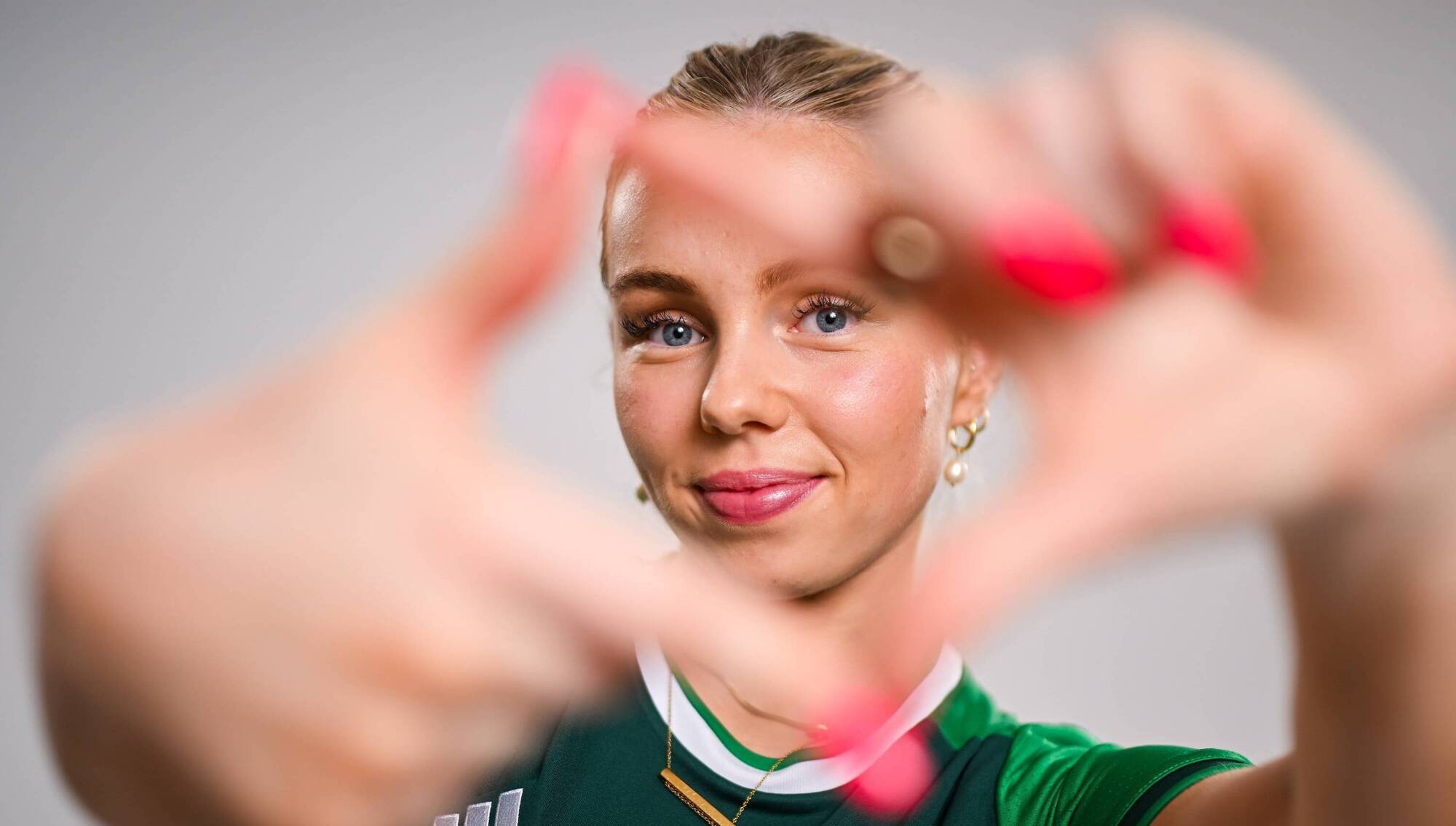
FAMILY AFFAIR: Rachael Darragh during the Team Ireland Paris 2024 team announcement. Picture: David Fitzgerald/Sportsfile
Happily for Rachael Darragh, badminton is an indoor sport. The 26-year-old was spending the final few days of her Olympic preparation at Sports Campus Ireland and the rain outside is almost biblical. Has been for days. Rumours, thought to have originated with the swim team, have it that an odd-looking bearded man has begun to herd animals two by two on to a newly built wooden boat across the road at the aquatic centre.
But on the warm dry badminton courts in the indoor arena the only things being herded are lines of excited children. Darragh and her colleague, Nhat Nguyen, the only qualifiers from Ireland for the women’s and men’s singles in Paris, are happily signing autographs and posing for ‘selfies’ with the young hordes from the school’s programme who have turned up to admire their heroes at an open training day. Their beaming, curious faces remind Darragh of her own first baby steps in the sport.
“One of the first things that really sticks out in my head is when Chloe and Sam were being coached in Raphoe badminton club, my hometown club,” she remembers. “I was so little and I was there picking up their shuttles, but I was watching every single thing they would do and everything that they were being told by the coach. That's like my first real clear memory of Badminton. I think that's where the drive started. And then the next real thing that sticks out in my head is watching Chloe in Beijing. Watching her on the TV at home in my kitchen I was like, okay, that's what I want to do. To have those role models and see that that's possible, it's really, really, really nice to know that you can do that from such a small place.”
The ‘Chloe and Sam’ she speaks of are her aunt and uncle Magee, both top class international badminton players who won many medals domestically and at international level. Chloe represented Ireland in Beijing (2008) where she became the first ever Irish woman to win a match at the Olympics and subsequently competed at both the London and Rio games.
Raphoe, population 1089, is half an hour from Derry, 15 minutes to Letterkenny, and one of the more unexpectedly remote locations to emerge as an epicentre in Irish sport. The badminton infrastructure is sparse, consisting of just one court in the church hall, which was, as Darragh recalls shiveringly, ‘often freezing cold.’ With her aunts and uncles so prominent in the sport was there always an expectation that young Rachael would join the family trade?
“I wouldn't even say I was expected to play,” she says. “I think it was just when you see everything that they've done, European medals and everything. I have three other siblings and they’ve only ever played for fun, but still love it. So, it was always my own choice, which I think is really nice because I wanted to do this and I've done it.”
She remembers Uncle Sam working on her technical abilities when he was at home then her mother, Naiomi Magee, helping out an early coach, Tom Causer who travelled to Raphoe from his base in Lisburn. Eventually she improved enough to begin a full athletic immersion in Dublin and improved again to domestic and international success and ultimately to a seat on a joyous flight to Paris.
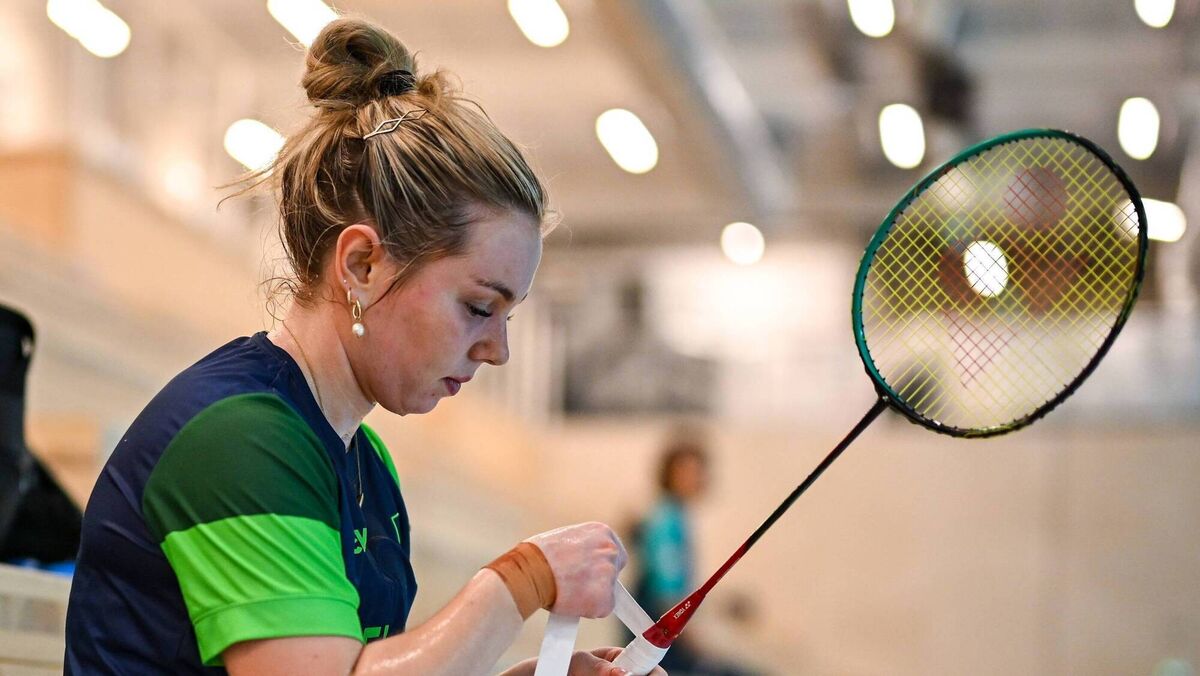
She acknowledges the patchwork quilt of mentors, supporters and coaches who helped buy her the Olympic ticket. “I think my career’s been different, there's been so many people that have given me little bits here and there and its so important to take a little bit from everyone. But I would say the move to the centre here and Iskander (Zulkarnainar), my coach now, really pushed my game on.”
While badminton can be lucrative if you are a superstar in one of the obsessed nations such as China, Japan, Korea or Indonesia, every ranking point, tournament placing or euro of prize money or sponsorship is hard won when you come from Raphoe. Rachael Darragh has learned the tough way that gaining prominence in the sport is a brutal game of snakes and ladders, steeply up, steeper down.
“Badminton is a sport that has so many lows,” she acknowledges. “The highs make it worth it but there is so many lows. Like the qualification process - you're paying twenty-five tournaments a year minimum, which is nearly one every second week. You're not going win in all of them so something I've really taken a lot of time and effort and try to improve this year was my mentality.
At the start of qualifying, I struggled a lot with that. You have such a team around you but at the end of the day, you do it for yourself, it is an individual sport. It’s an area of the game that, I think is overlooked a lot.” The prospects of Rachael Darragh or Nhat Nguyen (world ranking, 43) going deep in the competition is dependent on the kindness of lady luck and their round robin draw. Darragh is realistic about the challenges that lurk between her and a podium finish but still can’t hide the gritty determination that drives her forward, drives her to be better, drives her to be her best.
What does she feel are her strongest attributes as a player?
“There's a lot of technical stuff. Every single corner has six or seven shots, so that's a lot of shots,” she explains. “You need to be extremely agile and flexible and be able to move very well, you won't get away without that. Your tactical awareness needs to be quite good when you get to this level. I think you need to like the stuff you practise in training, these drills you practise teach you how to adapt in a match, to put those things into your match. Don't just keep doing things over and over. Do things right over and over.” With the badminton competition starting on day one of this year’s games, Rachael Darragh is not yet sure if she will be able to take part in the opening ceremony even though she would love to absorb the full Olympic experience. It is something she has dreamed of from an early age, something she still dreams of on peaceful long walks on lonely Donegal beaches.
“You don't just decide on a random Tuesday that you want to be in an Olympian,” she says.
“That's been in my head since I've been so little. It’s the discipline you need on your bad days, when you're not feeling good, but you turn up, you give a hundred per-cent. And I think that is so important because those bad days and tough times is what gets you to where you are now. It is the drive, is the passion inside you, it's the want to get to the goals you’ve put on paper, you want to achieve them and you will do anything to do that. I want to go there and perform to the absolute best that I can. I want to go there and be the best version of me. And we'll see from there."
CONNECT WITH US TODAY



Be the first to know the latest news and updates