The monsters of Oakmont: Three key holes
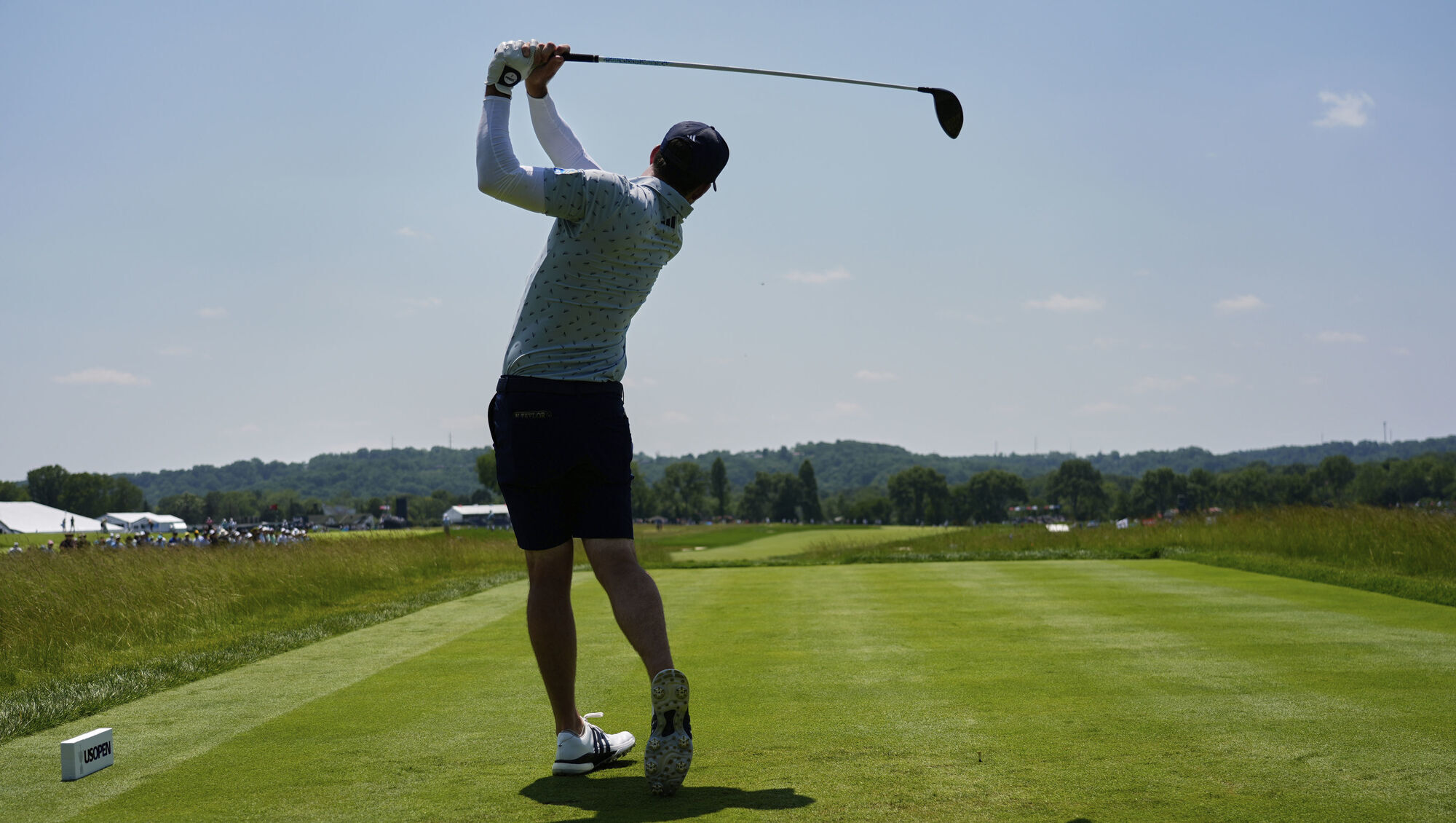
Nick Taylor, of Canada, tees off during a practice round ahead of the U.S. Open. Pic: AP Photo/Carolyn Kaster
— From the very get-go Oakmont dispenses with the faff. The most stripped-bare test in golf doesn’t need to indulge in something as fancy as giving its holes names. So, you begin on the 1st.
And it lets you know exactly what you’re in for over the next 18. Seen by many as the toughest opening hole in golf, it lived up to that reputation the last time the US Open visited. Back in 2016, Shane Lowry was just one of three players in the top 20 who played it under par.
For most it was a rapid reality check, with a scoring average of almost 4.5, a full half-shot over par. But watch a flyover and you’ll wonder why? It’s a downhill, straightaway par 4.
The test is its narrow fairway and all of the peril either side, bunkers and that brutal rough waiting. The partially hidden green deceives too with anything off speed or target ready to run off the back. US pro Zac Blair took a novel approach in Tuesday practice, going with a putter from 122 yards back and sending it in to 15 feet. Imagination will be required early and often this week.
.@z_blair from 122 with the putter on 1 at Oakmont….pretty good. pic.twitter.com/POSQjsOh3N
— Andy Johnson (@AndyTFE) June 10, 2025
— Statistically there will be many tougher holes on the track this week. But none are more iconic. Think the Amen Corner at Augusta, the Old Course’s Road Hole, the 17th at Sawgrass. That’s what the Church Pew bunker means to this place. Oakmont was originally the work of Pittsburgh steel magnate Henry Fownes, the only course he ever designed.
If you’re gonna build one, make it a good'un. It was Fownes’ son who was responsible for the sprawling 108-yard long bunker which takes up 28,000 sq ft between the 3rd and long 4th. It features 13 curving ‘pews’, each three feet tall.
Hugging the entire left side of an uphill par-4 with a blind tee shot and hidden green, the trap has the potential to make a bad start a truly miserable one. Better to pray for divine intervention and steer clear.
— The second half of a vexing pair of holes at the turn, the first test on the back nine has changed significantly since 2016.
As part of renowned architect Gil Hanse’s recent renovation, a new ravine now cuts the fairway in two at a brain-tickling point, 320 yards. The game’s biggest hitters will face a tempting conundrum, take it on and be left with a potentially much easier second into another vexing run-off green or play it safe with a fairway wood and land around the 300-yard mark? Xander Schauffele was asked his opinion.
“Take on the ravine? No,” he said. “I think Bryson is the only one who would think twice about carrying it…” We know one other reigning major champion who’d certainly give it a go.


CONNECT WITH US TODAY



Be the first to know the latest news and updates