Why Irish golf faces a decade long road to recovery
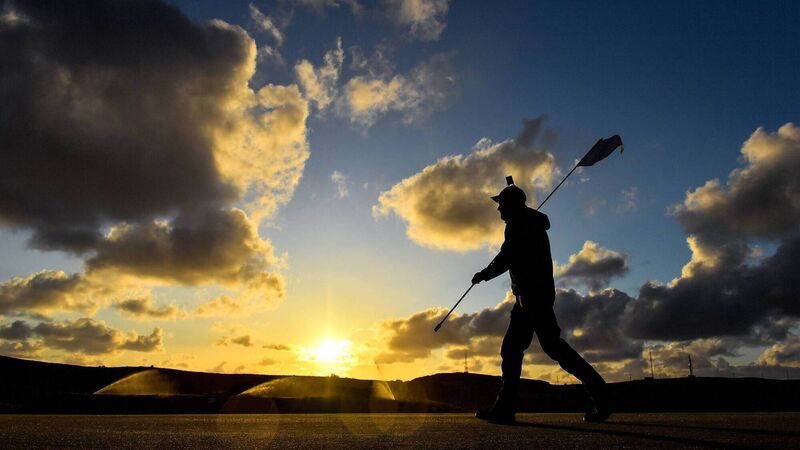
Course superintendent of Howth Golf Club, Ger Morgan works on the 11th green at Howth Golf Club in Dublin. Retaining new members and green fees from visitors are now key to clubs survival post-pandemic. Picture: Brendan Moran/Sportsfile
Irish Golf is facing into a double jeopardy which will test even the great recovery skills of the game.
The first hazard comes on the back of what is a much worse-than-feared ‘return-to-normal’ forecast by tourism experts, which will may have significant impacts on the golfing segment.
The Irish Examiner has learned that a specialist Department of Tourism unit — the Recovery Oversight Group — has forecasted that it will take up to a decade for Irish tourism to return to normality (pre-Covid levels).
The second challenge is a feared plunge in the numbers of those playing the game after a huge surge of enthusiasm post-lockdown saw a more than doubling of participation figures from 219,000 to 520,000.
European Tour winner Peter Lawrie said he expects numbers to “drop off the side of a cliff” after artificial boost and novelty factor experienced by the game levels out.
FIRST, THE GOLF TOURISM CHALLENGE
The 10-year nightmare scenario for Irish tourism will have impacts on all segments of incoming international travel — but even those working closely within the Recovery Oversight Group were taken aback by the lengthy forecast.
Such dire predictions threaten golf’s recovery significantly, and more broadly on the awaited return of the (overall) 11 million tourists who came here in 2019 – pre-pandemic.
The Department of Tourism has not put a figure on the financial impacts of any slow return of golf visitors to these shores — 50% of which come from the US.
In 2019 the value of golf tourism was worth €300m to the economy — with exchequer benefits of approximately €70m, with that figure expected to rise as Ireland looks to host a number of major golfing events in the years ahead.
HOW MUCH OF A BLOW TO GOLF IS A SLOW RECOVERY FOR TOURISM?
Any setback to the levels of full recovery will be painfully felt, but according to the Department of Tourism, golf may be in a potentially stronger position than most segments within the sector.
In a statement to the Irish Examiner, the Department said: “Some segments of the (Tourism) industry, such as golf tourism, offer the potential to bounce back sooner than others.
“Fáilte Ireland partners closely with the industry to ensure that they are maximising the potential for overseas visitors into Ireland via their Golf Tourism Advisory Forum.
“Through this forum, Fáilte Ireland is currently developing a golf tourism development strategy to support recovery of this lucrative sector. Golf visitors are among the highest spenders, with a strong regional spread.”
WHAT’S AT STAKE FOR A SLOW GOLF RECOVERY?
Billions of euro in revenues, potentially thousands of jobs and serious knock-on impacts for the tourism sector in general.
A snail’s paced reboot of golf tourism, will all but eliminate hopes for the game to reach anything close to the heights of the 90s and 00s, when the segment was propped up by an inflated Celtic Tiger and monstrous investment in the sector.
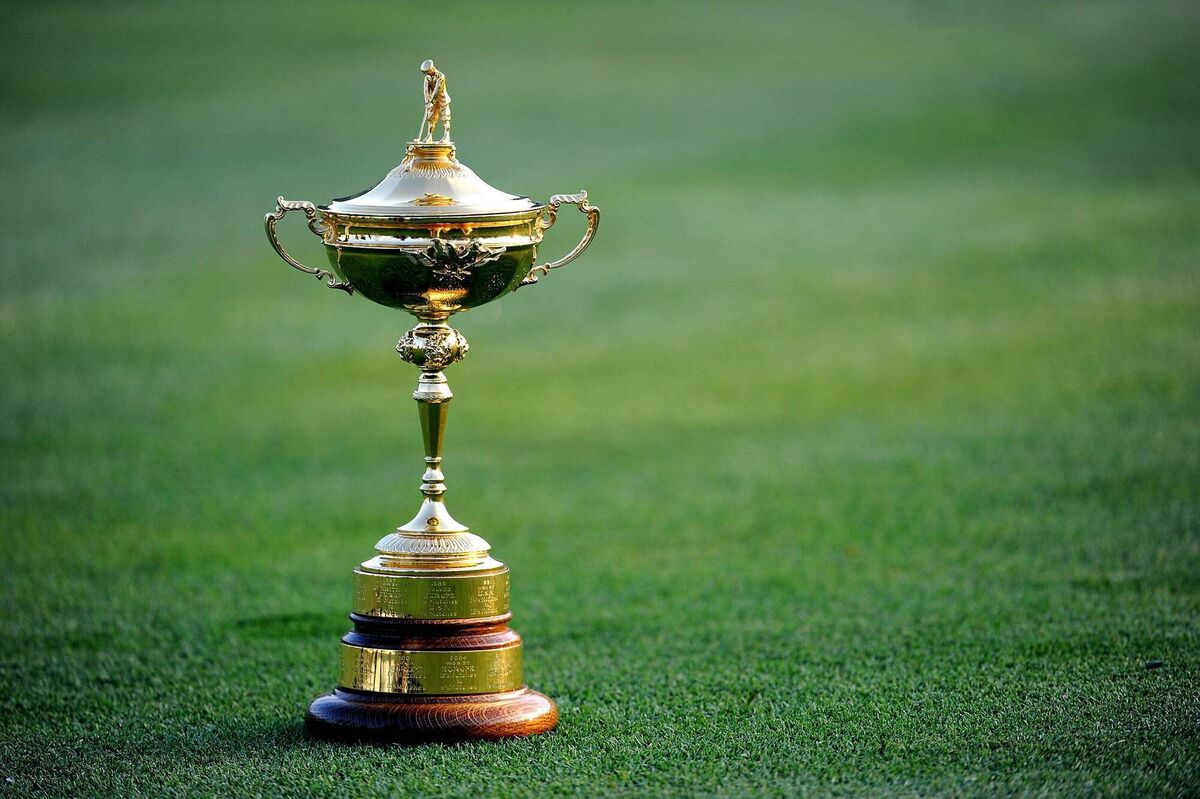
A number of five star golf courses have enjoyed, or are set to enjoy, significant private investment in anticipation of the golden tide of visibility which will wash up on these shores around the buzz of The Open in 2025 and a Ryder Cup in 2027.
The previous best comparison surrounded the 2006 Ryder Cup, which saw hundreds of millions of euro in investment in Irish super resorts as newly developed and redeveloped prestige parkland courses muscled in on their more renowned links rivals.
Leading the way were the likes of the K-Club, Mount Juliet and Fota Island as record numbers of tourists pumped up to half-a-billion euro into the economy per year.
Today the scale of investment is less, but recent developments — particularly with Adare Manor’s incredible facelift and the upcoming redesign of Druids Glen in 2022, demonstrates that serious money is once-again being dedicated to resort golf infrastructures.
For Adare it has worked spectacularly, with JP McManus using his skill, influence and investment to pull in the Ryder Cup in ‘27, while for Druids Glen the motivation will be to regain the Irish Open for multiple events – as a signpost to wealthy overseas golfers.
In sports sponsorship, and as first highlighted on these pages (July 5), the lure of a Ryder Cup to Ireland is also forcing a financial rethink for brands who typically invest in other sports, but who now see golf as an attractive, high-end option.
IS A RYDER CUP THAT IMPORTANT TO GOLF TOURISM?
‘Yes’ and ‘No’. Tourism and commercial experts will say yes, but one of the most interesting speakers in this area is golf economist, Professor Emeritus Stephen Shmanske, who told me he believes a ‘mega event’ “does not have a significant lasting effect”.
The author of Golfonomics and Super Golfonomics also believes Covid has divided the US golf visitor into two types: those who travel regularly to Ireland for golf, and those who will make one ‘bucket list’ visit here.
“Suppose I visited Ireland every year, but then Covid restrictions made me miss a year or two, this would (lead to) a direct decrease in demand,” he explained.
“Alternatively, suppose I had it on my bucket list to visit Ireland once, then the current Covid restrictions might delay my trip, but overall it would not be a decrease in demand. “With respect to the Ryder Cup, my research on mega events (The Economic Impacts of Golf Majors and Handbook of Mega Sporting Events) indicates that there is not a significant lasting effect of hosting a major competition. “Demand will certainly go up immediately around the event but over the course of a whole year the effect is negligible. “To this point, some of the bucket list people referred to above may decide to time their visit during the Ryder Cup, or alternatively, pick another period precisely to avoid the crowds and extra expense.”
GOLF’S DOMESTIC CHALLENGE
The bounce enjoyed by golf, post-lockdown — as more than half-a-million players returned to the game, or started playing for the first time - may be in line for a sharp reality check or ‘second year syndrome’.
Golf Ireland announced in May that “total adult golfers on a full-length course increased by 219,000 to 540,000”.
Domestic participation and visitor numbers are the two most powerful indicators to the health of the game here, and while tourism forecasts are challenged, the next set of data to come from the amateur game is eagerly anticipated.
Golf Ireland’s current figures reveal that one third of players to start playing the game, or return to golf, are in the highly marketable under-25 segment – a drop off in these numbers, if considerable, will be most significant..
Peter Lawrie is a key, and invested, observer and he expects a yo-yo affect in Year 2 of golf’s return.
“Covid was the best shot in the arm we ever got,” explained the host of the ‘Golf Weekly Podcast’ on Newstalk’s OTB and owner of the Spawell Golf Academy in Dublin.
“We mightn’t like it, but because of the pandemic we got a lot of people interested, to such a level of where we were with those who never played before, ‘who just wanted to get out there in the fresh air and play.
“It reminded me of January for gym members, but now that interest has fallen, and certainly it has taken two steps back of late. We’re not getting the punters who were in and I expect those numbers to drop off the side of a cliff.”
BUT THE CLUBS ARE STUFFED WITH NEW MEMBERS, RIGHT?
They are for now, but it’s the retention of members which is most significant and in Lawrie’s experience the omens are not good, with perhaps half of memberships not being renewed.
“There’s no doubt the surge has thrown golf courses a lot of new members, but the question really should be: ‘For how long?’ It’s a classic case of second season syndrome where you get in a load of new and enthusiastic members for year one, (but who don’t make it to year two).
“I know it only too well, the retention of members is very poor, and the reality is people who say ‘I am paying for golf, but am I getting that much out it now that lockdown is gone? How many are going to re-join next year — perhaps 50%.”
OK, BUT THE SUPER RESORTS WILL BE JUST FINE
Certainly the owners (Neville Hotel Group) of Druids Glen are in good shape. Having purchased the resort (hotel and two golf courses) for €43m in 2019 they’re not in it for a quick buck.
The carrots being dangled in their direction on the back of a multi-million euro redevelopment are multiple Irish Opens in the mid-2020’s, although not the four-in-a-row enjoyed by the Co Wicklow resort from 2005-09.
Druids Glen will quietly concede it is not trying to “keep up with the ‘McManuses’” —– it’s investment is multiple times smaller than that in Adare Manor — but by tweaking a magnificent golf course, it is presenting an alternative that is unmatched by most.
HOLD ON, GOLF TOURISTS ONLY WANT TO PLAY ON LINKS COURSES?
Correct. According to Peter Lawrie, and back to Stephen Shmanske’s ‘Bucket List’ bracketing of future US golf tourists, American golfers don’t want to come here and play US-style parkland courses, in the home of links golf.
“If I’m an American sitting at home, (and I) haven’t travelled in two years, playing my golf courses and thinking about heading away, I want to play links golf,” explained Lawrie.
“I want to experience links play, pints of Guinness and a bit of crack but I also want to stay somewhere nice, and this is where (Parkland) resorts could do quite well, the likes of Druids Glen, Adare and others. They’ll use these places as a base, and whether they’re going for the golf course is questionable.”


Continue reading for €5
Unlock unlimited access and exclusive benefits
Already a subscriber? Sign in
Cancel anytime
CONNECT WITH US TODAY



Be the first to know the latest news and updates