Golf’s €379m State sweetener
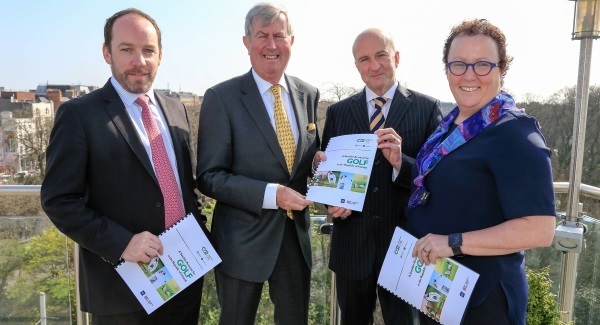
Consumers spend €379 million a year on golf in the Republic of Ireland, according to a groundbreaking report released yesterday.

Golf’s €379m State sweetener

The headline figures make impressive reading: €379m is spent annually on golf in the Republic and the tax take (corporate and value added) is €93m. Some €540m is spent on golf annually on the island of Ireland.

The findings throughout the report, however, reflect the many positives in Irish golf coupled with the opportunities that exist.

Entitled ‘A Satellite Account for Golf in the Republic of Ireland’, the report was commissioned by the Confederation of Golf in Ireland (CGI) and The R&A, and conducted by the Sport Industry Research Centre at Sheffield Hallam University. The Centre conducted a similar report for UK golf last year.

The Satellite Account technique was developed by the United Nations to measure the size of economic sectors that are not defined as industries in their own right within the System of National Accounts.

This approach enables golf to be analysed from four perspectives: consumer spending, Gross Value Added (GVA)*

, employment, and turnover.

The report shows definitively how golf contributes to our economy and, it is hoped, this can be used to attract greater investment from both the private and public sector.

In terms of consumer spending, the largest part of the Republic of Ireland’s €379m goes on club membership fees (€94m), club food and drink (€46m) and golf equipment (€39m). Based on participation rates in the sport, the average annual consumer spend per adult golfer is €1,350.

The level of participation in golf is also interesting. Overall membership numbers may be well down on a decade ago but the Republic of Ireland still has the second highest level of participation in the sport, worldwide.

The reports found that there are 281,000 adult golfers, of whom 160,000 play at least once a week. That equates to 4.5% of the adult population. In Northern Ireland the figure is 4%, and the UK (as a whole) is 3%. Only Scotland is ahead of us in the global pecking order, with 7% participation.

Based on these figures and club membership data, 4.7% of the adult population in the Republic of Ireland are members of a golf club. This is nearly one in every 20 adults, which compares favourably with England where the corresponding figure is close to one in 100.

In terms of weekly participation, golf is our fifth most popular sporting activity (out of 105), behind swimming, running, cycling and soccer.

Employment is another important element in the make-up of Irish golf’s value to the economy. There are 6,800 people directly employed in golf, with golf clubs the most significant employer, accounting for 34%. On a broader scale, that 6,800 figure means the golf industry is responsible for 0.3% of total employment, and 13% of employment in sport.

The report’s hard figures spelling out the economic impacts of golf — not to mention the health and social impacts — will enable our golfing organisations to make a stronger case for increased funding and resources.

The CGI currently has a team of just seven people and the organisation doesn’t have the resources to meet the demands of Irish golf clubs looking for programmes and ideas to help them grow. These clubs are clearly the engine for future growth so providing them with support is not only desirable it is also essential.

The ‘Get Into Golf’ campaign has been a resounding success, especially among lady golfers, but limited resources mean this campaign cannot grow at a faster rate.

More money from the public purse, via Sport Ireland, would help the game expand and, given the detailed figures, the CGI, GUI and ILGU can make that case for greater funding.

“This study proves that golf plays a far more important role in our economy than many would have expected,” said Redmond O’Donoghue, chairman of the Confederation of Golf in Ireland.

“We plan to use this study to underpin our arguments for greater support for the game of golf from both the public and the private sectors.

“It is quite clear now that golf, as well as being a healthy and enjoyable activity, makes a significant contribution to the economy.”

Professor Simon Shibli, Head of SIRC and author of the report, added: “Golf in the Republic of Ireland is more than just a sport. Our research demonstrates that it makes a measurable contribution to the nation’s economy and that golf clubs play an important role in the social fabric of their local communities. The current macro-economic conditions in the Republic of Ireland present an ideal opportunity for the nation’s golf industry to grow in future years.”

*

Gross Value Added (GVA) is defined as the profits plus wages within an industry, less an adjustment for taxation and subsidies. GVA is usually more than 90% of Gross Domestic Product (GDP), which is the most widely reported measure of the scale of an economy.

x

More in this section

Sport

Newsletter

Sign up to our daily sports bulletin, delivered straight to your inbox at 5pm. Subscribers also receive an exclusive email from our sports desk editors every Friday evening looking forward to the weekend's sporting action.

Cookie Policy Privacy Policy Brand Safety FAQ Help Contact Us Terms and Conditions

© Examiner Echo Group Limited