Staying ‘true’ proves key to Rory’s success
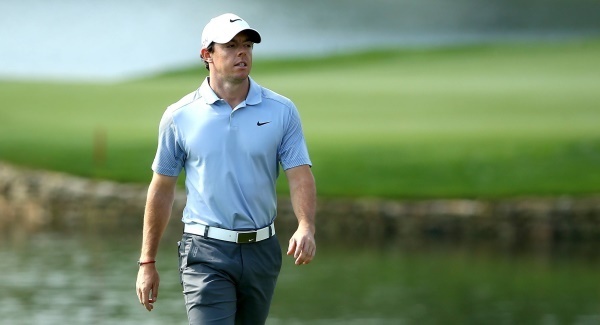
A statistical study proved that it was his play from tee to green, more so than his improved putting, that won him his fourth major title in the US PGA at Valhalla, and made him the favourite for the FedEx Cup.
His ball-striking prowess reminds us of comments made by Jack Nicklaus at the Honda Classic three years ago.
Indeed, the entire episode had its genesis in the first sit-down McIlroy had with the Golden Bear in early 2010.
“I don’t care what anyone says about the short game being the most important. It’s not,” McIlroy said in Tucson three years ago.
“The long game puts you in position to have putts to win tournaments. Guys say you have to have short game to win tournaments and it is not the case. Not at all.”
Asked about it the following week, Nicklaus agreed fully with McIlroy’s assessment at the time, which really was no surprise.
“It was me who told him so in the first place, when we had lunch last year,” Nicklaus said.
“I always thought the long game was more important. I’ve always felt that way. I never worried much about my short game and I didn’t practise it.
“I told Rory that I never practised my short game because I felt like if I can hit 15 greens a round and hit a couple of par fives in two and if I can make all my putts inside 10 feet, who cares where I chip it?
“And I didn’t enjoy practising that part of the game, I enjoyed the other part. But that was just me.”
There’s no doubt that McIlroy has improved his putting but his determination to remain true to his essence has paid dividends at a time when Pádraig Harrington has lost his PGA Tour card because his once imperious putting and short game are now unrecognisable.
Reworking his game with the Titleist Performance Institute might have made Harrington a better ball-striker but the time he dedicated there, coupled with the ban on square grooves, led to a deterioration in his game on and around the greens.
Paul McGinley spoke about this challenge recently and concluded that if he had his time all over again, he would remain true to himself.
“For me, one of the great role models has been Colin Montgomerie. People talk about Tiger and his work ethic and all that stuff but the guy who really stands out for me over the last 22 years has been Monty,” McGinley says. “It’s like climbing a tree. And so many of us — speaking for myself — in my aspirations to improve my game, you go off on tangents or different branches. Now Pádraig had a different view on this to me — the polar opposite view.
“But my view is that you tend to go off on tangents and start looking at things like fitness, like nutrition. You start looking at you schedule and all of a sudden you start to pick apart the things that are the fabric of who you are.
“Every time you go out on one of these branches, you are losing momentum. Some people say you should let the big thing remain the big thing.
“Well, the big thing is you are who you are, and it is about evolving that game and improving it, which is why I say that Monty comes to mind more than anybody because he never tried to change.”
McIlroy might have changed his physique but his game remains essentially the same as the one he started to hone with his coach Michael Bannon, 18 years ago.

CONNECT WITH US TODAY



Be the first to know the latest news and updates