From Damien Hayes to Joe Canning: The stories driving Galway's All-Ireland dream
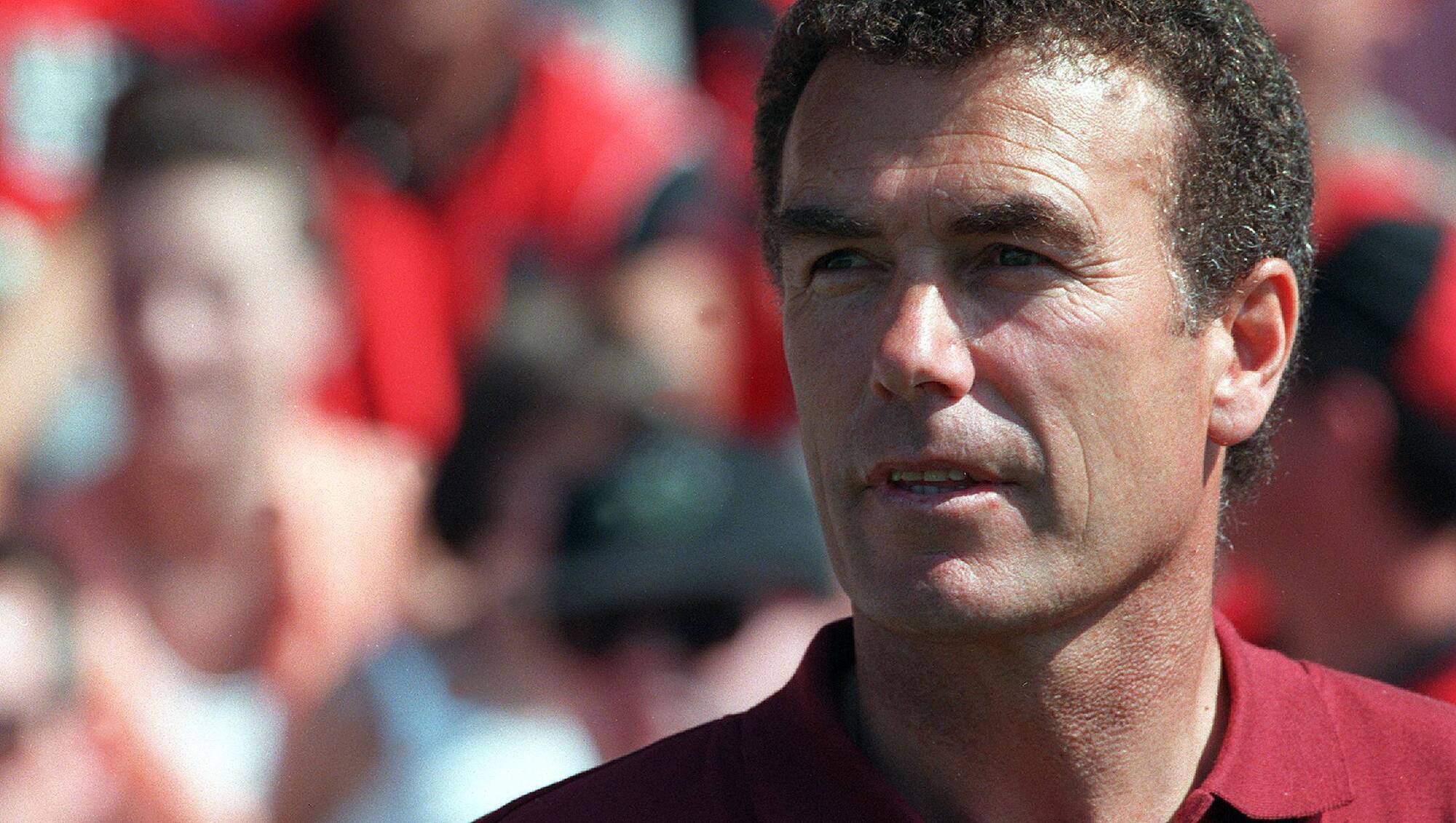
Galway legend John Connolly: When he came along 'it was a dream beyond dream to represent your county like them.' Pic: Lorraine O'Sullivan, Inpho
THE ghosts. The grief. A Galway minor team sat in silence as Damien Hayes spoke about what it meant to him to play for the county, who he was representing and how he would carry the cup up to a grave.
Hayes was an immensely gifted minor when his brother Keith died in a car crash on his way home to collect training gear.
Keith had captained Galway at minor level, was his companion on trips to the Joe Cooney hurling school in Bullaun, his team-mate on mini-sevens teams and his idol.
“We were all pretty much in tears,” recalls Tony Óg Regan, then a minor team-mate. “It was just such a different emotional edge. The motivation and passion, I’d never experienced it before. You saw that in Damien. He could go to places that pushed him to another level. His work-rate, his attitude, his goal scoring, the obvious drive. You knew where it came from.”
Hayes was able to bring a minor All-Ireland, club championship and All-Ireland club championship to his brother’s plot. He carried it with him every time they crossed the white lines.
Where you come from matters in the GAA. There is no truth more obvious than that. Each county has its own lore and heartbeat. Every one of them tries to harness it.
“I think it is a huge part of how people buy into groups, you need to understand your tradition and history,” says Regan, who works with teams as a performance psychology coach now.
“We’re different. The west, the Gaeltacht, Connemara, our past. That matters.
“We actually were always lucky to have members of the 1980s team on our backroom teams all the time underage. They were huge role models for us growing up.”
Read More
From the start, Galway’s story was anomalous. Their first All-Ireland triumph came in the 1923 final, played in 1924. It was the first title won by a Connacht county. They were due to play Limerick in a decider that almost never took place.
In June 1923, Limerick decided not to travel because of the continued detention of Republican prisoners following the Civil War. The chairman of Central Council proposed awarding Galway the title.
“Mr. Tom Kenny, of Craughwell, one of the Connaught representatives at the meeting voiced the popular feeling of his county by emphatically declaring that Galway would not take a walk-over,” noted a report in the Irish Independent that year.
“They would forfeit the award and trophies sooner than have it said that they accepted a bloodless victory.”
The western inferiority complex ran deep. As did the deep-seated resilience. In Breandán Ó hEithir’s seminal book, he recalled the cycling route from Galway through Oranmore, Craughwell, Loughrea, Killimor and into Portumna to spend the night before continuing on from there.
The Inis Mór native produced one of the finest books ever written on Irish sport, complete with vivid depictions of the suffering endured by those travelling to watch Galway lose finals, as they did in 1945.
That painful journey also carried whispers of the famous curse, attributed to a priest angered when men slipped out of Mass before the final blessing to make throw-in.
“I found the story easy to believe there seemed to be as many versions of the curse as there were locations for the original happening. I was told it happened in Castlegar (“On my solemn oath!”), Gort (“As sure as I’m standing here!”), Woodford (“May I be struck down dead if there’s a word of a lie in it”!), and more or less any hurling parish about 20 miles distance from where the teller of the tale resided.”
Every second cyclist offered the same version. It gained even more credence in subsequent years, for reasons that scarcely needed explaining.
How was that cycle to be broken? They needed examples and vision. Noel Lane didn’t play for Galway underage bar a stint with the U21s. It was while studying forestry in college that he tested himself against titans like Pat Delaney, Johnny Flaherty and more. Seeds were sown. He wanted to play for Galway and win for them.
“We won the three in a row football, they were our idols. They were gods. We were soon surrounded by men who knew what it took. John Connolly came along after that and it was a dream beyond dream to represent your county like them.”
After All-Ireland semi-finals, the likes of Séamus Leydon and the Keenan brothers would appear in the Aisling Hotel. Their encouragement carried immense weight. The only way a county on the margins could overcome its obstacles was by pulling together.
“Tipp, Kilkenny and Cork were the three premier counties,” says Lane. “Who were we to compete or beat them? Winning the National League in 1975, winning the U21 in 1972, competing in the minor in 1973, they were all stepping stones to us realising this guys aren’t eight foot ten. They aren’t giants. They are just ordinary people like ourselves.”
It was a golden generation. Their legacy is felt to this day. Regan speaks of how much they have given back ever since. How they stayed involved with teams, helped to steady the ship during internal trouble and what it still means to them.
Gradually, Galway became better at tapping into its history. There was a team-bonding session in 2010, led by Gerry Hussey, that unlocked raw emotion across the squad.
It brought them closer together. Regan still looks back on the one-point defeat to eventual champions Tipperary with lingering regret.
They have never sat easily within the sporting ecosystem, their path shaped by ever-shifting formats, structures and life in their adopted province. Crossing boundaries has long been woven into their identity.
This week, Galway submitted a panel of 39 players from 20 different clubs alongside a 24-strong backroom team.
Outside of the physios, every member of the management team is from the county. Nutritionist Niamh Mallon is from Down but now lives in Galway and plays camogie for her county.
That is something Lane sees as crucial. As a manager, he knew the importance of every person around the group.
Local legend Joe McDonagh’s son, Eoin, is the team doctor. Former players Aidan Harte, Damian Joyce and Cyril Donnellan are all part of the setup. Long-serving kitman Tex Callaghan has had many a player in the house for tea.
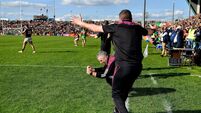
After Galway claimed their first Leinster title in eight years, players hoisted Callaghan onto their shoulders in appreciation.
“They were so important in my time,” stresses Lane. “They would communicate and talk to players in a way few others could. I got a huge amount from Dr Brendan Day and that team.”
There is no representative from west Galway on the panel. The closest is breakthrough star Darragh Neary, who hails from Castlegar, on the eastern outskirts of the city. It has not diminished the enthusiasm across the county.
Throughout the Gaeltacht this week, Galway flags have flown. Roadside jersey sellers stock green and red alongside maroon and white for the neighbours who spill across the adjoining border. Everyone senses the opportunity.
“People relate to the team in terms of how they play,” explains Rahoon-Newcastle’s Regan. “Absolutely, it is huge for a club to have someone on the panel, but there is still a huge buzz in my club this week. There is an enormous amount of work required to get to that level. It comes in cycles. The aim for clubs around the city is to keep producing those players.”
As for the spirit, it is something they have actively nurtured throughout this week.
In the Galmont Hotel on Friday night, former players David Burke, Joe Canning, Johnny Coen and Jason Flynn were presented with framed jerseys bearing their championship appearance number. Celebration came with appreciation.
A giddy crowd buzzed with the restless anticipation that comes around All-Ireland final week.
Before they left, the room was reminded of what they represent and who they are.
“We aren’t Leinster or Munster. We’re Galway.”
CONNECT WITH US TODAY



Be the first to know the latest news and updates