Christy O'Connor: GAA need to bite the bullet on video technology
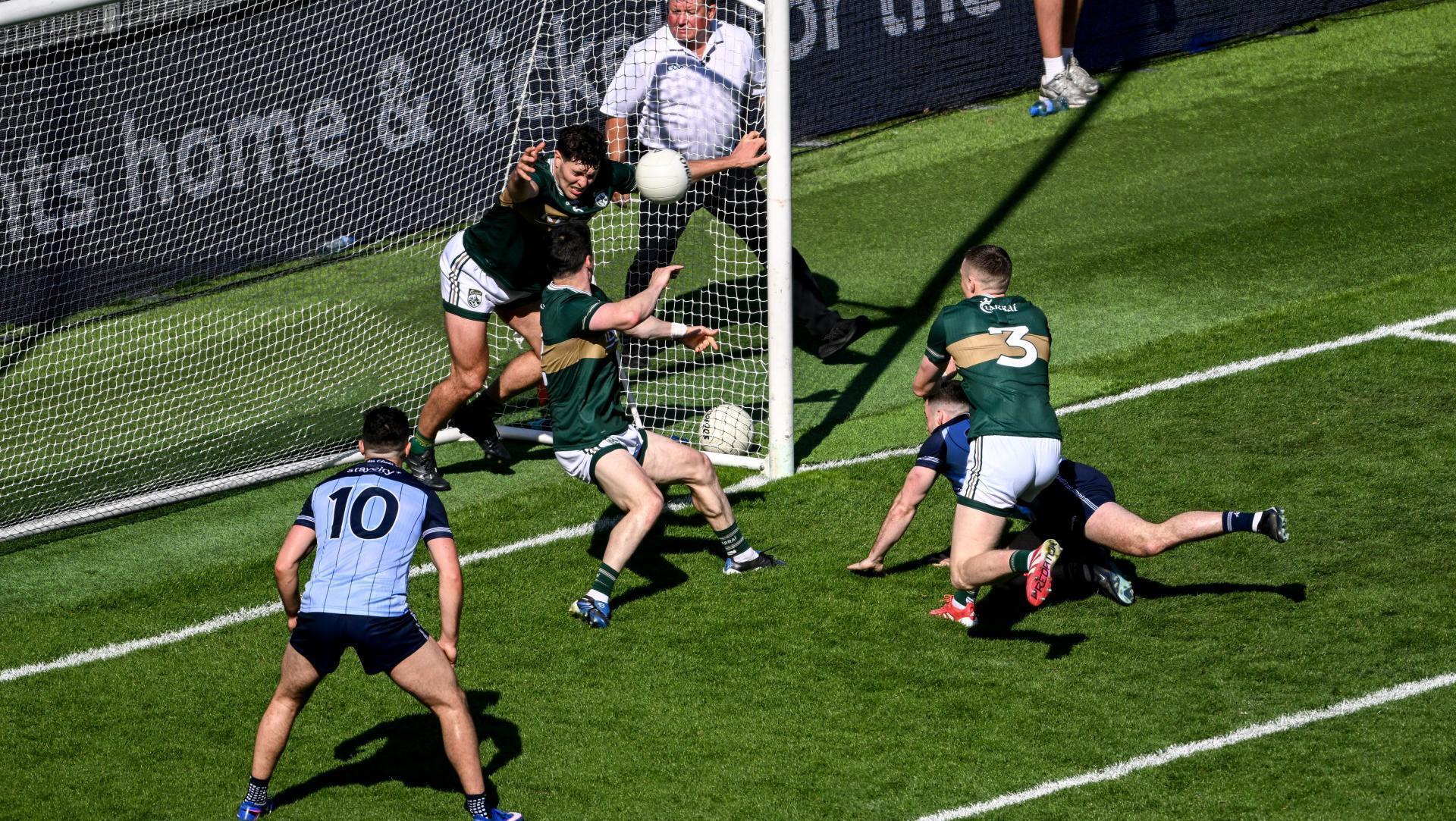
GOAL?: Mike Breen clears the ball off the line. Pic: Daire Brennan/Sportsfile

A few months after Limerick were denied a clear-cut 65 in the dying seconds of their one-point defeat to Kilkenny in the 2019 All-Ireland semi-final, their county board decided to try and make sure they were never in a similar position again.
Limerick brought a motion to Congress the following February which would have allowed for team managers or team captains to clarify a referee decision “limited to two failed requests per team per game”.
Referred back to Central Council, the motion apparently conflated Hawk Eye with other refereeing decisions not covered by the technology. In other words, it was the GAA’s way of burying something they didn’t want, or wanted delayed.
If it had been passed, the motion would have amended Rule 1.1, to allow the referee to consult the Hawk-Eye score detection system and/or match official to clarify if any of the team of officials erred in making a decision in relation to the validity of a score, or the awarding of a free, sideline ball, wide, 45 or 65, or a square infringement.
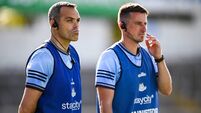
Six years on and Dublin might be revisiting Limerick’s pursuit of that rule change after Ger Brennan called for the introduction of video technology for key decisions after he felt his team were hard done by yesterday.
Read More
As well as a controversial penalty call against Peadar Ó Cofaigh-Byrne on Joe O’Connor, Seán O’Brien’s goal should have been a free out for a square ball while Mike Breen cleared a ball off the line with his head, with debate about whether the ball had crossed the line.
Brennan’s call is nothing new, especially around a ‘digital match assistant’. That model was in place for the International Rules Series between Ireland and Australia after 2008. Yet that system could only be operated at matches being broadcast live on television or matches that were being covered as live for deferred showing.
That limited arrangement will always be contentious, just as it is with Hawk-Eye, which has only been used in Croke Park, Semple Stadium and Páirc Uí Chaoimh. But there is no reason why a ‘digital match assistant’ could not be operational for so many of the live GAA matches on TV now.
Everything has to be equal in competition. But since it isn’t with Hawk-Eye – given the costs – and with it unfeasible to cover every game live, every county would surely accept a DMA system only in operation for knockout championship matches in the Sam Maguire and Liam MacCarthy.
That technological assistance has been in operation in ladies Gaelic football since 2017. In a partnership between the LGFA and TG4, the ‘score assistant’ sits in the TG4 production vans at all televised matches, and has benefit of all available television angles to help judge if a score has taken place.
The big fear with the potential introduction of any more technology in the GAA is that it doesn’t stop the flow of the game. However, ground rules could easily be established; the DMA could only be engaged at the referee's discretion; the referee could only invoke the DMA around clearly defined areas - a square ball/disputed goal or a penalty call. All of the officials, including the DMA, could initiate the DMA process, but the referee would have to remain the final decision-maker.
And looking back now, referee Brendan Cawley would surely have been delighted to have that option of technological assistance yesterday.
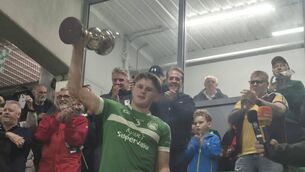
Before he presented the Tailteann Cup to Dean Healy on Saturday, GAA President Jarlath Burns posed the same question that every other person in the ground had been asking themselves across the previous 20 minutes. “What are we just after witnessing on this field?” said Burns.
Wicklow’s incredible second half turnaround against Down triggered a raw and guttural emotion rarely witnessed in Croke Park. The noise from their supporters that boomed around the ground throughout the second half, especially in the closing minutes and at the final whistle reflected a ravenous hunger, thirst and desire that could only come from a people starved of success throughout their history.
Along with Fermanagh, Wicklow are the only county not to have won a provincial title, but at least Fermanagh have had some of the big days that Wicklow could only crave; beating Armagh in the 2004 All-Ireland quarter-final before taking Mayo to the brink in the drawn and replayed All-Ireland semi-finals; drawing with Armagh in the 2008 Ulster final; reaching the 2018 Ulster final.
Since 2000, Wicklow are one of just five counties not to have reached a provincial final, alongside Carlow, Longford, Kilkenny and Waterford. But all of those counties have at least won a provincial title. Even Kilkenny, who no longer compete in the football championship, reached eight Leinster finals, winning three.
Who remembers now that Longford and Carlow qualified for the 2018 Leinster semi-finals? They lost those games to Dublin and Laois but it was a huge day out for the supporters of both counties. After beating Clare in 2007, Waterford got their day in the sun (abeit briefly) against Kerry in a Munster semi-final in Dungarvan.
Wicklow’s last Leinster semi-final appearance was in 1995, but that came off the back of one performance against a poor Westmeath team who only scored 0-3 in the quarter-final. And Meath hammered Wicklow in the semi-final.
Wicklow’s only appearance in a Leinster final came as far back as 1897. They were Leinster champions – but only for a week. A downpour caused Dublin to presume that the Leinster final would not be played. When Dublin, then represented by the CJ Kickhams club, went home the referee awarded a walk-over to Wicklow. However, a Central Council meeting a few days later ordered the match to be replayed and Dublin won by nine points.
That set a pattern Wicklow could never break. In the 1954 Leinster preliminary round, Wicklow were leading Meath by two points with time up but the referee somehow played nine minutes of additional time (completely unheard of back then), by which time Meath had edged over the line by one point. And Meath went on to win the All-Ireland.
And on it went. The Dubs only scraped over the line by two points in the 1981 Leinster quarter-final in Newbridge after a miracle save by John O’Leary in the dying moments. And O’Leary was born in Wicklow.
A week after Meath finally saw off Dublin after a fourth game in Leinster in 1991, Meath were haunted to scrape a draw against Wicklow before winning the replay by three points.
It took Wicklow until 2007 to win a game in Croke Park when beating Antrim in the Tommy Murphy Cup final. That was Wicklow’s second national title, after the 1992 All-Ireland B success. Saturday’s win though, was on a totally different level again to anything Wicklow had ever experienced before. Especially in Croke Park.
In his acceptance speech, Dean Healy spoke about the thrill of seeing so many Wicklow jerseys on Hill 16. As Healy concluded his speech, he also mentioned Wicklow’s win providing hope to counties, even outside of his own. “If I can get up these steps,” he stated, “anyone can.”
Well said. Well done.

CONNECT WITH US TODAY



Be the first to know the latest news and updates