'We know this may never happen again' - Opportunity knocks for Danny Lynch and Dingle's 'old stock'
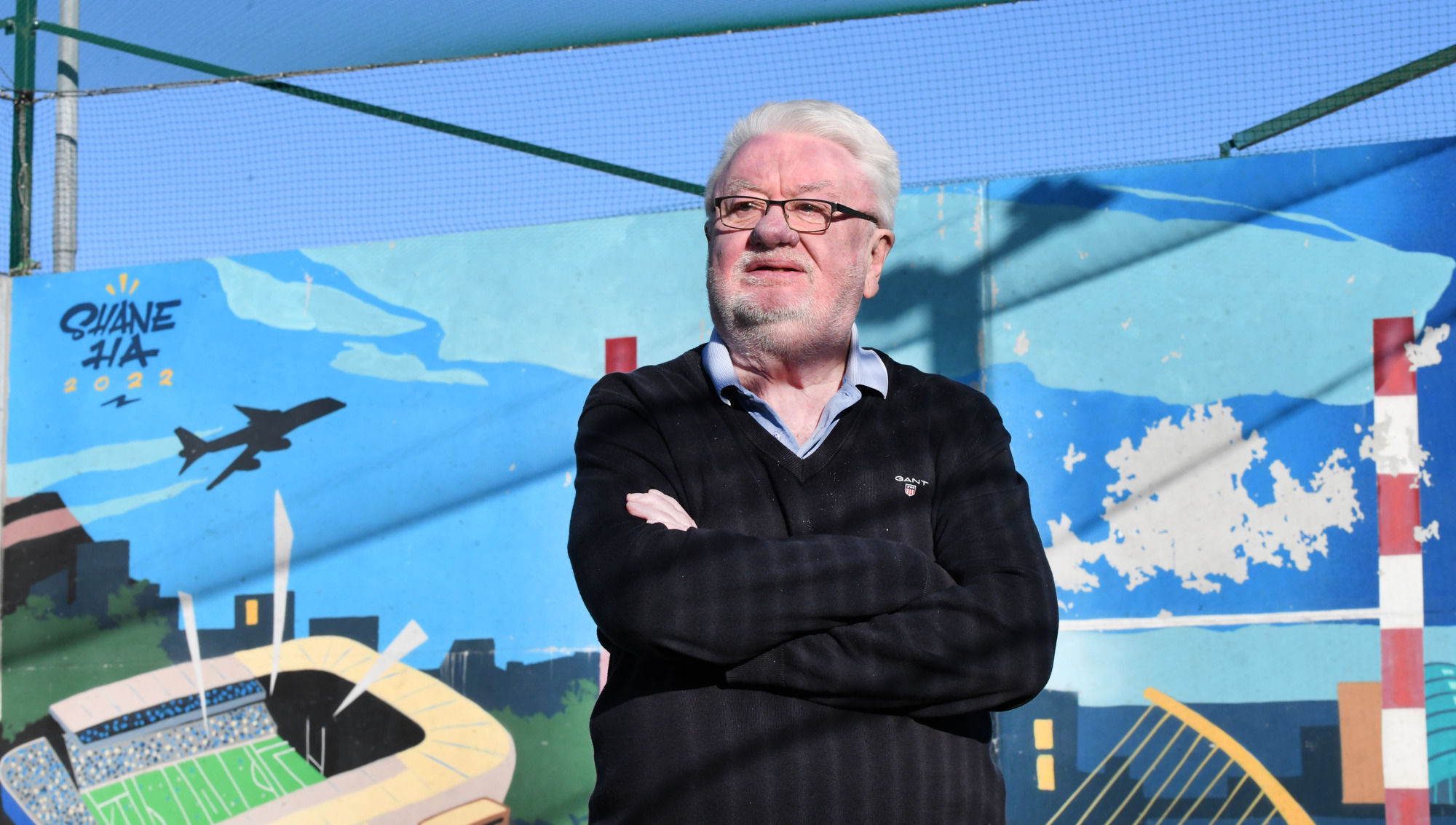
Danny Lynch, former GAA PRO, in St Jude's GAA club, Templeogue. Picture: Moya Nolan
In his 20 years as GAA PRO, “mischievous” was a favourite word of Danny Lynch’s to describe offensive newspaper reports.
He’s in that mood now as he’s about to have his photograph taken in the St Jude’s club in Templeogue he helped found. “I can use it for the memorial card,” he gasses.
In this week of all weeks, the rogue in Lynch is alive. Dingle, his Dingle, are in an All-Ireland final. He may have upped sticks for teacher training college in Dublin in 1969, but home is home and he spends a lot of time in Dingle since retiring in 2008.
“They reckon the snipe always goes back to the bog,” he chuckles.
For Cork readers who might be easily offended, look away now. Lynch has a yarn. “I know Cork might not think they have a stake in Dingle’s cause, but they do,” he smiles.
“When a Corkman tells a barman in Dingle where he’s from, the barman says, ‘Sure, you’ve your health. What about it?’
“But there is a connection. There was a Dingle stalwart Jimmy McKenna. His son still runs the family’s drapery shop in Dingle. At one time, Jimmy was an apprentice draper in Cork, and the story goes that the Cork County Board didn’t like a set of jerseys they ordered and they were left in abeyance in a backroom for years.
"But Jimmy being Jimmy, he brought them home and that’s why the Dingle jersey is red and white today.”
They had been green, blue and white, of course. Green and white for Na Piarsaigh, Lynch’s first club, and blue and white for Sráid Eoin (John Street).
“The rivalry had to be seen to be believed. It was an extraordinary arrangement. Everybody knew where the demarcation lines between Na Piarsaigh and Sráid Eoin started and ended but nobody could justify or make any logic out of it.
“There was a pharmacist in Green Street in Dingle below the church, Jack Walsh, who was an absolute Sráid Eoin stalwart. Directly across the road was Ted Murphy and he was an absolute out-and-out Na Piarsaigh ultra.
“Just outside the town there were two villages, Ballyhea and Ballinaboula. Ballyhea played with Na Piarsaigh, Ballinaboula played with Sráid Eoin. And each looked on the others as a lower caste. And the feeling was mutual.
“When Lispole went defunct for a period, their players went in with Pearses or John Street. Liam Higgins, who played for Kerry, went in with John Street because he thought Pearses were only medal hunters but his brothers played for Pearses.
“The Pearses were by far the dominant force because they were always accused of torturing every guard or agricultural instructor or anybody that would help from outside.
“But they were my heroes. I couldn't understand why they were not on the Kerry team even though most of them probably weren’t good enough. Only a couple made it – Paddy Hussey won an All-Ireland in 1959 and Frankie Leary played for Kerry but never won an All-Ireland.”
They and Lynch shared footpaths with giants. Tom “Gega” O’Connor had emigrated to the US in 1949 but multiple All-Ireland winners like Paddy Bawn Brosnan remained among them. Lynch remembers hearing about town having a whip-round to buy a fishing boat for Brosnan to stop him following O’Connor.
“In my era, you couldn't but be indoctrinated and totally committed to the GAA and Gaelic football because it was the only topic of conversation. Whether you were saving hay or putting out manure or you had a tradesmen, the conversation was football.
“The achievements of the Kerry teams of the 30s and 40s were iconic. And as a young fella when you walked around the town you'd bump into the great Billy Dillon or Paddy Bawn, and they'd say hello to you. It made you feel important.
“The first thing that I ever won was an U12 little cup. As captain of a school street league team. I remember Paddy Bawn filled it with lemonade. Boy, did I feel 10-feet tall.”
With emigration biting hard in the mid-1960s and playing numbers dwindling, the town’s new medic, three-time All-Ireland winner Dr Jim Brosnan from Moyvane, united the clans.
Lynch was told he was the youngest that ever played for Pearses and Dingle.
“Dr Jim saw the state of it and realised there was no future for the two teams. I would have played senior at the age of 15 because Na Piarsaigh were a player short. I went in corner forward wearing shoes because I came to see the match.”
Even after Brosnan’s foresight, Lynch says the club nearly folded. “I was a teenager, one of nine people at the AGM in 1968 in the old creamery and the question was could we keep the bloody club going.
“Just before that, a priest called Fr Brian Kelly arrived in Dingle, the greatest man I ever came across. He started those street leagues. Whether you could kick a ball or not, you had to turn out. Eleven-a-side, six or seven teams and he made sure everybody played.
“Unfortunately, he transferred after a couple of years but the green shoots from what he put down were beginning to show. We won the junior county championship in 1971.
“The club gradually progressed from there. The facilities were zilch, there were two dressing rooms that were derelict with no glass in the window frames.
“In my five years in secondary school, we won one game. The brothers and lay teachers had no interest. The one game we won, the fuckers wouldn’t pay for the bus in the next round. The same school (Pobalscoil Chorca Dhuibhne) that now has two Hogan Cups. It has come from there to here.”
Growing up, Lynch became versed in Dingle’s football heritage. As well as hearing about the Dingle Derby “where even the horses couldn’t look you straight in the eye”, his father Tom raised him on a diet of tales about the town’s 1925 All-Ireland winning goalkeeper Jack Sheehy from where the marina is now.
About Green Street’s Joe O’Sullivan, centre-back for all four of Kerry’s consecutive All-Irelands between 1929 and ’32. He heard all about the lengths people would go to watch the club too.
“During the war, there was no petrol. This character Joe O’Connor borrowed a bike from my father to go to watch Dingle play a Tralee team on the basis he was to have it back Monday evening. It was Friday before he turned up with it.
“My father was angry but then he relented and asked Joe what it was like in there. ‘Rough,”’ Joe said. ‘I shouted “Up Dingle” going through the bullring and the woman hit me with the slap of a baby. It was the only thing she had handy.’”
Lynch reminds you about Dingle’s other football claim to fames, like Connie O’Connor winning an All-Ireland medal with Galway in 1938 when he was stationed there with the army.
“We’re generous like that. As we were with Mick Falvey, who was midfielder for Dublin when they won in ’42, in midfield with Joe Fitzgerald who was from just outside Dingle on the way to Ventry.”
Gega O’Connor’s brother married Lynch’s aunt and his uncle was also wed to O’Connor’s sister. He says there isn’t enough time to go into just how intrinsically linked this current Dingle team are to those of the past. But he gives it a shot.
“Gega O'Connor is Mike Geaney and Mark O'Connor's granduncle. Mark O'Connor's grandmother is my aunt. There's one lady Margaret Sheehy in Milltown, about a quarter of a mile outside Dingle, and she has six grandsons involved – three Geaneys, three O’Connors. Somebody said to me a long time ago that all the Geaneys know where the posts are. There’s no doubt about it.”
In his 75th year, Lynch doesn’t consider Sunday’s final as just a once-in-a-lifetime experience for him. Dingle are fighting a tide. “Other than a couple of the newest estates, which are relatively small, there's no one in any house because they've all morphed into businesses.
“This would explain part of the Gaeltacht's renaissance as well because more people are living outside the Dingle catchment. I know from some of the names that play for the Gaeltacht that their parents and grandparents have been in Dingle. Dingle has only a catchment about a mile circle outside the town.”
He doesn’t envisage the parish rule in Kerry being changed any time soon but would like to see a curb put on transfers to successful Dublin clubs.
“I don’t want to take from Ballyboden but I will use them as an example. I thought it was ironic one of the biggest clubs with 4,000 members and 300 teams allegedly could have six non-natives lining out against a little club like Dingle.
“Any club in Dublin that has won a county championship in the last 10 years cannot field a player that hasn’t been a member for at least six or seven years.”
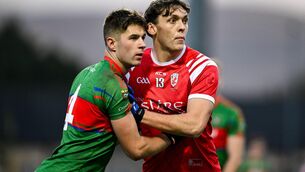
As a member of Ballyboden’s neighbours, Lynch had double the bragging rights last Saturday week. But for Dingle alone Lynch has gleaned no small amount of pleasure watching their progress.
“I've never ever seen such emotion, attachment and general pride in the current team. There are people coming from America, there are people who have disrupted their holidays at a huge cost to be in Croke Park on Sunday. We know this may never happen again.”
For the “Old Comrades”, or “old stock” as Lynch is inclined to call his friends and acquaintances, opportunity knocks.


CONNECT WITH US TODAY



Be the first to know the latest news and updates