The O'Connors of St Martin's: A father and son story of a life lived through sport
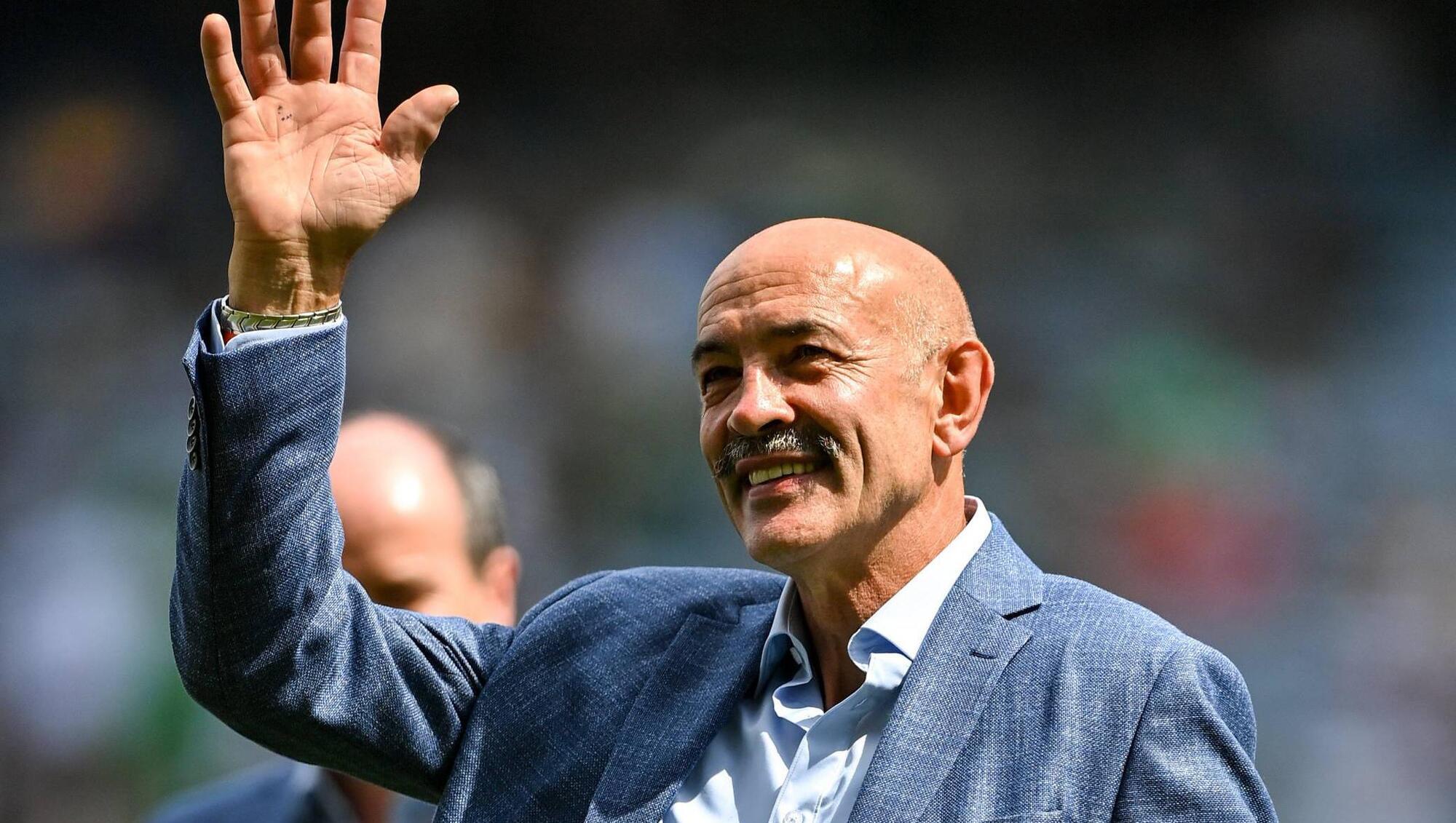
HONOURED: George O'Connor of the Wexford 1996 All-Ireland winning Jubilee team. Pic: Seb Daly/Sportsfile
Few jewels adorn their palace. For a long time, George O’Connor rarely spoke about his greatest triumph. Locally there was more than enough to do all the talking for him. On the pillar hangs St Martin’s maroon and white. A tribute to the start and the end.
One trophy can be found in the hallway. In a wooden frame sits the front page of the from September 2, 1996. O’Connor carried high after the crowning glory. All season long Wexford embraced hype they would once have recoiled from. It crested in a purple and gold wave. The summer turned golden. After seven Leinster finals logged and seven lost, their ultimate hard luck story became a hero’s tale.

“One of my standout memories as a child is leaving Wexford Park after a game and it taking an hour and a half to get back to the car,” laughs his only boy, Barry. From Piercestown to Sydney, no matter where he goes, he is a son of the father.
The 24-year-old has spent the past three seasons in the AFL with Sydney Swans. That stint was formative and surreal and crushing. Last September the club told him they would not be extending his contract. Chalk it down, move on.
“We have the same mindset,” Barry explains. “I am really lucky. A lot of guys are brought up as their dad is poking them with a stick, pushing them. It was never like that. At the same time, he can point you in the right direction if you need it. Dad has always been about simple, basic things.
“Do the little things right. Focus on positives. I never felt pressure to be anything either. I was always so proud.
“All the stories or people coming up, I never once felt, ‘would they shut up.’ Especially since he rarely spoke about his own career. We do share a passion for sport but positively. The score I’d be most buzzing about as a kid would be the one off my left. That was because he was always encouraging me to use both feet and I knew he’d be buzzing afterwards too.”
The family farm is their kingdom and here they are all at ease. For George it is the one constant. At the height of his career in the week before the All-Ireland final, he drew straw and gazed at the ducks and the pheasants.
Now he comes and goes from the yard, before venturing out to pour concrete for a neighbour. His wife and Barry’s mother, Ellen, veers into the kitchen to remonstrate over a grave transgression.
“Eejit,” she declares holding aloft a parking fine. “I never get a parking fine. Only once in my life and I’m here 34 years.”
Venture out to escape and explore the realm. First stop is the club grounds. Even here George looms large. A stone wall runs from Johnstown Castle to the field. Over the years he repaired various parts of its edifice.
Inside is a fully-kitted gym. There he rests on the wall, above where Barry goes to work during his off-seasons back in Ireland. An enormous mural with George at the centre giving thanks, the iconic image after the 1996 final whistle when he fell to his knees and clasped his hands in silent prayer.

“It is amazing to have all of this,” Barry says wheeling around with pride.
“These facilities do represent something. It is just something to come back to, I suppose. Right now, I do all my running and gym work here.”
Sport is part of their makeup. It always was, anything and everything. Over Christmas they giggled at old videotapes from George’s time in iconic television series The Superstars. Competitors from different sporting disciplines compete against each other in ten events. George was well-suited given growing up he played dual for Wexford, rugby for the Wanderers and athletics.
“There was one fella in it. A rower,” he recalls.
“He did 63 chin-ups in a minute. It was like his two arms were legs. I always say, if you really want to appreciate what he did, go to a bar and try do one.
“One of the best things you can do on a GAA field is athletics,” he maintains now. “When I was coaching, we always did the high jump. I’d move the bar up, get higher and higher. At the end whoever was the most improved gets a prize. It’s not about being the best. It is about who improved the most at it.”
While the house was abuzz over the holidays, with any number of cousins in attendance and various coming and going, George burst into the kitchen having made a sprint from the sitting room.
“In all my years of sport, I’ve never seen anything like that,” he declared. They all traipsed down to see what was generating the fuss and watched aghast as Michael Smith and Michael van Gerwen played out the greatest leg in darts history.
That passion becomes a fervour when it comes to Wexford. Their tribe.
“Wexford being at the top is massive for sport,” Barry argues. “I’m not just saying that because I’m from here. The colour, like they have sold out tickets for Kilkenny in the Walsh Cup at Wexford Park on Saturday night. The first night of floodlights, packed out pre-season.

“Wexford soccer is huge. Rugby, Tadhg Furlong is from here. Brian Deeny who is playing for Leinster now is from here. There is a fella from our own club in America, Dylan Fawsitt. The hooker. He is from St Martins.”
“I coached him,” interjects George. “He used to play in goal and then he wanted to go out the field and I said to him, bring the goalkeeper hurl with you. If the ball is dropping in, all you do is pull on it. When the ball is coming in, he didn’t realise everyone swings. He thought it was him and the ball. So he was fearless.
“He scored three goals one day in full forward, pulling in the air all day. Eventually, the referee came over and said who gave you that hurl? You can’t have it. He said, it’s all I have. Sure, I’m a goalkeeper.”
They draw from it. It draws from them.
“We have so many sports it is actually almost our biggest weakness,” says Barry. “Every county has talent in different sports I know, but it is incredible how many we miss out on. Think about Gaelic football. Good Counsel beat David Clifford’s Brendan’s in the Paul McGirr Cup final a few years ago. They retained that. St Peters from Wexford were in a senior final. Two schools, neither football-dominated, both mainly hurling, in national finals. And none of the best players are playing football now.”
Barry O’Connor has a pragmatic demeanour which both grounds and sustains him. His sporting career presented its own trials and tribulations and he wears it all lightly. At the same time as he was doing Australian Rules testing, he was heavily invested in dual codes. The weekend of the combine he half-participated on the Saturday and left early on the Sunday to play an U20 final.
During his first year in Sydney, he was promoted to the senior list, close to playing AFL as a rookie. Then Covid laid waste to the dream. The reserve league was scratched, budgets slashed, development coaches were let go.
“I think a lot of people, men particularly, have an inner stubbornness. You might not even be able to express it. I look at Dad with farming and hurling, getting it done no matter what. There is a lot of suffering. I don’t even mean with his mental health just generally, you suffer and put in hard work.”
All the while George was a unique north star in his universe. Across a 17-year inter-county career, his hands were broken 17 times. Those crooked fingers can’t use a smartphone now, so while Barry was in Australia he found it hard to keep track. Their relationship has its own rhythm.
In 2014, George was on the road as a Leinster Council coach when he blacked out behind the wheel. Thankfully, the wounds were modest. The mental toll was towering. It was a breaking point.
“A burn-out,” they called it. “My motto at the time was no surrender no matter what. That was self-destructive. Not going to the hospital when your fingers were broken. Get up. You’ll be grand. All sorts of clichés.”
Recovery was a step-by-step process. He went to the Summerhill facility in Wexford and St John of Gods in Dublin, across the road from Barry’s university. Raging defiance was infused in them all but could not define him. George reckons life is made up of a human wheel with key components, the emotional, mental, physical, spiritual and sexual. It works like gears in a grandfather clock. They all need each other. They all work hand in hand.
He learned a new formula. Family rekindled his fire. In interviews, George used to be reluctant to discuss 1996. He has heard all those questions. One common response he would offer is his sense of jealously for supporters. The players journey, while immensely fulfilling, was largely serious. On the other side they looked to be having a great time, the sunny southeast with the songs and the strawberries and the sea, watching hurling all year long.
Early in 2022, George and Ellen visited Barry Down Under. He was injured so the three of them went to an AFL game and sat in the players’ lounge. It just so happened it was the same match where supporters invaded the Sydney Cricket Ground in celebration after forward Lance ‘Buddy’ Franklin scored his 1,000th career goal.

What was that like? Enthralling? George pauses before finding the perfect explanation.
“It was like finally experiencing the pitch invasion after winning an All-Ireland.”
Then he leaves again, heading out like the tide. A virtuoso player and a force of nature person. Does that bring any pressure?
“At home he is more relaxed,” Barry clarifies. “His guard is down and his thoughts flow freely. He is in good form these days. I am equal parts my mam and dad. She is logical, he is the emotional connection.
“I know what it (pressure) feels like, how you can build it up. The damage that pressure to perform can do. Now I don’t do it for anyone else. When I was younger I did.
“I remember when I was a minor for Wexford, I played both. We made the football quarter-final and hurling Leinster final. Then I felt pressure for a few reasons. I never played for a county hurling team until that year. I made it midfield and I had a shocker in the Leinster final.
“See my grandmother, Dad’s mom, who was a famous Wexford woman too, she passed away the day before. We got taken to play the game the next day. The biggest day of our hurling lives… Rory was captain, I was midfield. I was taken off at half-time. Rory pulled on a guy and was sent off before the end. It all capitulated.”
It is all formative. Every day adds up. In Australia he found out how he truly felt about sport.
“You learn a lot about culture, about how culture is really created. It can’t be faked. I think GAA don’t realise how good they have it. You can’t artificially create the bonds within a lot of GAA teams. No matter what happened, if I played AFL, won a Premiership, did it all, that would never mean more to me than winning with St Martins. No way.
“Like the lads I lived with and I am pals with now, but they still aren’t my cousins. You are not playing alongside literal family. Someone I grew up with all my life and went through everything with.”
Now he prepares to journey back for one final swing. After leaving the Swans, he sat down with former Cavan footballer and St Kilda performance coach Nicholas Walsh for a coffee. Walsh’s father is also from Wexford. He revered George. When he saw Barry’s testing scores he put him in touch with his former employer, GWS Giants. They were keen and tabled a contract in the VFL, the reserve league.
“Right now, my focus is still AFL. It is a longshot and I know the odds are against me, but I am going to give it my best crack. All in. The only other sporting ambition I have is to play hurling for Wexford someday. I know that is another longshot, I haven’t hurled properly in years. None of that is because of wanting to do it for him, I just grew up wanting to do it and Dad was there supporting me every step of the way.”
Together they carry on.