People at the centre of Ballyea manager Robbie Hogan's approach
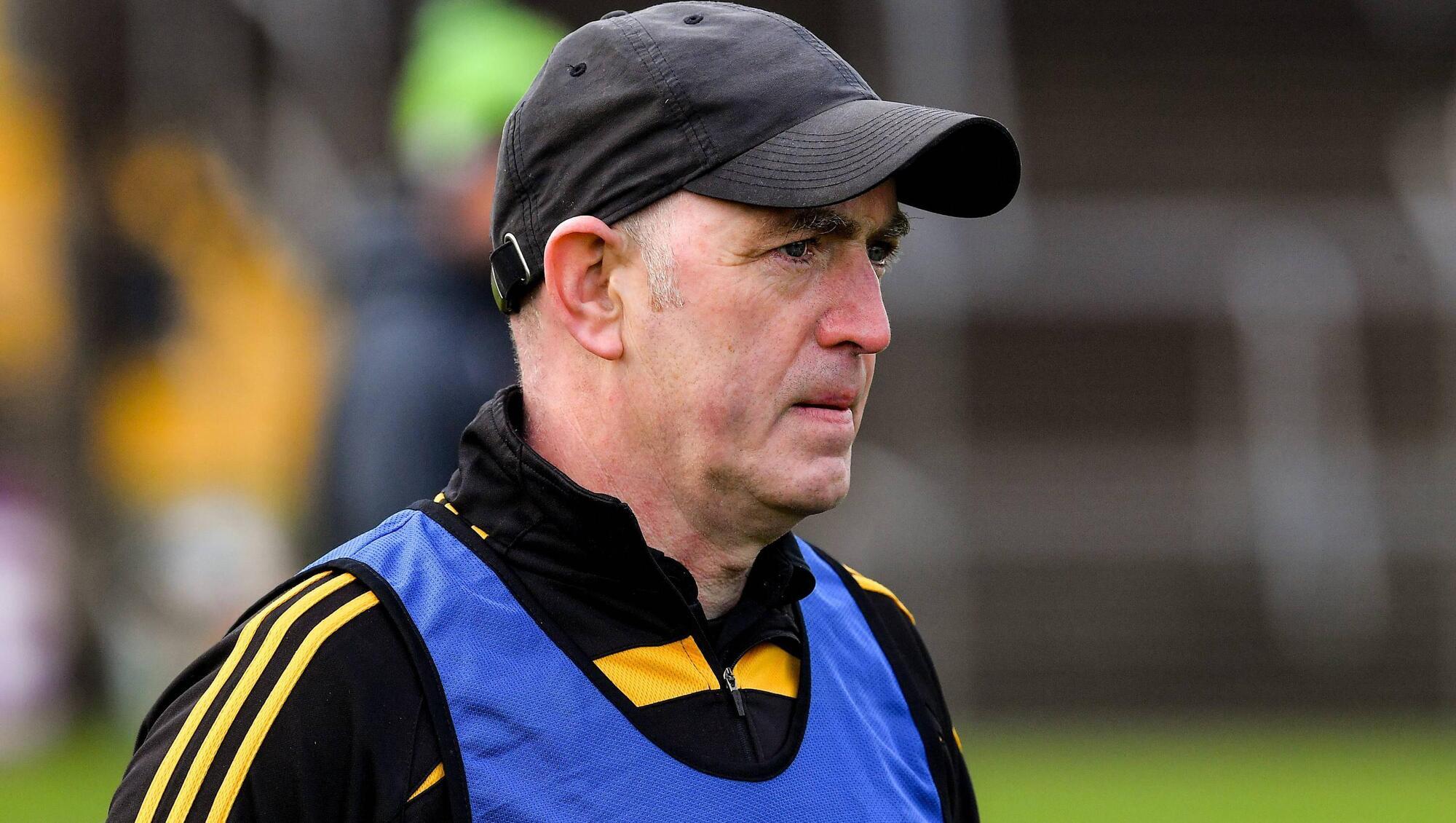
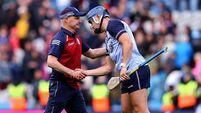
PEOPLE CENTRED: Ballyea manager Robbie Hogan is your classic good man-manager. Or player-centred, or even person-centred coach if he was in the fashion of using such terms which he isn’t. Pic: Ray McManus/Sportsfile
He goes back to the days of the Slob.
As Robbie Hogan reminded his players and their supporters from the podium when Ballyea came home from winning a Munster in Thurles and playing in an All-Ireland up in Croke Park, there were no iPhones, S&C coaches or astroturf pitches when he and his pals started out with the club.
“All we had was the Slob,” he smiled. “But we loved the Slob!”
It was a stretch of land down by the estuary, reclaimed by some Dutch specialists the locals brought over. A long wall was built to keep the water back and subsequently there was a pitch for the club.
“At the time we were just junior so we didn’t need the greatest facilities,” he says now on the eve of yet again leading Ballyea out for a Munster club campaign. “But the pitch was naturally flat, there was no need for any drainage and Gerry Longe made the goalposts. A mobile home was purchased and that was your dressing room. Every year it deteriorated and there’d be less and less of it but that was our home for a good number of years.”
The Slob though was less a place as a state of mind, an experience; as Hogan would tell his players and supporters at those homecomings during the winter of 2016-17, sport, life, is the road you travel. And no road or journey was more craic than the one to and from the Slob.
Hogan used to come from Drumadrehid, about the highest point in the parish, up where his father Joe and Joe’s 11 siblings would have full-scale matches with the 15 Killougherys next door. He could nearly freewheel it all the way to the Slob before throwing his bike against the hedge. But the real fun was after training or a match when a dozen or more bikes would form a convoy.
“There wasn’t an orchard safe. Poor John Joe Garvey was cleaned out many a night.”
This past summer Hogan went for a walk down by the Slob with the dog and while his inner ear could still hear the laughter from another stolen apple, the only pitch in sight was that of the local soccer club, Fern Celtic, surrounded by perfectly rectangular farming fields. These days the hurling club is based a couple of pucks of the ball from the local primary school with Hogan and his wife Catherine and their three daughters living only a few fields up the road themselves.
The clubhouse is relatively modest, in keeping with the sensibility of the club. There’s no bar and just a basic meeting room. But it has a spartan gym the players live out of, a ball wall the pied piper Tony Kelly and his followers have already nearly worn down, several dressing rooms to take the place of any old mobile homes, and more importantly a fully redeveloped, brilliantly drained floodlit main pitch.
“There’s an awareness from the likes of Tony how we as a club started off and how things have changed,” says Hogan. “You pass the place now at night and the lights are on. Even back when we won Munster in 2016 we had to go to different places to train. Now we can train in our own place all-year round.”
Kelly would also have an appreciation of how other things have been built out Ballyea way, which is why he has a habit of turning to and even calling up to Hogan.
The winter before they won that Munster and their first county, Hogan was leaning towards opting out of the setup. He’d given four years to it in some form or another: selector, mentor, coach, manager, even playing once while in his 40s when they were desperately stuck. Kelly though had only one role in mind for him for 2016 because to him Hogan was the only man that could be their manager.
When he’d first come on board in the early spring of 2012 a local paper had ranked Ballyea 18th out of the 20 senior clubs in the county. Now they were consistently reaching quarter-finals, even the odd semi-final. If it stuck together the group could make the breakthrough. And no one knew the group and its quirks and characters better than Hogan. He got them which meant they had to get him.
So that Christmas Kelly along with Paul Flanagan and Jack Browne called up to Hogan’s house and persuaded him to stay on for one more year. The rest is history – and legacy: within 20 months of Ballyea’s Croke Park appearance and Hogan subsequently stepping down to spend and make up some time with his family, the club were county champions again under the guidance of goalkeeper-turned-manager Kevin Sheehan. When Sheehan himself though stepped aside at the end of 2020, Kelly paved the way for then club chairman Seán Griffin to make an official approach.
“You know what you’ll do now over the weekend,” Kelly told Hogan. “Take out a few of those old matches from ’16 and ’17 and watch them.”
Kelly’s tact worked, a fire was relit and it’s created a blaze with Ballyea putting back-to-back titles together.
Paul Flanagan would have been part of several delegation teams that have sat in Hogan’s living room and explains why the likes of him, Kelly and Browne have called there. He has an earthed cool (Hogan sometimes sports a stud earring) and sincerity about him that makes him easy to relate to and with.
“Even during the summer [when Flanagan was playing and starring with Clare], I called into him and sat down and had a cup of tea and a chat,” says Flanagan. “He always has your best interests at heart. He genuinely wants the best for you. His values just shine through in everything he does.
“I mean, he’s a tiler by trade and though he quietly goes about his business and doesn’t look for a pile of thanks for it he’s renowned for being one of the best tilers in the county. He’s a real family man, Catherine and Lisa, Emma and Laura are his world but we’ve dragged him into our world and he’s become nearly a father figure to us. Even though he’s a good bit older than us [50], you’d consider him a real friend who is always there for you. He’ll always have a good read and check in with how things are with you. How is your girlfriend? Mother and father. Work. College. The house?”
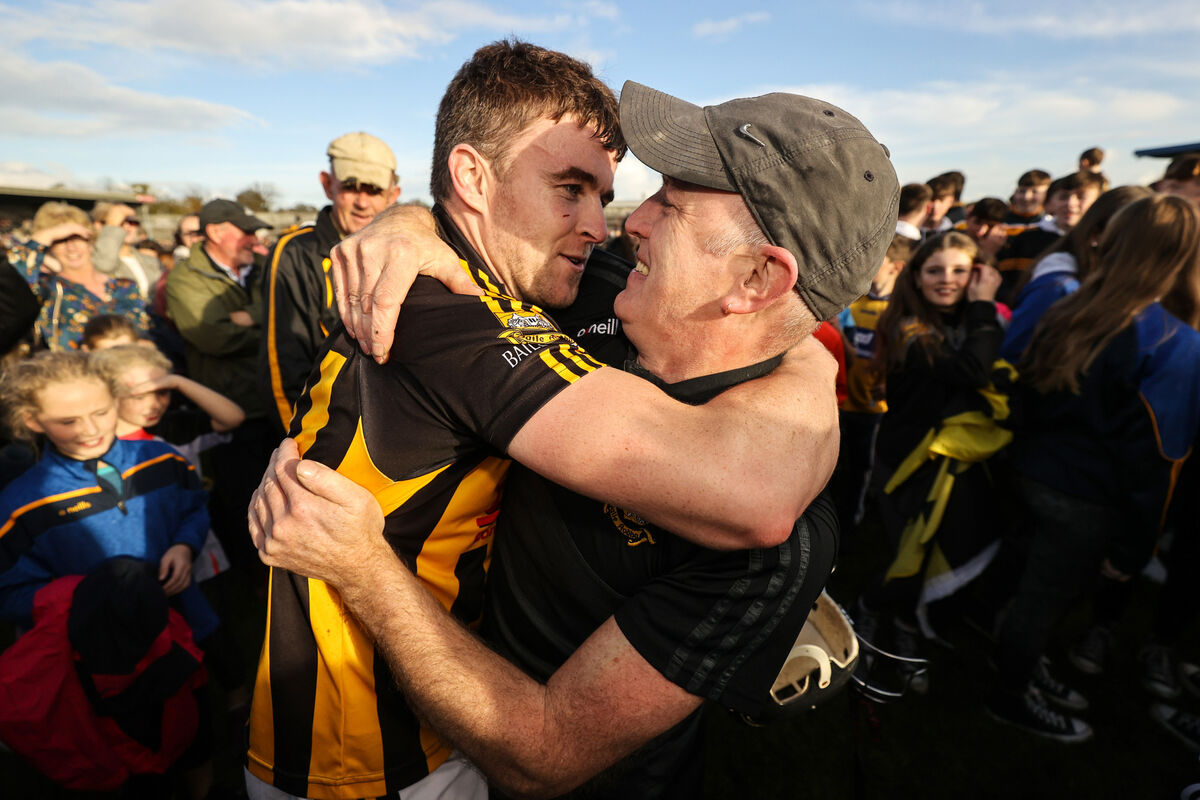
Kelly is a case in point. Right now he’s building a house and doing the tiles for him is Hogan. But he’s gone beyond that. Earlier in the project before Hogan came on board he’d got wind that some scaffolding Kelly required hadn’t come through. And so to get his neighbour out of a hole, Hogan put in a call to another friend or two and presto, Kelly had his scaffolding and was able to get back on with the build.
Hogan himself doesn’t volunteer such an example but believes such things go hand in hand with the role.
“It’s about helping out lads really,” he says in his soft-spoken, amiable manner. “When I started out with the lads, they might have been looking for a bit of work or a summer job when it was hard for them to find any. But lucky enough a brother of mine was able to get apprenticeships for some lads. It goes beyond the pitch. If you can help them out in any small way you can it creates that bit of trust.”
In other words he’s your classic good man-manager. Or player-centred, or even person-centred coach if he was in the fashion of using such terms which he isn’t. Although he now has to be in the reckoning for any county management roles within Clare and beyond that will come up, you won’t find Hogan giving a PowerPoint presentation or citing fancy quotes or studies to land it. Players trust him because he puts his trust in them.
Niall Deasy, the team’s leading scorer over multiple campaigns, flourishes in the black and amber of Ballyea in a way he never did in his time in the saffron and blue. Instead of getting bogged on his GPS scores, Hogan appealed to his free spirit.
“Niall is a super-intelligent guy but he like things nice and relaxed. He doesn’t like a huge burden of expectation on him. So you let him off and do his own thing. If he wants to go in full forward, he can. They don’t have to be looking to us to make the moves a lot of the time.”
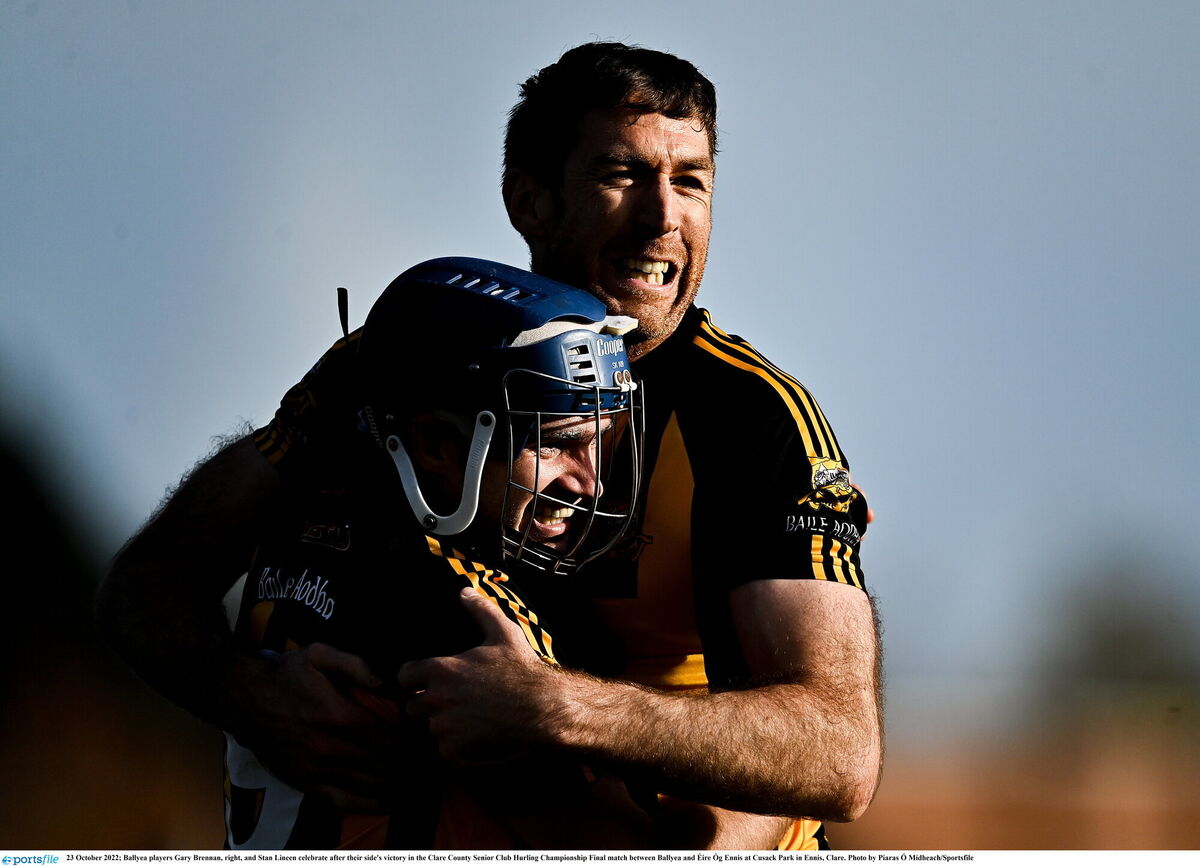
Gary Brennan is another former county man he has managed brilliantly, especially this year. From the outset of the season when Hogan called into him Brennan told him Ballyea and hurling was a non-runner this year. He and his wife Niamh were building a house, were just after having little Daithí, he was doing a third-level course on top of the day job teaching in Flannan’s. With his father Martin managing Ballyea’s sister club Clondegad, the only thing he’d be togging out for would be club football. He gave the same answer when Hogan checked in with him in late July on the eve of the championship. But Hogan gave a similar response.
“We understand. You owe the club nothing. But the key will always be left out for you.”
Sure enough when Clondegad bowed out in the quarter-final to eventual and defending champions Éire Óg, Brennan reached for the key and the phone. By the following Sunday he was coming on at half-time in a county hurling semi-final against Cratloe. For the final he was starting.
That meant dropping Cathal O’Connor, Brennan’s good friend and regular midfield partner with the county footballers. Another player might have stropped, at least with a different manager. But Hogan framed it sensitively.
“My pitch to him was, ‘All the games up to this point, Cathal, you’ve been taken off, exhausted, having done some shift for the team. Maybe this is the one to finish the game.’ And I just knew from his expression he took it immediately on board. There wasn’t a hint of selfishness about him. And by God when he came on was he ready to finish and win the game for us.”
Hogan himself has known what it’s like to come on and win a big game for the team. After being part of a Clare team that won a Tony Forristal U14, he went on to be part of St Flannan’s teams that won a Dean Ryan, an U16B Munster football title and then in 1989 a Harty Cup final when he came on at corner forward and was marked by another sub, a certain Brian Lohan of Shannon Comprehensive. In Flannan’s he received more than one form of education.
“The likes of Fr Gardiner, Bishop Wilie [Walsh], Fr O’Dowd, they were great hurling men, great teachers. I can still remember Fr Gardiner demonstrating a sideline cut, how you had to take the little divot out of the ground from behind it. It was the first time I was really exposed to coaching. In Ballyea you’d just rock up the field and train or play.”
For a long time even after leaving the Slob the club was in the doldrums. Hogan reckons there must have been a stretch where they went five years without winning a championship game; back then it used to be do-or-die and too often on the first day out it was a case of die for Ballyea. He especially remembers a junior game in Lahinch against Ennistymon, pure football country, and still being beaten.
“That was a really low point. You had a lot of lads moving away from Ballyea so we lost a lot of good hurlers. And maybe we weren’t putting in the required effort either.”
Over time that changed. The orchard raiders from the Slob days progressed to going out into town and the Queens, always together, and by 2001 the core of them had formed a bond and work ethic that propelled them to win the county intermediate title. That was Hogan’s last championship game with the club; at 30 and with a second daughter having just come into the world, people were now relying on him and his hands that lay those tiles.
But now he’s back, giving back, and seeing the Kelly-Browne-Flanagan generation go through their own rites of passage. As kids they lived up in the field when they weren’t in the one in Flannan’s.
“Then when we first took over about 10 years ago they were going to college. Now they’re building houses.”
Over that time he’s got to know what makes them tick, their psyche, as individuals, as a team, as a community. Flanagan speaks about how he can reference a person they all know to give them that sense of both freedom and representation anytime they step onto the field. They don’t remember him ever mentioning or certainly making a deal that they’d be without the injured Kelly from the county semi-final on.
What they do recall though is him mentioning the late beloved Susan O’Neill, the secretary and friendly face of the local primary school most of them went to and wife of former club and county chairman Michael. In spite of sickness, for years she’d still be seen walking the small bendy roads of the parish alongside Michael, a model of dignity and strength. We are our people, lads. Dignified. Strong. And here we are healthy and lucky enough to represent them. Now what are we going to do with that opportunity? Hook, block, tackle.
Simplicity is at the core of all they do. After they lost a dead-rubber group game to Cratloe back in late August, they had a rare post-mortem and video session but set a limit of one hour on it.
“You put yourself into the lads’ boots during the summer,” says Hogan. “It’s hurling, it’s football, it’s hurling, then it’s football again. You have so little time with them, you try to make the best of getting them on the pitch and getting them hurling. Maybe if you had two-week intervals you might do more of it [video analysis sessions]. But I just think we’re not really that kind of group. A lot of teams like to do the washout on a Monday and go through the video but it’s not really us. It takes from the enjoyment of what it’s supposed to be all about, that it’s nearly like homework on top of everything else.”
You can take it they’ve studied St Finbarr’s ahead of Sunday’s game. The club share a mutual strength and conditioning coach in Adrian O’Brien who has now gone in with Clare so Hogan knows they’re well prepared while Ballyea’s last appearance in the province, a thumping from Ballygunner, still leaves a sting. He hopes and believes a year on they’re now wiser, and stronger. They were missing Kelly through injury last year. Gearóid ‘Gudgie’ O’Connor was in San Francisco, Cathal Doohan in Australia. Now they’re all back.
“The day of every game we always meet in the dressing room in Ballyea, name the team and have our chat there before heading to Cusack Park. That dressing room is six metres by six metres, and before the first round this year someone mentioned how precious that 36-square metres is. How fellas had travelled from all over the world to be in that little patch of ground. San Fran. Melbourne.”
And of course, the Slob. Just up the road but no journey further or more glorious.


CONNECT WITH US TODAY



Be the first to know the latest news and updates