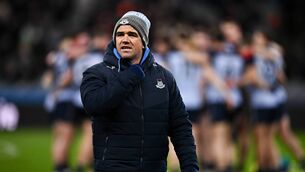
There are baptisms of fire and then there are infernos.
As Galway GAA operations and finance manager, Mark Gottsche has been dousing the flames since he was first appointed in September 2019.
Returning home from London, he knew the flames would be licking at his feet from the outset but his brief, to put order on a turbulent financial situation in the county, was made colossal by the pandemic.
Galway’s end of year accounts for 2019 showed a €635,000 drop from the previous year. A decline of over €700,000 in fundraising was recorded, largely precipitated by the troubling revelations of financial mishandling at the 2018 convention.
Restoring trust has been Gottsche’s modus operandi these last 21 months but Covid turned off the tap on fighting the blaze.
Last year, Galway showed a modest surplus before fixed assets depreciation, which was no small achievement given gate receipts crashed from €1.2 million in 2019 to €653,000 — “and that (€653,000) figure was supplemented by the 2019 championship finals played in November outside the financial year so it didn’t give an accurate reflection of how 2020 went for us,” adds Gottsche.
As of last December, Galway owed Croke Park €1.66m. Refinancing that was relatively simple but when the season was indefinitely suspended in January other creditors had to be appeased.
“You were wondering how the bills were going to be paid,” he reflects.
Generating income in the absence of gate receipts has been difficult for every county but in Galway’s situation there exists a legacy of suspicion. The “March for Maroon” fundraiser to support the county teams across the four sports, Cancer Care West and the Oranmore-Maree Coastal Search Unit, had an online target of €82,000 on the idonate website but to date has raised less than €16,000.
A corresponding event on the June Bank Holiday when up to 50 people have each raised €3,000 will help to reach the overall target but people have still to be convinced their money will be put to good use.
“There was a lot of reputational damage arising from previous events before my time and we were working on that,” says Gottsche. “We did some good things; we were one of the few counties who gave a refund to season ticket holders.

“Our social media presence is important and we’re trying to get our message out there more and more. We want to show that we’re not just taking the money. We’re aware that the people we offered the refund to last year are the same people we will be approaching to purchase season tickets this year.
We have been trying to repair and improve our image and reputation and trying to realise our commercial possibilities. We still have some work to do. It’s not an overnight solution but we’re getting there. Things have improved in how the affairs of Galway GAA are being managed.”
Along with treasurer Mike Burke, who effectively shone a light on the shoddy way Galway GAA did their business, Gottsche is working on commercial ventures. The sale of Pearse Stadium’s naming rights is on the agenda as well as sponsorship of their streaming service, which brought in €185,000 last year.
“We had viewers from 30-something countries so that’s something we’re working on at the moment,” reports Gottsche.
“We will have some of the traditional fundraisers like golf days later in the year both here, in the UK and the US.”
As a bona fide dual county, the money will be needed. There is the extra cost of currently preparing two U20 and two minor hurling teams — the 2020 U20s face Limerick in an All-Ireland semi-final while last year’s minors take on Offaly in a Leinster final. Last year, Galway’s All-Ireland winning U20 footballers also had three pre-seasons because of the stop-start nature of their championship, which also required additional financing.
Also, the two senior teams have genuine designs on provincial and All-Ireland silverware, ambitions which demand support. Frontloaded expenses such as GPS systems, analysis software, and supplements are also musts but Gottsche highlights the management teams are realistic.
“In fairness to the county managers, they are very understanding and they’re looking for value for money in their expenditure. They’re not asking for anything over and above the normal odds, they’re accommodating and they have good relationships with their respective football and hurling committees.
“It’s not so much reducing costs but identifying what’s critical in the short term and what we might bring in halfway through the year, whether it’s some sort of tech or equipment, and other things might be for next year.
“My philosophy is ‘why’ rather than no and discussing the requests that are made and making sure they are justified and there is a good rationale behind it and it’s going to benefit the teams. Galway is unique in that it has four county grounds plus a centre of excellence so the ongoing maintenance of them has to be considered on a weekly and monthly basis.”
For the next two if not three financial years, county GAA accounts, not just Galway’s, are going to vary wildly. The decision at Congress in February to change the end of the financial year to September 30 from October 31 means a significant amount of anticipated gate receipts and streaming revenue for this year’s club championship games aren’t going to be included until the 2022 accounts.
“The group stages will probably be the only games that fall into this financial year so you’d be looking at a fairly substantial deficit this year but next year there will be a substantial surplus. Even the changes in the fixtures calendar sort of kicks the accounts out of sync and makes year-on-year comparisons very difficult because you’re not comparing like for like.”
Gottsche and Burke project average championship crowds of 600 to 700 per game later this year will see them return gate receipts figures similar to 2019. The split season model, while welcome especially this year when the vaccination roll-out should mean counties will benefit most out of crowds returning to games, will have some adverse if temporary financial repercussions too.
“The majority of your income is going to be delayed until the second half of the year now so you’re going to be delaying paying your creditors until you have money in the back,” says Gottsche. “Unless, of course, you are a county who has built up a reserve but we’re not there yet. We aim to be.”
CONNECT WITH US TODAY
Be the first to know the latest news and updates