Kieran Shannon: Token gestures do little to build trust
There’s a substantial difference between symbolism and tokenism.
Symbolism is meaningful. It signifies and represents a value, an idea, an ideal. Done right, it can be powerful, even beautiful. Profound.
Tokenism is something shallow. Hollow. Just ticking the box. Or, to be blunt about it, covering ass.
Sport has long appreciated the importance of symbolism, and how symbolic it itself can be. It has particularly understood that with the advent of Covid-19, at least in this country.
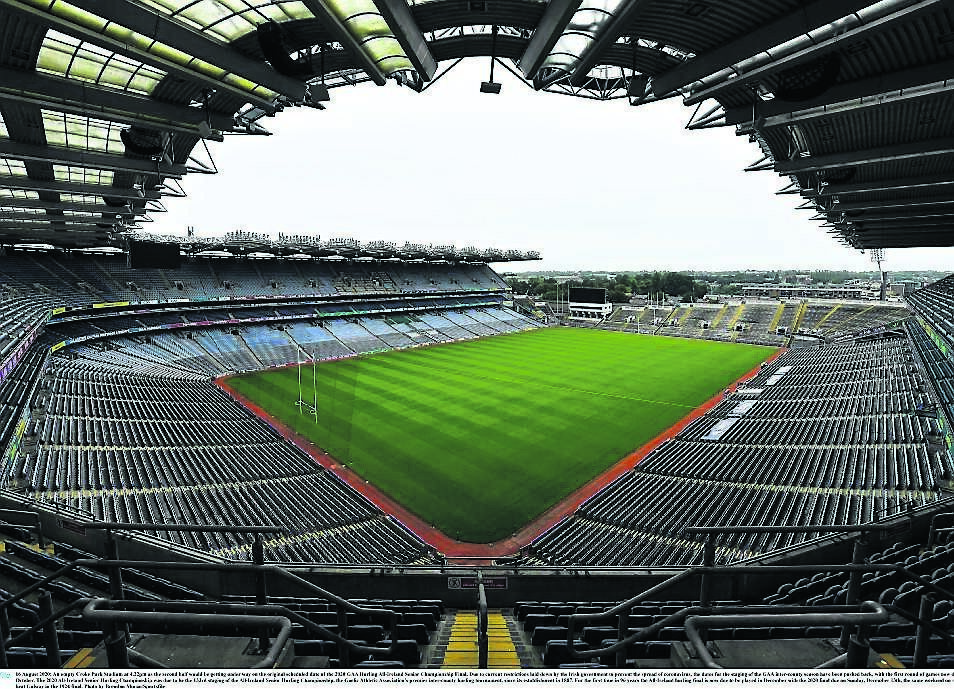
In March, the biggest sporting organisation in this country didn’t just shut down all games and training ahead of the Government’s lockdown but offered its main stadium, Croke Park, as a testing centre. Its clubs shopped and looked out for the more vulnerable members of its community. As the man once said, ask not what your country can do for you, ask what you can do for your country. Or, as we believed at the time, we’re all in this together.
Yesterday, the Government and NPHET introduced a range of measures that obviously indicated that the country needs to up its game more when it comes to dealing with the threat of Covid.
But too many of them smacked of tokenism, not least its decision to ban spectators being present at outdoor sporting fixtures.
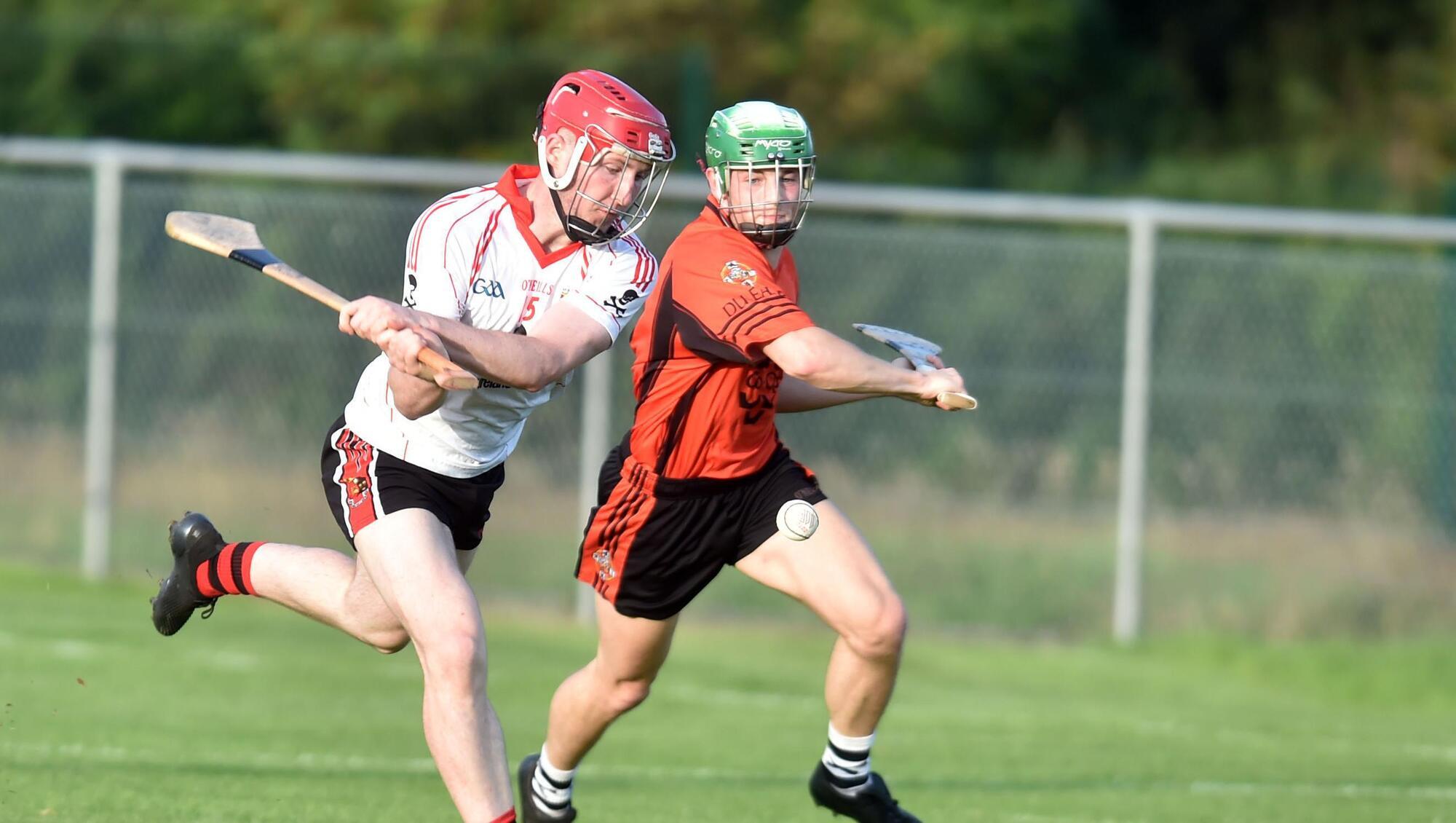
The rationale behind the previous limit on spectators at outdoor events had been rather hazy as it was. Over the past month, you could have 200 people at your daughter’s local U14 camogie match at a small clubfield – and no more than that in Semple Stadium, the Gaelic Grounds and Páirc Uí Chaoimh which used to be able to house over 40,000 people.
You’d have thought they could have done something like having a Venue A which could have no more than 200 people (your typical clubfield), maybe 400 at a small-sized county ground, and maybe 500 at a facility that can hold 20,000-plus.
But now there is a blanket ban on everyone. Last night, parents at that underage camogie game didn’t even know if they could watch it. If they were with the away team, were they supposed to wait in the car?
Again, sport would be happy to play its part if it felt we were all in this together. If they could see that such actions really helped. But people are sceptical. And rightly so.
A sensible, acceptable measure would have been to insist that everyone attending a public gathering has to wear a face mask. Even if the event is outdoors. It would have triggered an extra vigilance about the importance of social distancing, something that had become more lax, including at sporting events, even though there has been no evidence of transmission from people attending sporting gatherings.
If there was such data and evidence, then no one would object to what the Government announced yesterday on NPHET’s advice. No one would object to wearing a face mask and socially distancing four, six, 10 metres even in the absence of such evidence. But as Professor Jack Lambert of UCD, a consultant in infectious diseases, told The Last Word on Today FM yesterday, the Government are merely responding to numbers. Playing sport behind closed doors will not reduce the transmission of Covid. The real causes, the real clusters, are far removed from sport.
Very early on in this crisis, the real causes, the real clusters, were identified. Direct provision. Inadequate – and often inhumane – working conditions in such places as some meat factories. Yet little was done. Certainly not enough was done. And more needs to be done in those areas, and in providing a proper health service system: even now, after all those platitudes and candles lit back in the spring, we still do not truly value – and pay – our health workers. But going after sport does not make their job any easier. Instead it smacks of being a smokescreen to cover for the Government’s ineptitude to address those areas and a faulty test tracing process.
There are so many other inconsistencies with the Government’s and NPHET’s guidelines. So 30 people can play a game but only 15 can train? And does indoor sport just give up altogether? At least until September 13?
In doing away with crowds, the Government has lost some of the crowd. In playing to the galleries, it hast lost the gallery. In displaying such tokenism, it has revealed a certain symbolism: they don’t know what they’re at. You can fool some of the people…..
Covid is too serious to try to fool anyone about.
People’s adherence to public health measures had been out of a sense of collectivism more than self-interest: we’re in this together. And it has been out of trust. But now some of that trust has been eroded.
Sport may not be classified as an essential service, even though it is an industry in itself and indirectly affects other industries, including the media, which this paper and column is in. It certainly is not seen as an essential cabinet ministry, otherwise there wouldn’t be such ambiguity and confusion about yesterday evening’s new measures. But yesterday’s press conference brought to mind the famous yarn told in Brendan Ó hEithir’s Over the Bar where Sean MacBride bemoaned the lack of numbers and attentiveness at an IRA meeting in 1936.
When informed that it clashed with an All Ireland semi-final, he grumbled whether a football match could be more important than the future of the Irish Republic, prompting Máirtin Ó Cadhain to surmise, “I knew then he would never do any good in politics because he did not understand Ireland.”
So far, NPHET and the Government have done a reasonable job at handling the Covid-crisis, in no small part because of the role of sporting organisations in this country, like the GAA. But yesterday made you wonder if anyone in NPHET has ever been at a club match, and if they have ever conducted a training session.
Sport will play its part for the team. But don’t subject it to tokenism.
CONNECT WITH US TODAY



Be the first to know the latest news and updates