Proceed with caution: Why hurling must not be allowed to rest on its laurels

At first glance, hurling has never seemed stronger. The game is faster than ever before at the top level, where the competition has rarely been more finely balanced. Galway and Limerick won the last two All-Ireland finals but it would take a brave man to identify this season’s All-Ireland semi-finalists. Why is sounding a note of warning, then?
They say victorious generals returning in glory to ancient Rome had a slave accompany them on their chariots to remind them with a whisper, even as the cheers of the crowd rang out, that they were mortal.
Should someone be whispering in the ears of the GAA about hurling, particularly at the inter-county level? Here are a few issues to be resolved, as well as a few solutions to pressing problems.
You saw what happened with the Gaelic football rules this past pre-season. A few grumbles and one of the trial rules — relating to the three handpasses — was scratched. Hurling needs more rules trialled, however, as slowness to experiment can calcify easily enough into intransigence.
These pre-season tournaments should be used to try different rules on for size in a competitive environment rather than allowing smugness about the game’s current attractiveness to bar progress. Being proactive and addressing potential issues is far easier than tackling problems; the game should always be evolving.
And this should be the first new rule trialled. Handpassing has now become more honoured in the breach than the observance, with beleaguered referees’ occasional enforcement of the rules leading to ironic cheers.
In some sports, the constant blurring of what’s legal and illegal can lead to exasperated accommodation of an infringement that’s difficult to punish. If it’s not quite at that stage with hurling yet, it’s getting there.
A fair warning about referees looking for a distinct, visible passing motion/separation of hand and ball should be issued, and an ensuing rattle of frees given to enforce same would be a considerable step forward.
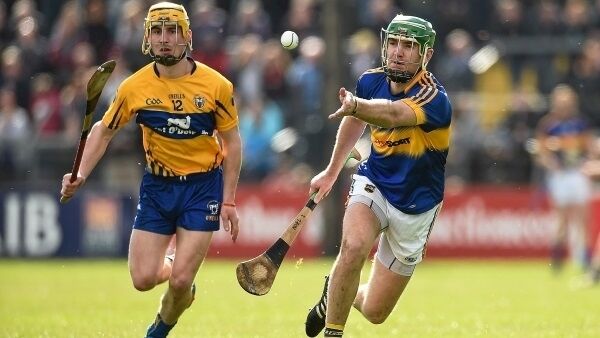
The shemozzles of yesteryear are now a defined tactical approach, with teams holding up play and deploying specific players to root around in what are now unashamedly called rucks. As a general observation, this is not rugby. These are not rucks to be cleared out.
Therefore when play gets congested around the sliotar, referees should be instructed to give five seconds for resolution before whistling, then nominating the two nearest opponents for a clash ball, rather than the 20 seconds wasted as players congregate to slow the game down further.
By far the biggest change — but also the one with a hinterland. Back in the late 60s senior colleges hurling was run on a 13-a-side basis, which formed an immediate tactical challenge to coaches of the time.
Given the explosion in player fitness and the disappearance of rigid positioning, is there a valid argument that the current field size at senior inter-county level is too small for 28 highly conditioned outfield players? Is the acreage on offer simply not big enough to allow players from finding the space to express themselves?
Linking back to the points above, would a trial run in handpassing enforcement, briefer rucks and 13-a-side not be worthwhile for the game going forward?
Martin Fogarty is the National Hurling Development Manager for the GAA but the role mentioned above is somewhat different. The development of the game — helping counties to improve structures, and so on — is not the same as functioning along the lines of an NBA/NFL Commissioner.
As in, the capacity to act unilaterally in the best interests of the sport, whether that’s in terms of rules, sanctions, or public image. A front-of-house Mr or Mrs Hurling, in other words, to represent the game — but also to rule it. If there’s a hurling issue, the commissioner is the first port of call and the last word.
Here’s something for the Commish to deal with immediately, the dirty secret of hurling in a competitive marketplace: nobody knows who these hurlers are. When you deal with players regularly you can fall into a familiar trap: if I know them, everyone does. Not so.
The facemasks are an obvious barrier to identifying some of the most electrifying athletes in the country, and whether names on inter-county jerseys become obligatory or not, the game faces a tricky marketing challenge when its greatest exponents are, in essence, reduced on TV screens to a mesh of steel and a plastic head-covering.
Running in parallel to the above challenge is, of course, the distrust shown by intercounty managers when it comes to their own players providing cliches to the media. Granted, your level of sympathy for the journalists’ plight is probably low enough, but when someone complains about the exposure given to other sports compared to hurling — or Gaelic football — this is the reason why.
It reached a peak, or a nadir, during the week, with news that the Derry hurlers were now observing a media ban. Fair enough. But prepare yourself for a torrent of soccer, rugby, ice hockey, basketball, gymnastics, American football, horseracing (add more as you wish) coverage because of the control-freakery of various managers.
The upside is the forthcoming flood of camogie and ladies football coverage, given those two sports tend to take the view that their practitioners are adults who can be trusted to speak.
If a tiny dictaphone remains more intimidating to players than lining out in front of 80,000 people, here’s an obvious way for the game to market itself. The Major League Baseball home run derby was played off last year in front of almost 50,000 supporters in Washington DC. Why not get a representative from the top six teams who didn’t make the All-Ireland final to do something similar the Saturday before the decider?
When I say something similar, I mean a contest along the lines of the Féile skills challenge: a template which allows some of the most skilled players in Ireland to show off the touches that set them apart. You never know, they might even talk.
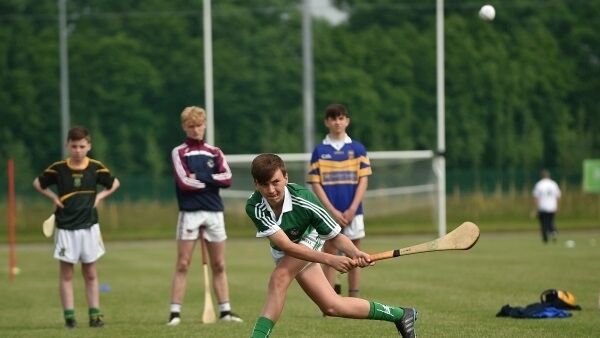
While on the subject of marketing, why is a luminous sliotar not on the agenda? Even on a bright summer’s day it can sometimes be difficult to track the flight of the ball, never mind the guesswork involved in locating a sliotar buried beneath feet and ankles in one of the rucks mentioned above.
Here’s where everything starts to align, of course. A Hurling Commissioner could rule that the Munster Senior Hurling League or the Walsh Cup could trial the use of a luminous sliotar, with observers tasked with reporting back on the number of foul handpasses or lengthy rucks identified as a result.
And finally... one immediate step that could be taken by hurling “people” everywhere is to ease off on the comparisons with Gaelic football, comparisons which are rarely to the latter’s benefit. These are two different sports run by the same organisation, but gauging the health of one by the travails of another is a false argument.
Park the smugness and small-mindedness involved: it helps to perpetuate the myth that if sport A does not face the challenges of sport B, then sport A has no challenges at all.
Not true. You can see that from the points above.

CONNECT WITH US TODAY



Be the first to know the latest news and updates