Joe O’Connor Interview: Putting players first
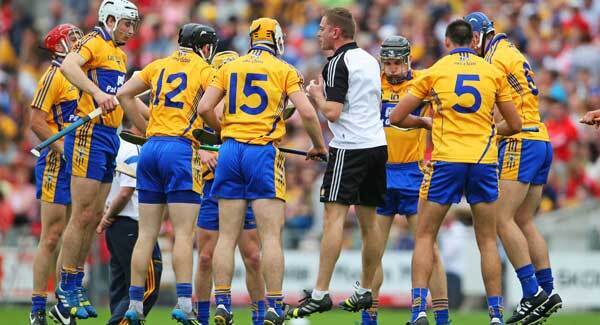
He might stay in the background, but when Joe O’Connor takes on a task, he puts everything into it. And while he has a modern approach to fitness, his ideas are also shaped by his past
Joe O’Connor Interview: Putting players first

From the outside, you’d hardly notice or hear a word from him.

When Joe O’Connor was with Clare, he might have been part of the most animated sideline in hurling but that was because your eyes and ears were drawn to Davy. When the pair of them also teamed up on Ireland’s Fittest Family, O’Connor just seems to be the guy with the blank face who blows the hooter. The same now that he’s with his native Limerick as part of TJ Ryan’s management team: from afar he is a quiet, unspeaking, almost unnoticed presence.

Within all those setups though, O’Connor is key.

On Ireland’s Fittest Family, O’Connor is not just someone who unleashes hell on those driven, almost deranged, families; before they ever step up to the line, he has been through their hell and back, having personally road-tested every tunnel of shit they’ll crawl through, every tyre or plane they’ll drag.

The Clare players and management that won the 2013 All-Ireland swear by him and his expertise on preparation.

And already in Limerick, he’s commanding similar loyalty and respect. There won’t be a day that TJ Ryan won’t be on to him to run some little but significant detail past him, like a certain game to use or pull in training, or when and where the team should eat and meet before a game, like tomorrow’s league semi-final in Thurles. When it comes to such matters, he is literally the expert, having a Masters in exercise and nutrition science and being a lecturer in exercise physiology in Tralee IT for more than 10 years.

His view is informed by the best of the worlds of academic and technical knowledge, and also enough practical experience and cop on to know what to apply and what to leave out.

“We don’t have time with amateur athletes to be doing everything,” he explains in a coffee shop on the outskirts of Tralee, the town his wife hails from and where he’s lived half his life now.

“So fitness without the ball — it’s not that it’s a waste of time, it’s that it’s not a priority of your time. That’s what I look at a lot with Dinny [Cahill, Limerick coach] and TJ, the same as it was with Paul [Kinnerk] and Davy in Clare. My role is not so much to take the session but monitor it to make sure we’re getting both the skill and the fitness, so the overall volume can be lower so the quality of what we do is better.”

He constantly reminds his setups of the game and business they’re in — optimal performance. And what facilitates that is optimal training and optimal recovery. So no point training like a professional when you don’t have the time to recover like one — it’s self-defeating. It’s all about context, and as a result, compromise.

Take something like when the team meets up for a home league game on a Sunday. The nutrition plan kickstarts on the Friday morning. The pre-match meal will be three hours out. Will they eat it together? Probably not.

“I’d be wary of taking lads out of their bed and bringing them in early to give them a feed three hours before a league game, and then to have them sit around for two hours. Because what we do then is start filling time for the sake of it. I’d prefer to trust guys to follow their meal plans and then gradually build it up.

“It comes back to the biopsychosocial model which comes from different disciplines but which I use all the time with performance. You have to have the balance right between your biology, your psychology, and your sociology.

“So biologically speaking, the nutritional science might say you should eat at this time. But if what is proven in scientific literature messes up the psychology of a player — ‘Why the hell are we doing this? We haven’t done this before’ — and he feels anxious all of a sudden and that sends a ricochet throughout the squad — ‘Why is he anxious?’ — the social interaction and support can be compromised.

So I always look at it like this: ‘Right, this is what the book says, this is what anecdotal evidence says, this is what I’ve done in the past, this is what these players have done in the past.’”

The past informs a lot of what O’Connor does. It’s why he does what he does — promote and facilitate physical activity and sporting excellence. Because when he was 12, it seemed like that was going to be taken from him.

This is a story he doesn’t advertise and will come as news to most of the Limerick and Clare hurlers he’s trained that would think they’d be close to him; only those who have noticed and inquired about the scars on his back will know.

He was riding out a horse on his uncle’s paddock in the north Cork plains of Liscarroll when the horse suddenly fell and trampled on him. O’Connor’s immediate fear was that he’d hardly start the following day’s game with the Rathkeale Under-12 team with his cut face and the knee that was killing him, not knowing they were the least of his problems — his back was broken in three places.

That evening he was transported to Cork University Hospital where two 14-inch pins were inserted either side of his spine. For six weeks, he lay on his chest on a Stryker bed, staring at the floor from the little hole carved out to fit his face. He was told he had a 20% chance of walking again. That was enough for him.

“All through, I just had this positive mentality. When people were saying I couldn’t do it, I just remember challenging that: ‘There is a chance, so why can’t I do it?’ That was my attitude. I remember being on my front one day and I still couldn’t feel my legs but I was saying to myself, ‘God, I feel great.’”

He’d ask a neighbouring patient if he could borrow his crutches. He’d crawl his way around the room. One evening his mother came in, baffled and bemused why he had moved the bed over to the other side of the room. Young Joe gave the only answer he could; because he was bored. He wanted to be active. Two years later he was back running. Two years later he was offered a scholarship to the States, before declining it for one in Tralee IT.

To this day, he still runs. Last summer he came ninth in the World Masters championships in the over-35s 800m steeplechase. He laughs, but only half-joking, of wanting to be still taking part in the over-90s version of the event in the year 2070. It’s why he set up his own fitness consultancy company, Nisus, to promote physical activity for life. And that philosophy seriously informs his training of elite GAA teams. He’s seen too many retired players about his own age, in their mid-30s, barely able to walk or put on their socks or play with their children, because of inappropriate training regimes. All-Ireland medals don’t need to be won that way.

“I could run people into the ground to get them really fit really fast, knowing in the long-term they’ll probably be crippled. But I feel it’s unethical if I injure players by training them too hard to make me look good. I’m not willing for such a short-term gain to the detriment of their health and well-being. I’m looking at a player not just where he’ll be in two weeks or two months but in two years and two decades’ time. It’s again where the whole biopsychosocial model kicks in.

“I’ve been blessed in Limerick to inherit the terrific work of Mark Lyons before me, and build on the fabulous work Ross Corbett has done with the U21s. And I’m hoping that when I eventually move on from Limerick that I have also helped to push it on and not to have handed over to my successor a group of cripples.”

For O’Connor, the player’s welfare is the core of everything. That might mean compromising short-term team goals.

Players studying and working up the country won’t be dragged down to two collective midweek sessions. He understood during the Fitzgibbon Cup, when Limerick had three colleges reach the semi-finals, that had to be the priority for those players involved; their scholarships and education were dependent on playing for their college. Whenever they have exams, he pretty much lets them go. Focus on your exams, drink plenty of water, make sure you’re getting plenty of sleep. Adding more stress to your life will only hurt you in the long run, including your athletic performance.

“I work with some professional golfers and they really only have one thing to look after. Whereas with GAA, there’s more elements in the mix. Just because they’re amateur does not mean they’re not elite athletes — they are elite athletes. And I think because they’re amateur, we actually have to be more professional in our monitoring and application.”

He finds there’s far too much talk about burnout without people knowing what it is or what’s too much or what’s being actually done.

“People comment on training and what we do, without actually seeing it! I’m like ‘How do you know, like?! You’re not even there!” What he can suggest is that the volume of training is measured. It helps to have tools like GPS and heart-rate monitors or blood analysis, but even without them, you can use the Borg Scale of Perceived Exertion. On a scale of 10, you ask players their perceived level of exertion out of 10 for a 60-minute session. Say it’s seven. That’s 420 units. In a week, he’d usually recommend for a 20-year-old no more than 2,000 units a week. Sometimes you might go up to 2,500 a week but then ease down the following week. He’s had youngsters come to him clocking 6,500 a week, skipping meals between training with their school before heading off to train with the club. That can’t continue. That young fella won’t continue. But measuring brings awareness. So measure.

In Clare, he left a positive legacy and friendship for life, including, contrary to rumour, one with Davy Fitzgerald. He can speak only highly of the Sixmilebridge man, and his ability to adapt to what the team needs. The only reason O’Connor departed that setup at the end of 2014 was to set up his own fitness consultancy and the arrival of a second child at home. Before their promotion decider in Cusack Park last month, the interaction with Fitzgerald was just as he expected and wanted. “Harsh. Cold. Competition.” Afterwards it was congratulations, commiserations, talk to you later, sure.

He just had to accept the Limerick job when TJ Ryan called last September. The summer of ’94, a 14-year-old O’Connor who was just getting back to walking and running again, was inspired by Limerick’s run to the All-Ireland final, and then distraught by their defeat in it. “I cried my eyes out in Croke Park that day.”

O’Connor has worked with a lot of county set-ups over the years — like the 2010 Waterford hurlers and the 2011 Kerry footballers that won Munster titles, as well as Kerry hurling teams that have won the Christy Ring Cup, all gigs for which he was recommended by his old mentor Pat Flanagan.

But the one that he always craved was a shot with his own. He found training against them and beating them, especially in the 2013 All-Ireland semi-final, particularly difficult, something he says Fitzgerald could truly empathise with. He’d a lot already on his plate — as well as running Nisus, he’s a tutor with Athletics Ireland, an advisor to the Irish under-25 eventing team and a consultant to several endurance athletes that are heading to Rio — but he had to make time for Limerick.

He’s clicked with them, and you can see why he clicked with them. While he provides academic and professional credibility, he first and foremost brings a huge likeability. Without trying to be, he’s cool. Here’s someone who unlike most teenagers in college, didn’t need any dutch courage to ask a girl out; instead he met Tina in the barber shop, cutting his hair. Eighteen years later, they’re married with two kids.

Players can see too by the shape he’s in that he practises what he preaches; that he literally won’t ask them to do anything he can’t or hasn’t himself. And that he knows what he’s talking about. He’s studied the journals, without being a slave to them.

“Something a lot of people don’t realise is that something or some method has to exist first before the science can validate it. A lot of academics will say ‘Well don’t do that unless the science says you can do it.’ Well, where does it start, like?! That’s where I get nervous when the pure academics come out pontificating, just as I’m wary of those who are governed totally by anecdotal or personal experience as well. The more I’ve studied and the more I’ve got into exercise physiology, the more I’ve realised what I don’t know.

“We have to look at the academic research, absolutely. But we also have to be mindful that a lot of scientific research has to be in a very controlled environment for it to be valid for research. Sport is not a controlled environment. Also, a lot of the research we are led by is done on recreational-level students who volunteer their time to be part of the study. Elite performers don’t. Do you think the Dublin footballers are going to give up all their fitness results for research?!”

But as much as elite performance fascinates him and his competitive nature, he’s more driven to help the non-elite, the non-jocks. That’s why he set up a business: to cater for the kid who wasn’t picked in the schoolyard or the school team and by confusing sport for physical activity, avoided both.

“There’s a culture in Ireland whereby if you’re not sick, you’re healthy. We’re comfortable with not being sick rather than being healthy and living life to the full. I look at it in a different way. Living life is jumping out of bed and having the energy to live your life to the full on your terms. So on your day off, you shouldn’t be saying ‘Oh, I’m going to have a big sleep-in now.’ That’s not living. You should be healthy.

“And that’s what I encourage to players. Running out in Croke Park in front of 82,000 people — what a life experience; my God, that is living — but getting depressed about not getting there is not living. And when an athlete says to me, ‘I’m not enjoying it anymore’, you’ve to ask them ‘Well, why did you do it as a kid?’”

With the scars to prove it, he knows why he did.

More in this section

Cookie Policy Privacy Policy Brand Safety FAQ Help Contact Us Terms and Conditions

© Examiner Echo Group Limited