John Bannon: All-Ireland semi-final played in great spirit
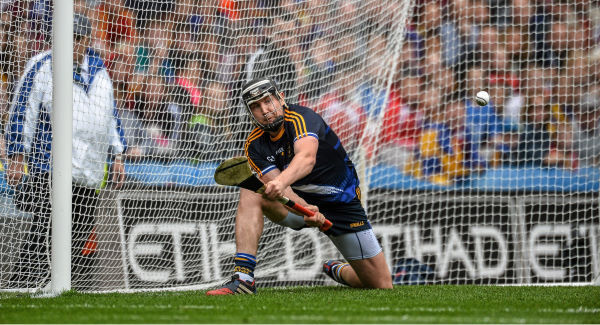
In the second minute, Johnny Coen was unlucky to have a free called against him when it appeared Cathal Barrett ran straight into him. Up to half-time, Galway would have felt a couple of decisions were unfair on them, both involving Joe Canning towards the end of the half.
However, in the second half, Iarla Tannian was lucky to get a free when he was legally hooked and Galway were just as fortunate to have a call go their way with five minutes of normal time left. Barry was correct to consult with umpires in ruling out a Tipperary 65 when the camera showed Lar Corbett was the last man to touch the ball before it crossed the end-line. As for the two penalty decisions, both were spot-on.
Of the two minor games, the biggest moment by far was Galway’s square ball goal. I know a lot of people have commented on it and dismissed it as an illegitimate goal. However, I have watched it back several times on TV and I’m still not 100% certain Cian Salmon was in the small rectangle before the ball arrived.
Finally, in last Monday’s article, I was unclear on whether the same advantage rule applies in hurling and football. Rule 4.34 cites advantage can be played for technical fouls in hurling, while rule 4.36 says it can be played for “a foul” in football. I’m happy to clarify now that rule 5.43 in hurling covers aggressive fouls as well.
We have seen, during the summer, numerous occasions in football where referees allow the five- second advantage and if the ball is kicked wide they bring back the free to where the foul occurred.
We have not seen this as much in hurling, which is surprising because a lot more can happen in five seconds in hurling. A free should be awarded from where the foul occurred if a score does not result within the five seconds.