Raising their game
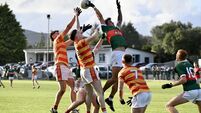
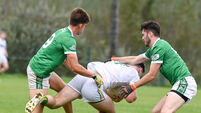
LYNN KELLY, the newly-appointed national development co-ordinator for camogie, is bullish about her favourite game.
“The largest female sporting event of last year in Ireland, in terms of attendance, was the All-Ireland camogie final, with 25,000 people at it. Okay, it was the centenary and there was a bit of a push for it, but it was still the biggest day of the year,” she said.
Although coaching and games development is part of the job description, Kelly’s brief also includes administration.
“Up to the time we were appointed, only three people were working full-time in camogie and a lot of people were working as volunteers without major training,” said Kelly.
“The GAA has launched a major club initiative and the idea is that we, in conjunction with ladies football, would run a similar programme.
“That’s a huge issue, because good administrators make good teams - a good county board always leads to a good team.”
Mary O’Connor is one of three regional development co-ordinators, along with Caroline Murray in Connacht/Leinster and Michael McClements in Ulster.
O’Connor, a Cork ladies footballer and camogie star, took a break from her preparations for tomorrow’s All-Ireland final with Tipperary to outline her role.
“At a national level while there’s ladies football in every county, that isn’t the case in camogie. That’s the same with hurling - you don’t have a strong hurling presence in every county either, you’ve only five or six counties challenging for the All-Ireland every year.
“Camogie is there, it’s a matter of bringing up the profile and increasing participation among girls, particularly at primary level - that’s where you’ll get them.
“The challenge is getting them from the school down to the local GAA pitch then. If you increase participation you’ll increase the number of coaches and administrators as well. You have to make sure that clubs have the structures in place to deal with the influx of girls.
“In the last few years in Cork, with the hurlers being so successful, there’s a lot of interest among girls in hurling and camogie, so it’s a matter of harnessing that.
“Clubs have a lot of girls turning up to play but they need to be able to give them proper coaching.”
O’Connor’s club, Killeagh, can boast over 40 U10s playing camogie every Saturday, but retention is a challenge for them and for other clubs.
“The big drop-off comes when the girls get into their teens and other distractions come into play.
“Secondary school, and early secondary school in particular, is where we lose players. Girls get into first or second year and they get inhibited about playing, so we’re working on getting more competitions going for those years in particular.
“If you have competitions for those age groups, competitions in which girls have a realistic chance of participating, there’s a chance of holding onto those players because they’ll have a hurley in their hands all year round, not just during the summer.
“All things considered though, camogie is as popular as it ever was,” she concluded.
Máire Uí Scolai, PRO of the Camogie Association, is equally confident. “We’re looking at a camogie membership of 90,000 which is very encouraging,” she said.
“Last year, the centenary, was massive for us, and we’re building on that to develop the game, expanding it into 32 counties here while also organising shinty compromise games.”
There are other changes. A recent games review committee came up with some radical ideas to change the senior camogie competitions.
Next season a county like Cork will have a senior team and a senior B team, for example, while the junior competition will be confined to the counties outside the ‘big six.’
A conscious effort is also being made to spread the gospel in counties which don’t have designated county boards, and girls from four such counties - Kerry, Mayo, Sligo and Donegal - will play in the half-time game on Sunday in Croke Park.
Other changes involve changing the minor age level to U18, up from U16, although an U16 competition will be left in place.
“We have a strategic plan in place to cover 2004 to 2008, and the appointment of officers and game restructuring is part of that,” said Uí Scolai.
“The PR and communications committee is also working hard, conducting regional seminars for the last couple of years to get an active PRO in every county.”
O’Connor adds: “Obviously coverage plays a huge role in getting kids interested. Having highlights from the quarter-finals, or even semi-finals, shown on TG4 is a huge boost for ladies football, but for camogie there’s only one game broadcast and that’s the final.
“If that game isn’t great then the public perception of camogie for the year is based solely on that game. That’s why camogie people always hope the final is a good game, to give people a good impression of the game.
“We’re gradually getting close to the GAA and that should help our profile. If you had a situation where intercounty camogie games were played before National League or even championship games in the big stadiums, that’d be a huge boost.”
Uí Scolaí is optimistic about the game’s prospects.
“Camogie has never been in such a healthy position, between competitions here and abroad. The second century of camogie looks very good.”
CONNECT WITH US TODAY



Be the first to know the latest news and updates