BOXING: The manager of dreams
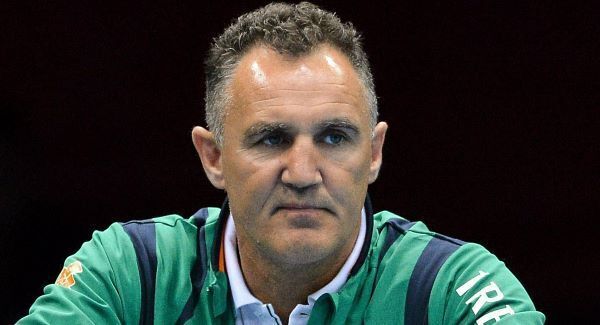
WE’VE all heard the terms: ‘Gaining the edge’, ‘Always looking to improve,’ ‘Sustaining excellence’. Maybe even said them, but how do you actually put flesh on them, give them meaning?
Like a lot of things in Irish sport these days, Billy Walsh and the boxing high performance unit is the best source to find out.
In that soft but effusive manner of his, he tells you that a month out from this year’s Olympic, he and his support staff hosted a family day for the parents, partners and coaches of all of Ireland’s London-bound boxers. Walsh and his team had calculated the boxers would be spending 30% of their time between then and London at home around their loved ones. That represented a great opportunity for performance improvement and a competitive edge.
So they educated the athletes’ loved ones about the language they use in the high performance unit and which they could replicate at home. That it’s all about preparation and performance; take care of that and the outcome takes care of itself. Refrain from talking about medals; they’re under enough pressure from people on the street without you joining that choir. Understand that when they come home, often the last thing they’ll want to talk about is boxing; a tricky dilemma for some of the fathers considering half the London-bound boxers were coached by their own father.
The mothers were addressed too. In fact a mother addressed them. Maura Egan and her son Kenneth gave a fascinating insight into their Beijing experience, what they handled well and what they didn’t. One of their slides showed about 40 people in their family living room, cameras and microphones everywhere, the morning of one of Kenny’s medal fights. Were you ready for that kind of madness, the highs and the lows?
“When we asked them what they’d like out of the day,” recalls Walsh, “their fear was that they didn’t know just how big the Olympics were. They were concerned about their children. What would they turn out like? What would they come home like?”
So the support staff told them the two 80% stories.
The first was about how four in every five athletes experience a wobble in the month leading up to the Olympics, so don’t panic if your kid starts to panic; Walsh found that stat particularly useful when days later John Joe Nevin dropped the bombshell in his office that he didn’t want to go to London.
Then they drew an analogy with Mount Everest. You have all your base camps and training camps. You have the summit. And then you have the descent. Eighty percent of all Everest fatalities occur on the descent. Beijing and even Seoul had taught Walsh just how much that extended to boxing.
“It took me 17 years to get over my own Olympic journey. It still haunts me a bit, how I under-performed, but at least I’m able to put it away now. We had to prepare our athletes for their descent. For a moment in time they are part of the greatest show on earth. Everyone thinks you’re a superstar. Everyone there is beautiful. Everything is free. You’re living on this cloud and then suddenly you’re back to normality.”
To help ease the descent, all the boxing team were in Abbotstown three days after their return from London. Waiting for them was a team of psychologists from the Institute of Sport. Three days later their parents, partners and coaches again met with Walsh and his support team who talked them through the various mood stages they were likely to encounter.
And a month later all the team were all back in the gym on the South Circular Road. That was probably the best therapy of all.
“We learned the hard way after Beijing. Back then we’d left boys off to enjoy themselves and some of them enjoyed it too much. It made us realise that ultimately they’re athletes and athletes are used to structure and to training. The transition is 100% better this time. If anything it’s the lads who medalled who are coping best.”
For any of them to reach the heights though, Walsh had to be at the top of his own game. Early in the year he had his own wobble. Back then it was his mood that was dangerously low.
“There was a lot of stuff and politics going on and I wasn’t in the best place mentally or physically. We went to The Curragh in February and there was a bit of dissent. The group were looking for leadership and I wasn’t fit for purpose. It was then the people closest to me set up Team Walsh.”
It included a best friend from home in Wexford, his secretary and Daragh Sheridan of the Institute of Sport, its role to clear any obstacle for him. He gave up alcohol and took up regular exercise, availing of the cross-trainer in the gym of his midweek Dublin hotel. Only for that regimen and support, he probably wouldn’t have come up with a eureka moment like Family Day. He wouldn’t have been as alert for all the 6am starts and the fights in London.
The previous October at the first Olympic qualifiers in Baku he once had to coach three fights in an hour. In the early days he’d have struggled with that.
“I’d take defeats very badly. I’m much better now. I can now switch from one fight to the next very quickly. You’ve got to be an actor. You’ve got to put on the right face for the next guy going into the ring.
“In Baku, David Oliver Joyce was called for a public warning with four seconds to go in the fight. If that hadn’t happened, he’d have been going to the Olympics. I was cracking up but I had to get myself together and park it because Michael Conlon was heading into the next ring.
“So Michael goes in, beats the world silver medallist to qualify for the Olympics, but straightaway it’s over to the first ring again because Connie Sheehan is about to fight an Olympic gold medallist from Italy. And I end up throwing in the towel because Connie wasn’t fighting to win. He was happy to just get through the fight. That’s not good enough. We have high standards. You’re representing your country. So right in that hour you had the whole spectrum.”
Naturally Sheehan was even more peeved at that point. He didn’t talk to Walsh for days. But of course they’re talking now like they all talk to Walsh because as much as they all love him they’ve all experienced tough love from him at some point.
The qualifying tournament in April could so easily have been all about Joe Ward. The very thing they had dreaded had become a reality: the Belfast kid had been pitted against a Turkish fighter, in Turkey. Ward had clearly won the fight but he’d lost the decision and with it the whole world and Irish team nearly lost their minds.
“Irish people are very good to whinge and feel hard one by. We had to nip that in the bud. At that stage we had no qualified yet from that tournament so I told one of the coaches to tell our four remaining guys left in the tournament to be in my room when I got back to the hotel.
“I said to them, ‘What do we speak about all the time? Performing. Did Joe perform to the best of his ability?’ And they all said ‘No.’ I said, ‘Okay, if he had, would he have qualified?’ And they all said ‘Yes.’ So I said, ‘The Joe Show is over. He’s not going to qualify. You can still qualify. We’ve to focus on you four guys.’
Two of those fighters were Paddy Barnes and Adam Nolan, both of whom qualified for London.
A couple of months later Walsh was having much sterner words with Barnes, and John Joe Nevin and Michael Conlon. All three Olympic medallists were overweight for a warm-up tournament in France. Walsh had gone to serious lengths to arrange that series of fights, the last they’d get in before London. And this was his reward? Not to be consulted about their decision to keep some weight on? For him to be embarrassed in front of other international coaches?
His first instinct was to send them home. But then he thought about it some more. They were heading to the Olympics. They needed these fights. So after giving them a dressing down, he moved them up a weight.
Conlon won his three fights. Barnes lost only one of his. John Joe lost two of his. When they returned to Dublin, Nevin called up to the National Stadium and told Walsh that he didn’t want to go to the Olympics.
Again Walsh provided him with the face and the words that he needed. He nodded. He empathised. He even smiled. When you’ve seen time and time again the crisis of today turn out to be the joke of tomorrow, you learn sometimes to laugh today.
“When he asked me why I was smiling, I said ‘John Joe, every time there’s been a crisis with you, you’ve medalled! It was the same before [the 2009 world championships in] Milan, it was the same before Baku. You say you’re worried about your form. Form is temporary, class is permanent, and you’re class. We have five weeks left. I know you. You’ll get in peak shape very quickly. We’ve the Indian national team coming over for 10 days and by the end of that you’ll feel a lot better. Forget about all the pressure and talk of medals. Let’s live in the moment, get the best out of yourself and we’ll take it from there.’”
THE rest is not so much history as poetry. On the way out Nevin was met by the squad’s sport psychologist Gerry Hussey, who went for a run with him. They all had a wonderful camp in the serene setting of Assisi, with Walsh on the pads, working on Nevin’s mind.
They were the first athletes in the Olympic village, the extra few days’ orientation making them feel they had another edge. They were also the first team to case the ExCel Arena; the day they visited, the ring canvas was still covered in plastic. The stadium manager was a Mayo man that Walsh knew so they got the grand tour, allowing them to visualise in advance their warm-up in that dressing room, their entrance from the tunnel and their dance onto that canvas.
Some things they weren’t quite prepared for, until they learned to prepare for them too. John Joe was the first to fight. Waiting in that tunnel was like something from Gladiator. When the curtain was pulled back, the noise from the music and crowd stunned him. After the first round Walsh had to snap him out of it. Fight the fight instead of looking at the crowd. Nevin nodded. They all got the message. That evening Hussey replayed that curtain moment to the rest of the team and downloaded it onto their iPods so they were ready for that assault on the senses.
Katie didn’t need any iPod. When she emerged for her first fight the sound made the hair on the back of Walsh’s neck stand, yet when he looked over at Katie, she was just nodding, cool as you like. He hasn’t met anyone with her focus. Last week he did some padwork with her and was astonished by her desire to become even greater.
It hasn’t been lost on Walsh that Katie was the only one to bring home gold. The six medals the lads brought back from Beijing and London were all either silver or bronze. In another domain they’d be labelled as the Mayo of boxing; regular, plucky contenders but never outright winners.
“The programme has been driven to win men’s gold medals, we’ve been knocking on the door twice and we still haven’t got over that line. There’s still that drive to achieve that. To be honest I came back disappointed from London. You’d have very mixed emotions. You win a bronze medal but you’ve lost. You win a silver medal and you lose. Paddy [Barnes] should have been in the final. If Joe [Ward] had made it out of Turkey he’d have won gold in London; the four guys who all medalled in his weight, he’s beaten them all. John Joe was good enough to win the final.
“I was annoyed with some of my own communication. We had the tactics right but we didn’t have him [John Joe] in the right mindset to implement them. After he’d beaten the Cuban [and world champion] in the semi-final, I spoke to the media about gold medals. I’d never spoken about medals before. In my own mind I was talking about him getting the Val Barker trophy for best boxer of the Olympics. I don’t know if that fed into John Joe. John Joe needs to have a fear of an opponent and he didn’t fear [Luke] Campbell because he had beaten him before.
“Where we were staying also had all these signs outlining when your bags had to be cleared out of your room and what time your departure was at. So everyone else is getting ready to go home, the party’s started while we’ve still a final to fight. We should have ripped those signs off the door to say ‘We’re not finished.’”
The good news is they still aren’t. Last month Walsh, Zaur Antia and Pete Taylor spent four days being tutored by Professor Vasily Filimonov, the hugely regarded Russian coach. They brought a team to a 19-nation tournament in Finland and six of the seven Irish boxers medalled. This past week Jason Quigley from Donegal and Hughie Myers from Mullingar each reached a final at the European under-23 championships. In February there’ll be the national championships.
“What we did in London won’t be good enough when we go to Minsk for the European championships in May. When I’m retired with the slippers and the pipe, then I’ll maybe bask in it, but now we just keep doing as much as we can.”
‘Gaining the edge.’ ‘Always looking to improve.’ ‘Sustaining excellence.’ They live it.
Billy Walsh embodies it.