Tommy Martin: At Croke Park we'll celebrate Katie Taylor and what she represents
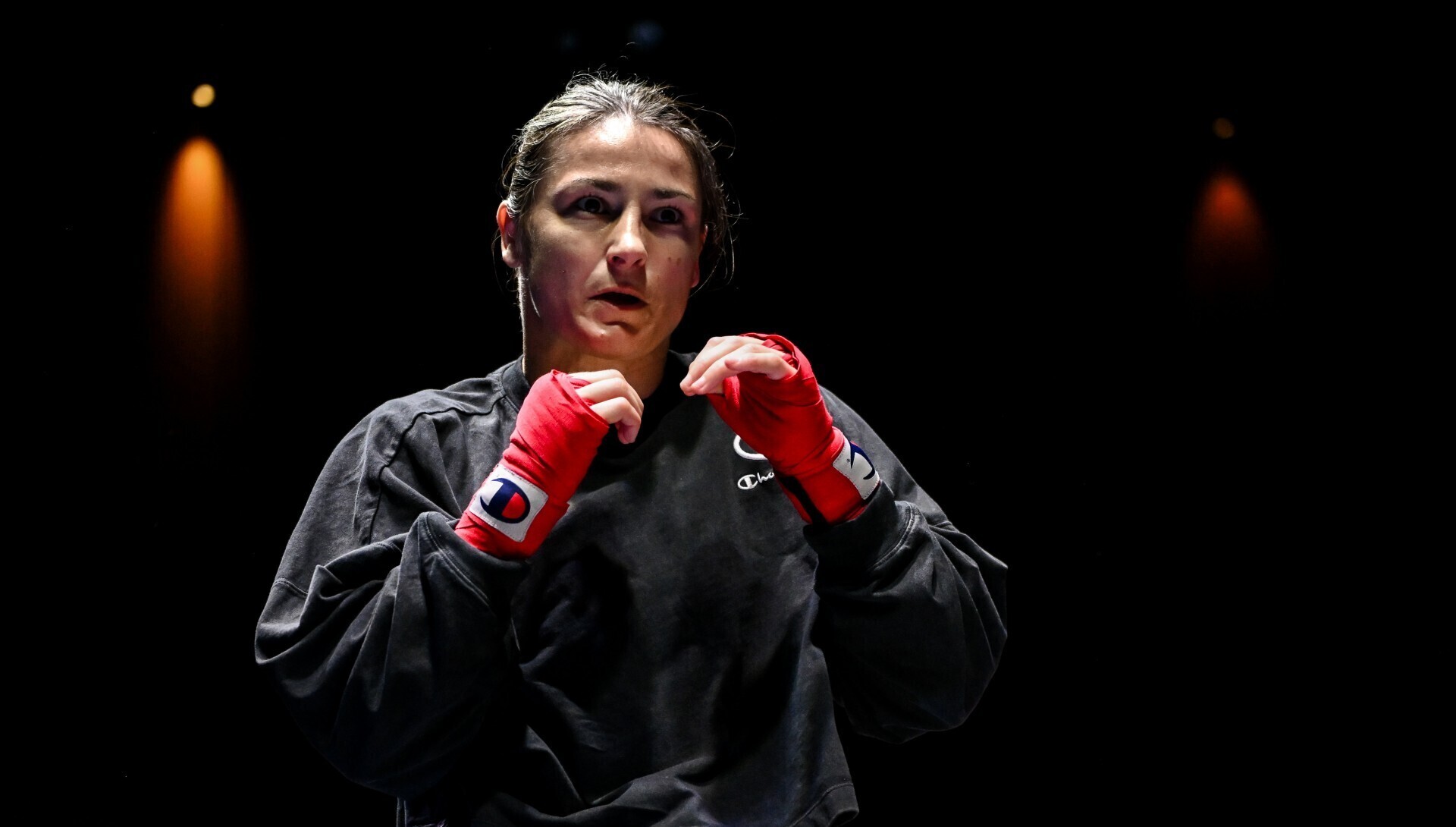
Katie Taylor stands apart in a world whose values have never seemed more disposable and up for sale. Pic: Stephen McCarthy/Sportsfile

Who ever thought it was a good idea to tell Katie Taylor she couldn’t do something?
Be a girl who boxes. Be a girl who boxes in the Olympics. Be a girl who boxes in the Olympics andwins gold. Turn professional and headline sellout cards at Madison Square Garden. Have pay-per-view companies and streamers fighting to show a women’s boxing card.
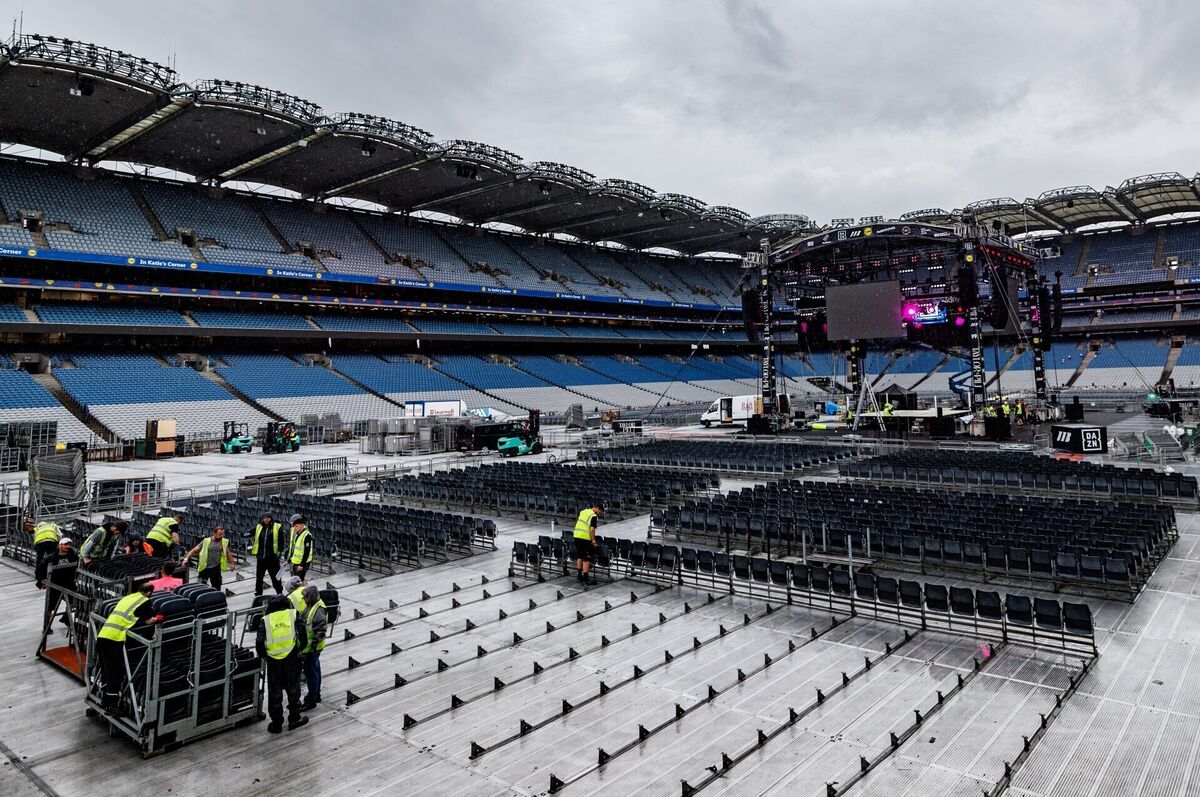
Stage a fight in Croke Park. Sell out 80,000 tickets for Croke Park. Fight her last fight at Croke Park and get to have the farewell she deserves.
Tick, tick, tick, tick and tick.
At some stage in the incubation of each dream that Katie Taylor has fulfilled, someone told her it couldn’t be done, wouldn’t be done or shouldn’t be done. Lesson learned. Nothing this extraordinary woman decides is possible cannot be bent to her will, it seems and, as a nation prepares to show its love, she has no more worlds to conquer.
Read More
“It will be an event, more than a boxing card,” said Taylor’s manager Brian Peters when the details of the historic night were announced. He was talking about the need to pitch the night beyond the fight fan demographic and into the broader market for mass happenings that sets Irish Ticketmaster accounts ablaze on a regular basis.
FOMO is our national psychosis, and the prospect of not being there for the thing that everyone is talking about will make us turn up, cowboy-hatted and chanting Olé, Olé, Olé, at all sorts of games, gigs and shindigs. Peters and co reckoned the seats in Croker would need to be filled with bums not used to being planted ringside. The general public would need bands, fireworks, light shows – an event, more than a fight.
As it turned out, Katie was the event. Yes, the tickets were reasonable. There was talk of musical acts and a family friendly atmosphere. It was Croke Park, the national playground. But it’s a big old hall. Would people turn out for Katie?
The tickets sold out in half an hour. There was no need for the hard sell. The slots on chat shows and public appearances were pushing an open door. It’s for Katie, of course we’ll be there.
In economics, they say scarcity is the biggest driver of value and this was an impending scarcity of Katie. Sometimes you don’t know what you’ve got till it's gone and this was damn near gone. In a moment, everything that Katie meant to the people who had watched her journey was crystallised and they got their credit cards out.
It has been mentioned that 90% of those that bought tickets for this fight had never been to a boxing event before. So, what are they coming to see? Disgracefully unable to fight in her home country for so long due to the malign forces within the fight game, Taylor had herhomecoming fights in 2023 in the 3Arena, both against Chantelle Cameron.
The first of those sold out quickly, but tickets for the victorious rematch in the 9,000-seater venue only sold out in the days before the fight. This was Ireland’s most-admired sportsperson in a still rare outing on home soil, and the crowd wasn’t too far in excess of a high-stakes Dublin derby in Tallaght Stadium.
Boxing is a sport whose tradition runs deep in Ireland, but it remains a niche concern. The 3Arena cards were fight nights, properly festooned with the signature air of excitement and danger and the hint of sulphur that the late A.J. Liebling himself would have recognised had he walked in off the Liffey quays.
The people going to Croke Park, the promoters’ statistics tell us, are after something different. It’s an event, more than a boxing card, as Peters said. And the event is about saying farewell to Katie; thanking her, paying tribute to her and celebrating her, but also celebrating what she represents.
She has always been different. Ireland loves archetypes because we take comfort in the sense that we all know each other. We like to be able to place someone. Our pop culture is full of archetypes. Ross O’Carroll-Kelly, Father Ted, The Two Johnnies, the Aisling character from the popular fiction series. David McWilliams made himself famous by understanding the economics of archetypes.
But Katie is not an archetype. Her whole life has been about rubbing out the lines that tell you who you are and what you should do. That’s why the papers sent snappers out to Bray to get shots of the 10-year-old girl who wanted to box. She is of us, but she is not one of us.
There’s the God thing. For much of early Taylor’s rise, a lot of people in Ireland were uncomfortable with open displays of faith. This has changed lately with multiculturalism and the general sense of tolerance for whatever it is that turns you on.
But in those years when Taylor was winning championship medals and pushing the cause of women’s boxing at the Olympics, people would often roll their eyes at “the God stuff”. It was thought weird and uncomfortable. “We don’t do God,” as Alastair Campbell once rapped at a journo trying to ask Tony Blair about his faith.
Of course, this said more about us than it did about Katie: the deep cynicism and hurt that the crimes of the Catholic church had left on the national psyche. The only permissible way to talk about faith was in the vernacular of the stand-up comic, making gags about dodgy priests and being forced to go to mass by your mam.
Katie’s born-again Pentecostal Christianity has been a constant throughout her time in the public eye, vocally but not loudly expressed whenever words of gratitude or entreaty were needed. You could say that God is the one person that has been in her corner throughout. We got over it, Katie winning the way she always does, by being true to herself and making you adjust your stance.
The sense of otherness about Katie persists even though those who spend time in her company talk about how she is warm and witty and dead, dead sound. I remember being sent to the airport to meet her coming back with an amateur gold medal and seeing her emerge through a clutch of muscular male boxers. She seemed tiny and slight back then but radiated an immense core of strength, the eyes smiling but dark and defiant. She was shiny and hard, like a diamond.
Most of her professional journey has been spent away from Ireland, in America, where she lives, trains and recently got married. In that time and distance, she has become a venerated figure, moving past the “Our Katie” of the Jimmy Magee days, through the god-adjacent, big vision phase, the Bono it was ok to like.
Now she is a secular saint, less Virgin Mary and more Joan of Arc, a girl touched by God who wore a boy’s armour into battle. The moment the vastness of Croke Park was opened to her, people realised what she had come to mean. This will be a pilgrimage, more than a boxing card.
Katie Taylor stands apart in a world whose values have never seemed more disposable and up for sale, where self-aggrandisement is hard currency and everyone has a ring light. By celebrating Katie, we are saying that the things she represents – courage, single-mindedness, honesty, defiance, integrity, hard work, humility and the refusal to accept obvious injustice – are the values that should be celebrated. There is something reassuring about this. We have recognised that she is of us, not one of us, but the best of us. Whatever she wants to do next, don't dare tell her it can't be done.