Tommy Martin: Meltdown into hurling panic has been alarmingly swift
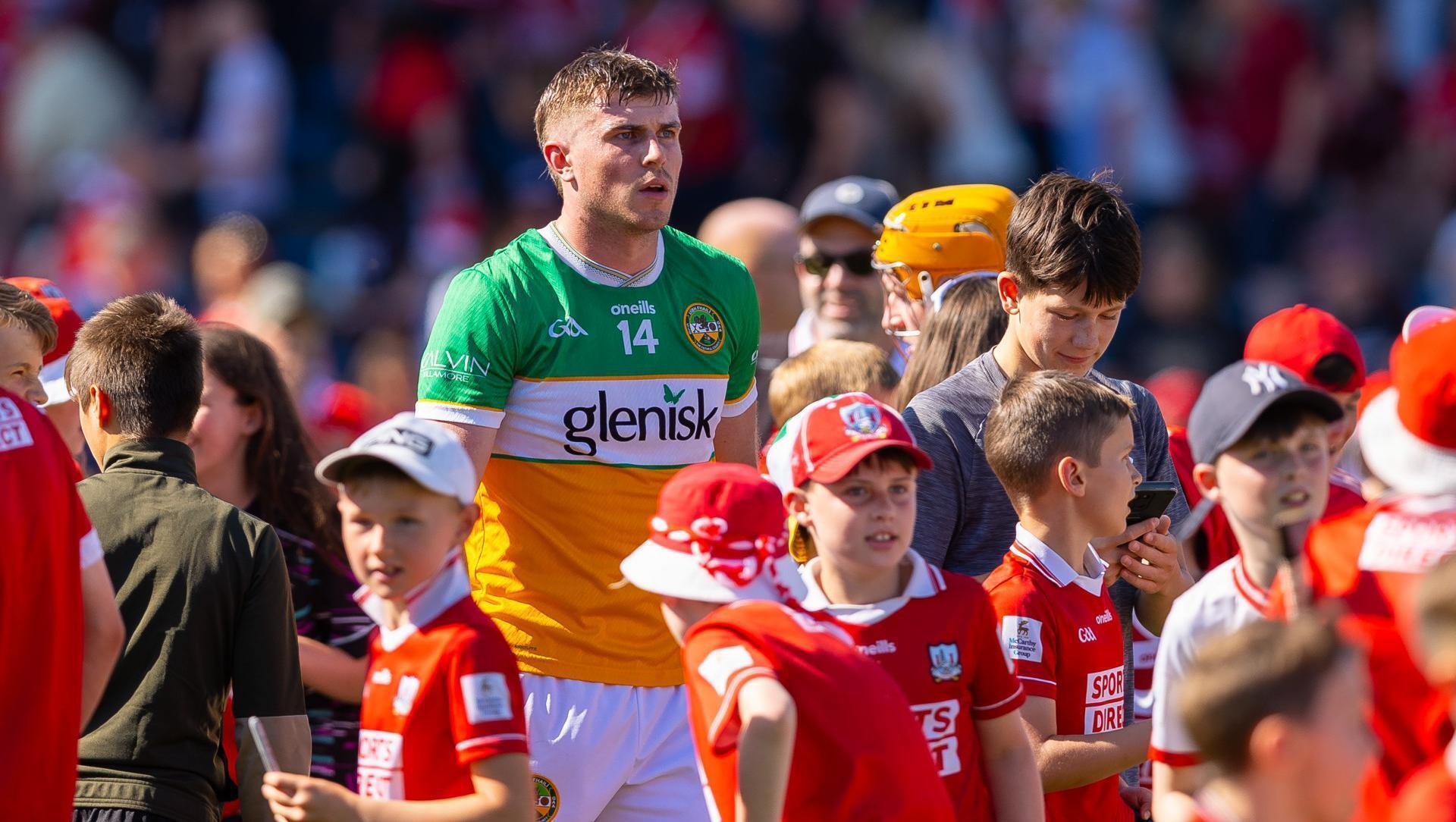
Offaly's Brian Duignan dejected after the heavy defeat to Cork in the quarter-finals. Pic: INPHO/Tom O'Hanlon

Checking in on our old friends in the great sport of hurling, only one inquiry feels appropriate.
U ok hun?
Seriously, the vibes have never been so bad heading into one of the ancient game’s marquee weekends. Hurling is in crisis. Hurling is being disrespected at every turn. Hurling needs restructuring. Hurling should be left alone. Hurling, some have claimed, is dying.
This weekend, over 150,000 souls will pack into Croke Park to watch this bag of wheezing bones. The semi-final between Cork and Galway is expected to push GAA HQ close to its 82,300 capacity. If this is dying, book me into whatever Swiss clinic you guys are using.
Fair enough, there is an understandable feeling of trepidation about these semi-finals, following on from the beatings administered to Leinster opposition in the quarter-finals two weeks ago.

That weekend, Clare beat Dublin by 13 points and Cork beat Offaly by 26 points. If these games follow a similar script and Cork and Limerick show themselves to be furlongs ahead of the field, then claims of existential peril will gain another smidgen of validation.
Nonetheless, the lurch from unease about a forgettable inter-county season into all-out, hair-on-fire meltdown has been alarming. The natural waxing and waning of various teams’ competitiveness has been mixed with deep-seated insecurity about the game’s place in the scheme of things, bubbling over into a full-on collective panic attack. If hurling were at a house party, it would sitting crying on the stairs with mascara running down its face.
While a lot of the talk has focused on practical matters like tweaking the championship format to factor in Munster superiority, or the need to lengthen the season so that hurling takes more of a starring role in the summer months, or general questions about growing the game in traditional and non-traditional areas, there has also been a doom-laden subtext to the mood.
The elegiac tone was captured by the great hurling man Eamon O’Shea in these pages, writing this week about how his thoughts wandered during a cycle in the Burren to question the very future of the sport.
“As I rest, my mind begins to reflect on the potential demise of the game nationally,” O’Shea wrote. “For sure there are signs of progress. Kildare being the case in point this year. But it is a fair question to ask if hurling is sustainable in the long run? I am not talking about this year, or the next, or the next ten years, but in the decades to come. Are we in the downhill phase of the long decline?”
When a genius hurling mind such as O’Shea talks, you listen. His prescription to arrest the decline is detailed and sensible but you do wonder if there is something in the air that has provoked such dark forebodings. Dónal Óg Cusack has described the game as a “hardy flower surviving on resilience” and this sense of endangerment leads to a natural protectiveness, where a bad season is greeted with the same anxiety as the folks at Beijing Zoo might view marital discord in the Giant Panda enclosure.
It is a fundamental truth about hurling that something so good is enjoyed by so relatively few; if events this weekend transpire to suggest that only Cork and Limerick are objectively any good at this hurling lark right now, it will only encourage the deep-seated fear that the herd numbers are dwindling.
But if there is something, aside from the underperformance of traditional powerhouses like Kilkenny and Tipperary, that has elevated questions about the overall health of the game into something more histrionic, then it can be boiled down to one word: football.
For all eternity, hurling has been able to console itself through its troubles and tribulations with its superiority to Gaelic football. Unlike hurling, football is popular and widely played, but then so is the music of Coldplay. Hurling could always rest easy that in terms of both cultural heft and sheer sporting spectacle, it would always be self-evidently so much better than football.
Can you really say that now, after the FRC has had its wicked way? Sure, hurling has its UNESCO status, and a good game of hurling still beats all, but the sudden glow-up football has enjoyed in both its playing rules and championship format has only served to amplify all hurling’s flaws and insecurities.
"Whenever a friend succeeds, a little something in me dies,” said Gore Vidal and hurling seems to be following the late American thinker’s worldview. The two sports are cheek by jowl in so many ways, but it is far from a marriage of equals. The relationship is more like that between Ireland and England, deeply interwoven and occasionally hostile but where the larger party doesn’t really care what the smaller cousin thinks about it.
Watching football receive the garlands when so recently everyone was chucking rotten eggs in its direction has been too much to take when hurling’s own showpiece has been earning mixed reviews. You only have to go back into archives to the distant summer of 2024 and see what this correspondent wrote about that season’s championships to see how much has changed in so little time.
“If Gaelic football resembles the three-point turn scene in Austin Powers, trying to back its way out of tactical and structural dead ends,” this column parped in those dark, pre-FRC times, “hurling seems designed to accommodate each modern rationalisation and just get better…Every season brings a new candidate for greatest game ever; every campaign seems more colourful than the last.”
So, hurling should wipe off the mascara, pull itself together and rest assured that things can change very quickly. Better still, the underlying trends that its devotees fear are not as bad as all that. I’ve no idea if the Hurling Development Committee under William Maher will be successful, but it has laid out a plan to grow the game with measurable targets over the long term.
The government are committing €750,000 a year ring-fenced for hurling in non-traditional counties. Jarlath Burns says it might take 20 years – he might be underestimating things. But the GAA has shown it can sort out big issues when it puts its mind to it; plus, it is loaded with GAA+ and football gate cash and is ready and willing to throw money at problems. It got the poshest suburbs of south Dublin to play the quintessential culchie game, so the conquest of hostile territory is nothing new.
And so what if Longford never challenge for Liam MacCarthy and hurling at the highest level remains the preserve of a few? So is rugby union and that muddles along okay. The last time hurling nearly died, it took a famine and penal laws imposed by an occupying force (England, not the FRC). Hopefully we’re not due any of those any time soon.
In the shorter term, we have two superb teams in Cork and Limerick, one great champion team in Clare hoping for a last dance and a highly promising Galway squad who could be ready to kick on. All playing in front of massive, heaving crowds this weekend. Below that, do you really think Kilkenny and Tipp won’t come again in a big way? Or the incremental improvements in Dublin, Offaly and Kildare won’t keeping ticking along?
Football is in annoyingly rude health and there are a few sick patients in the infirmary, but don’t call in the undertakers just yet.