John Riordan: As a raft of football stars cross the Atlantic, maybe it's better to have the old ways back
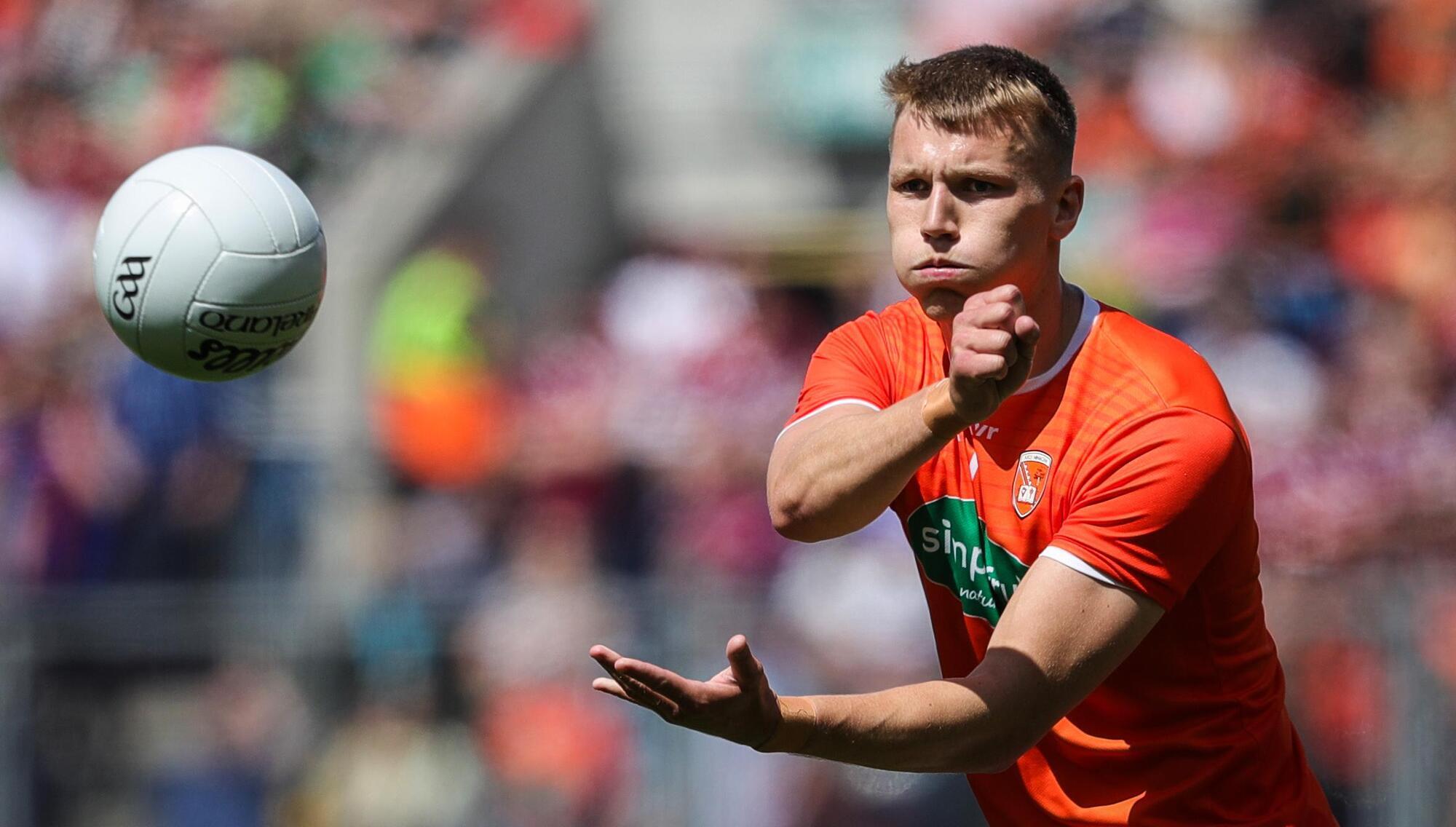
Rian O'Neill to Chicago, Ruairi Canavan to Philly, seven Mayo panel members joining the one club in the Windy City: after a pandemic pause of three years, the summer influx of talent is back Stateside. There's a lot to like about it.
John Riordan: As a raft of football stars cross the Atlantic, maybe it's better to have the old ways back

Chicago cub: Armagh's Rian O'Neill is heading Stateside for a summer of club football there. Pic: INPHO/Evan Treacy

Maybe it's my fault for not digging around enough (or the timesuck that was watching the downfall of Boris) but the only Gaelic football story I read this week as of Thursday morning was the link sent to our WhatsApp group by my friend back in Cork. Which is a dereliction of duty considering the week that’s in it.

Alas, no, I'm afraid the reporter he was urging us to read wasn't excitedly previewing the weekend of real football we're lucky to be looking forward to. I suppose that feel-good kind of thing doesn't normally generate your usual WhatsApp fodder; the text group is not the best place to earnestly anticipate the Tailteann Cup final and the All-Ireland SFC's final four.


It was a link to a no-nonsense, no-frills, collated list of footballers coming to America for the summer. In other words, total clickbait. But it was illuminating in its sheer quantity, the extent of which offered the sender the chance to crack that he might be next to expect a call-up, such was the frenzy of recruitment in the States. He'd recently come out of retirement to play sweeper keeper at the All Islands on Bere Island. Anything is possible.

The lazy ones like me had heard that Rian O'Neill had been lured by a club in Chicago not long after the heartbreaking penalty shootout loss to Galway. But not until I had seen the vast array of talent making the trip across for a summer of a lifetime did a few things dawn on me.

For one, this formerly annual rite of passage hadn't happened in fully three years. That's a long time in the GAA. It sparked the barely believable memory of there having been a one-way travel ban for so long between the US and the EU which only recently ended in early November.

The pandemic restrictions on travel caused a lot of real-world impact, much more serious than those felt by Gaelic games, but for pockets of Chicago, Philly, SF, Boston and New York, the lifeblood of the infamous summer sanction felt like a suddenly extinct species.

To varying degrees, the big cities made the most of it and they replicated the realities of every other GAA outpost across North America by relying solely on homebred and homegrown players. Enjoyable seasons, competitive championships and a distinct lack of a money-driven rat race for school teachers and students who excel at their chosen sport ensured that everyone found their new niche.

It had dawned on me also that the change in the pace and timing of intercounty fixtures this year had thrown the market into absolute disarray, just in time for its dramatic revival.

The deadline for sanctioned players being registered to play as invited guest of the New York and North America County Boards is July 1, perfect timing for the players listed on the panels of defeated quarter-finalists in both codes. There was just enough breathing room to put out feelers or to - more likely - reply to missed calls from +1 numbers.

When I saw the list of players, I made a few calls to old contacts in the Bay Area, Chicago and Boston to get a sense of the feeling on the ground and it's almost universally positive.

Whether you're a GAA member focused on nurturing young homegrown talent or a purist hellbent on building a homebased club of Irish immigrants who are there for the long haul and not the quick buck, this most recent infusion of top-level ballers seems to be taking on a fresher, more positive meaning than it might have done in 2019.

That was back before the notion that an opportunity to travel to play like that felt cast in stone. It hasn’t always been a smooth process and there is plenty to be cynical about. Some of my earliest memories of the GAA are of the stars of the late 80s playing in America and facing suspensions for doing so in a less than kosher manner.

For the first half of my 12 years in New York, I actively railed against it and took part in the Association in ways that reflected the need for a different way. Meanwhile, stricter immigration laws meant sterner interrogations of young players at airports. Somehow, there was always a way through.

And then it stopped.

Not coincidentally, the delayed 2020 season in New York and its regularly operated 2021 season saw senior football championship wins for the first time ever for an all-American team, MacLean Avenue's St Barnabas. Most of the other cities didn’t bounce back as quickly and the San Francisco representatives didn't even travel to Boston in 2021 for the North American Championships, such was the lopsided way the pandemic conditions bounced around the US.

But now they’re back and some of the names are impressive. Two 2021 All-Ireland winners in Michael McKernan and Conor Meyler who both head to Chicago's Parnells club while their Tyrone compatriot Ruairi Canavan will line out with St Patricks in Philadelphia.

Chicago clubs made the biggest splash and most eye-catching of all was John McBrides snapping up seven Mayo footballers, most notably Enda Hession, Paul Towey, Eoin McLoughlin, Oisin Mullin and Matthew Ruane.

They will have enough time to impress the locals and the objective will be to drag their club to the national championships which take place in Chicago the third weekend of August.

For most counties, this will still be in-season for the all-important domestic club championships, allowing everyone to live life to the fullest, as much as possible.

But there is also a new feel to this somewhat post-pandemic GAA landscape in the US. Some of the rules are the same; each incoming player needs to commit to a minimum 30-day sanction. But the playing rules have tweaked slightly and to enough of an extent that some of these elite lads are going to have to be patient with lower level players and a bit of bench sitting all while adjusting to the age-old 13-aside requisite.

Last November, there was a rule passed that every team in North America from senior down to Junior D must have a minimum of two American-born players on the field. With young Americans having multiple summer commitments of their own and not necessarily of their heritage, this will prove problematic for the clubs who have traditionally been reliant on opening out the coffers for the visiting star.

On the flip side, if you're American-born in a city like Chicago, you can play junior with one club and senior with another, if you're good enough to do so. It allows some of the more progressive youth development clubs to keep their own identity and then also watch the players who grew up in their system go test themselves against the intercounty elites.

That won’t always be possible, however, GAA rivalries and tensions being as they are means the spoils won’t always be shared so generously. Some would describe that as chickens coming home to roost - even one individual I spoke with who accepted that as being a price of doing business over the years - but the larger story is that the GAA in North America has continued to grow and this influx will only serve to boost the overall story.

With the summer players back, it has meant in some cases that a lot of clubs have grown back out to two teams - which seems miniscule when compared with clubs back home but means a huge lift on this side of the Atlantic.

By the time the nationals roll around in August, there will likely be around 5,000 players registered to the North American board. And over the course of that weekend, there'll be almost 120 games played. Just 10 of them will be senior clashes between the big stars.

There’ll be plenty of entertainment for the neutral enjoying Sundays at Canton, south of Boston, and Treasure Island in the Bay Area and the particularly impressive facility that’s built up at Gaelic Park in Chicago.

And the best boon of all will be the cause of domestic development of young players who will enjoy some coaching sessions given by these celebrity players at Cúl Camps and the like.

As was told to me by one GAA member whose focus was primarily here, the modern GAA player travelling over needs only to be asked once to give a little back to their temporary home. In that light, maybe it's better to have the old ways back.

More in this section

Sport

Newsletter

Latest news from the world of sport, along with the best in opinion from our outstanding team of sports writers. and reporters

Cookie Policy Privacy Policy Brand Safety FAQ Help Contact Us Terms and Conditions

© Examiner Echo Group Limited