Kieran Shannon: Mickey Moran, quiet man of GAA, always putting players first
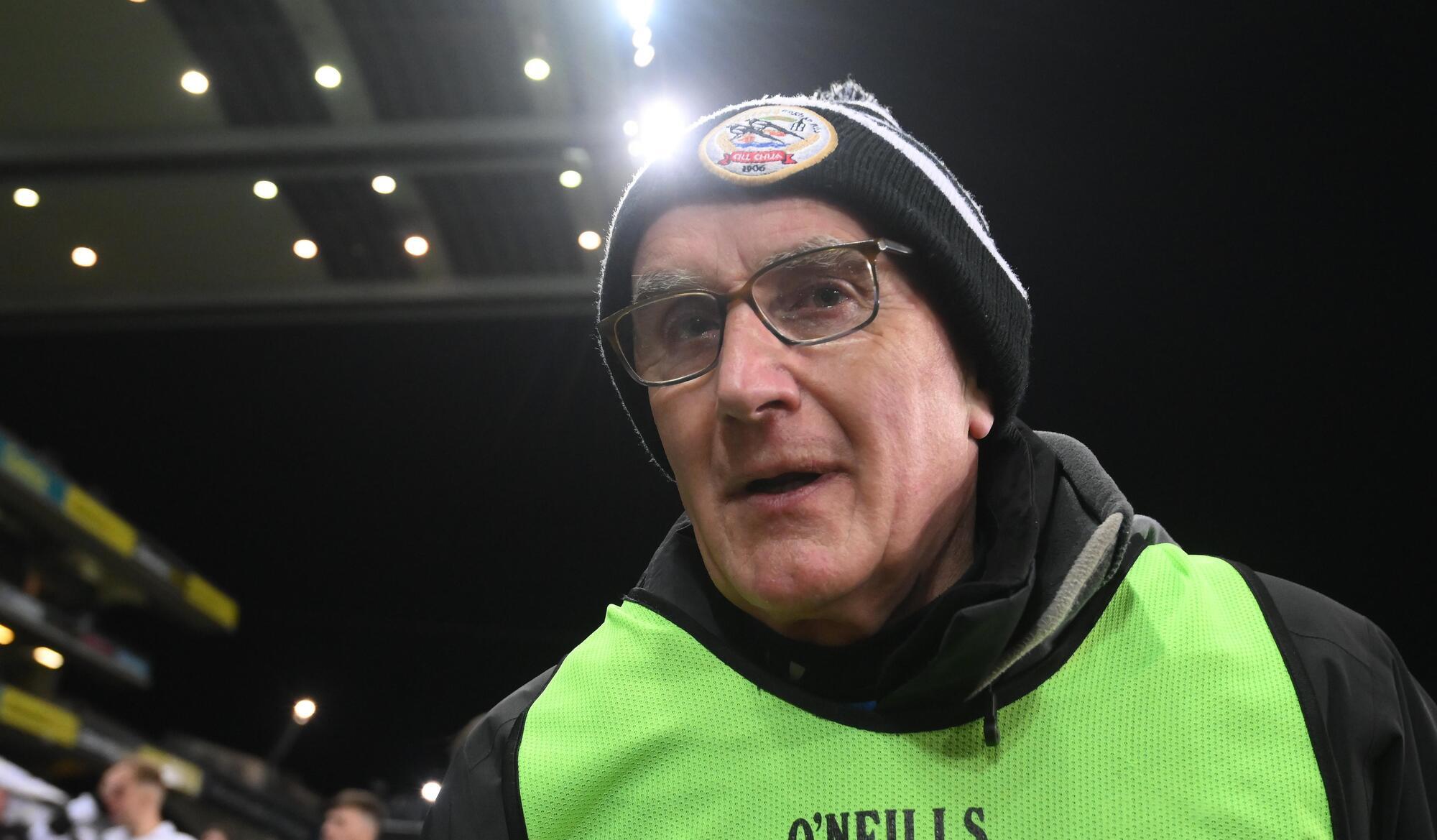
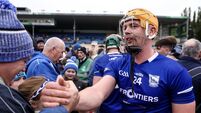
Kilcoo manager Mickey Moran after the All-Ireland Club SFC final win over Kilmacud Crokes. Picture: Stephen McCarthy/Sportsfile
Like everyone else outside the Kilcoo huddle, I can no longer hear his voice now that he refrains from doing any media, only in my inner ear when recalling a rare audience he granted me quite a few moons ago.
And seeing Mickey Moran’s reaction upon the final whistle sounding in Croke Park last Saturday evening triggered snatches of that conversation back in 2004 to surface again.
“I don’t like the media aspect of [county management],” he’d tell me over tea in a hotel lobby in an interview with and lined up by our mutual friend, the late great John Morrison, a week out from a Derry team they were coaching faced Kerry in an All-Ireland semi-final. “I’m not comfortable with it. It’s got wild high profile this past while, you just feel sometimes that you don’t even want to be involved in football.
“Once the final whistle goes? Anti-climax. Job done. You just want to get back to the training pitch the next night, quick. Get home and go for a walk and think about how we’re going to go about our next session on the Tuesday. The training ground. That’s where the buzz is. The actual field and seeing things from there come to fruition during a match. That’s the satisfaction. Knowing the fellas and watching them do a job, because to me that’s who it’s all about – the players.”
There were three separate post-match vignettes from Kilcoo’s remarkable All-Ireland win that reinforced how sincere those sentiments from Moran were.
Once the final whistle went, there was no act of triumphalism or even euphoria from Moran. “Anti-climax. Job done.” Instead his instinctive reaction was to walk in the direction of the losing manager, Kilmacud’s Robbie Brennan. En route he was met by a couple of jubilant supporters whose congratulations he simply shrugged off; the only thing that delayed him from embracing Brennan was when he crossed paths of the Crokes’ player Craig Dyas and shared a similar moment with him.
Then, after finally intermingling with and congratulating his players, Moran broke away from them to head towards the Hill 16 end of the ground and get on his hands and knees like Pope John Paul II to kiss the spot where Jerome Johnston scored that dramatic late winning goal. “That’s where the buzz is. The actual field and seeing things from the training ground come to fruition during a match. That’s the satisfaction.” Then, to symbolise what he means to the players, he was called up to the steps of the Hogan Stand by captains Conor Laverty and Aidan Branagan to share in the moment they finally got to lift the Andy Merrigan Cup. While Moran appreciated the gesture, he visibly looked as comfortable being up on the podium as he’d be if they’d asked him to join them on one of the dancefloors they’ve been seen raving and lighting up the last couple of days. As Conleith Gilligan, his now number-two who he is happy to offload all media duties to, would say afterwards, Moran didn’t want to go up, only Laverty was insistent. Planting flags isn’t his thing; planting seeds are. The podium isn’t where he wants to be; the training ground is.
Moran would be what the Danish psychologist Dr Helle Hein would describe as the introverted performance addict. They’re “classical nerds”. They get their kick from coming up with creative and innovative ways of “cracking nuts of increasing difficulty”. When the nut is cracked, they don’t celebrate like most people do. They can appear like “loners”, who withdraw from, or stay on the periphery of, the celebrations. They celebrate, says Hein, by throwing something of “an introverted party”, in which it’s as if they’re sipping a cup of coffee and nodding approvingly, watching their co-workers bound around more energetically, or, in Moran’s case, kissing the spot where a training ground move was completed. Until, not long after, they get itchy and restless and go looking for another tough nut and try to come up with ways to crack it. And yearn for the next Tuesday night.
In a way it can be overstated just what Moran achieved last Saturday. It wasn’t like he single-handedly transformed Kilcoo. Other managers, like Jim McCorry and Paul McIvor, did a lot of heavy lifting before him, turning Kilcoo from also-rans into eventual champions and then serial county champions and constant challengers for Ulster.
And it wasn’t like Moran hadn’t won an All-Ireland before. He was, of course, part of the coaching ticket in Derry’s that was 1993. But after how things then turned sour up there between himself and Eamon Coleman, and the four other subsequent All-Ireland final defeats he’d experienced as a manager, there was universal delight that he’d finally finished on top as a number one.
He’s been at this craic a long time now, trying to crack nuts. He first started playing senior for his club, Watty Grahams, AKA The Glen, 54 years ago back when he was 15 and a half. “They’d only 14 men and I was picked up bringing ice cream back for dinner,” he’d smilingly tell me and Morrison back in 2004. Soon he was coaching teams in the club, being a young PE teacher, though that’s often forgotten because his long great CV in the game includes so few seasons taking their senior team.
By 28 he was managing Derry. “I was still playing but they couldn’t get a manager. Anthony McGurk said to me, ‘You take the training for now and we’ll get a manager.’ So I took the training. But in the end, they didn’t get anyone to manage the team so I ended up being player-manager, and eventually just being the manager. And I regret that. I would love to have just played as a player until I could no longer play. But sure life is full of regrets.”
Derry would prompt a few more of them. When we spoke in 2004 he was reluctant to go back over what had happened a decade earlier. “It happened and that’s it. I did what I felt was right [replacing Coleman as manager for the 1994-95 season] and other people felt differently and felt they were right and I respect that. Things have moved on. And nobody will ever take ’93 away from all of us.” At the time of all that hurt and strife in Derry, he wouldn’t have been perceived to be a players’ man the way his once-great collaborator Coleman was. But over the years the GAA public has come to understand through his actions and the words of others what was apparent to me from that conversation with Morrison.
He is a gentle, private, thoughtful man; during our chat, he spoke about how he prefers going for a walk than a pint, how much he was enjoying John Pilger’s latest book and critique of modern imperialism, and how the radio “is a fantastic friend” during his commutes to training.
And he’s been ahead of his time, championing a games-based and player-centred approach long before it was fashionable or widespread.
“Coaching and training is all about feel,” he’d say that evening. “Fellas take training and say ‘We’ll do that there for two minutes and that then there for five.’ There’s not one of our training sessions that we don’t change midstream: we either add more or take away or stop something we’d pencilled in. And that’s the beauty of the big man there [Morrison]. He’ll ask the players, ‘How do you find that?’ ‘How did you feel about that?’ And they’ll tell us straight and we won’t be offended. And a lot of the time what they say is great. Players think a lot about the game as well. So you can throw an idea and they can then expand on it. ‘How about we try this?’”
As he’d say, it’s ultimately all about the players. Which is why in that Kilcoo dressing room they felt this one was so much about him.