Cathal Dennehy: The impact Ciarán Ó Lionáird created in life means he will never be forgotten
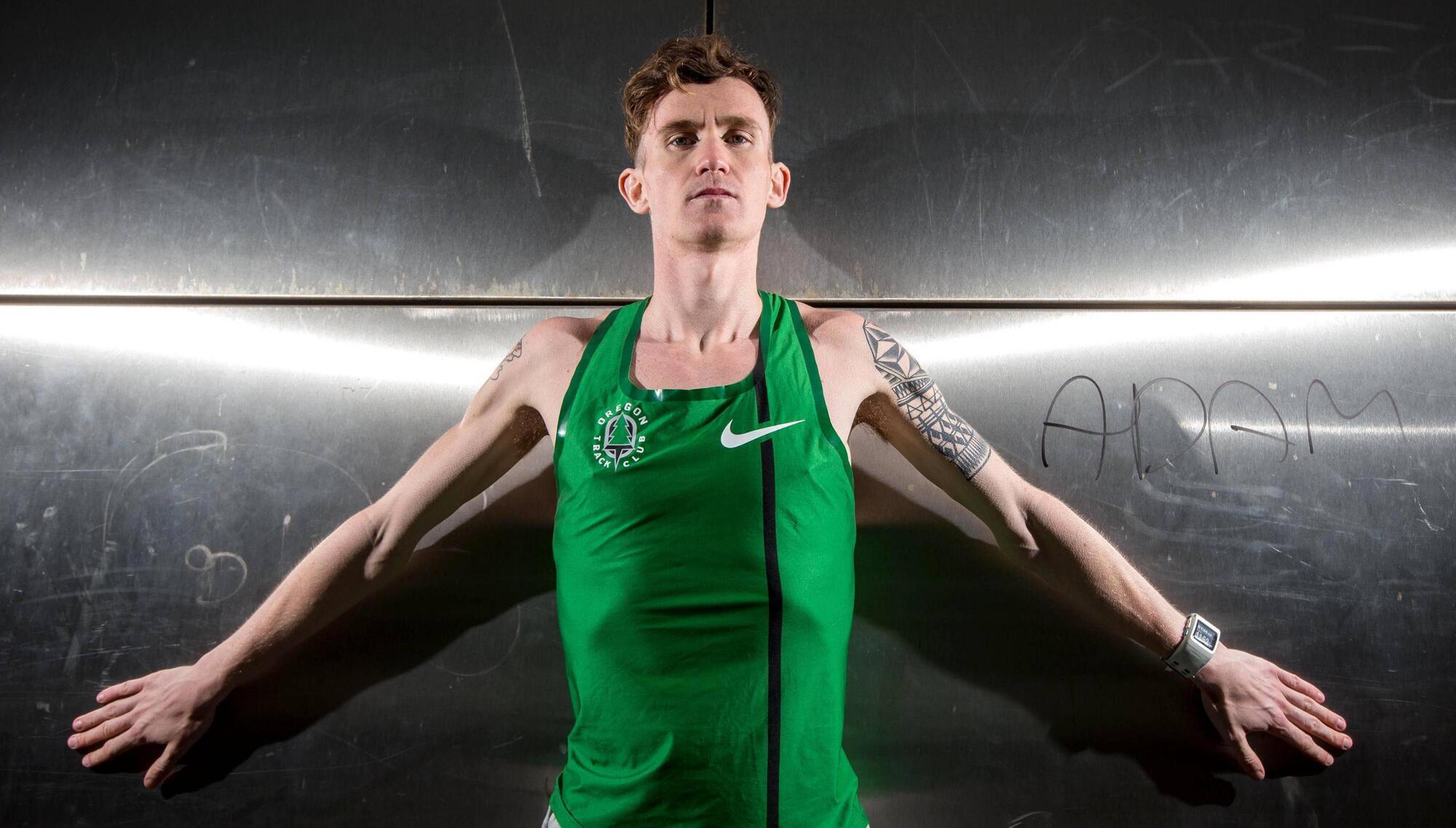
NEVER TO BE FORGOTTEN: Ciaran O’Lionaird was sadly found dead on Tuesday morning. Pic: ©INPHO/Ryan Byrne.
Back in 2020, when Ciarán Ó Lionáird was plotting his course out of retirement, the Cork athlete reflected on the void he’d felt in the years prior when running was no longer the sun around which his world orbited.
The title of a docu-film about his journey back, Not Dead Yet, was inspired by US rock band Grateful Dead. “One thing I took away personally was how death is perceived – the idea that one is not really dead unless they’re forgotten,” he said.
“It lit a spark in me around my own running career: the notion that in retirement, a part of you does die, but perhaps it’s not fully gone unless it’s forgotten.”
Those words land very differently this week, ever since Ó Lionáird was found dead at a hotel in Vancouver on Tuesday morning, the details of his passing still unclear. He was just 38 years old.
Ó Lionáird was a hell of an athlete, and one with a highly complex mind. There were layers to his personality and few got close enough to truly unearth them all. He could sit with a beer and have a laugh, chatting about the greatest footballers of the 90s, trolling friends with sharp line and cheeky smiles, then seamlessly transition into nuanced discussion about geopolitics or a Christopher Hitchens hypothesis.
Read More
In the straight-laced world of athletics, he brought a certain rock-star energy – a quirky, offbeat, individualistic approach that led to him being nicknamed ‘Mad Len’. He relished being the showman, the rebel – James Dean meets Jakob Ingebrigtsen.
He was first in line to laugh at himself. To not take life too seriously. But that masked a desire that seemed to spawn from somewhere darker. Even among the type-A folk in elite athletics, his drive was especially notable.
He’d grown up on a farm near Macroom, spending his adolescence building an intimate knowledge of the roads around Inchigeelagh. He won a rake of underage titles for West Muskerry AC before moving to Leevale AC, developing into a world-class junior under coach Der O’Donovan.
Ó Lionáird was a gifted writer and in his teens he’d post satirical stories about athletics friends on his club’s message board, his command of the language and sharp wit giving them the feel, and funniness, of a Ross O’Carroll-Kelly column.
From a young age, he was looking stateside, firing off mails to university coaches in the US while midway through secondary school. He wanted to reach the very top and so opted for the University of Michigan, where many world-class milers were based.
It went wrong for him there, Ó Lionáird spending much time injured before transferring to Florida State University. After a prolonged period of healthy training, his talent fully bloomed in 2011. He smashed his 1500m best, clocking 3:34.46 to qualify for the World Championships in South Korea.
He performed remarkably there, making the 1500m final and finishing 10th. He then turned professional, moving to Portland and joining the Nike Oregon Project under coach Alberto Salazar. That also went wrong.
Ó Lionáird was in flying form through the indoor season that followed but the training intensity caused him to crack, an Achilles injury leaving him “running on a flat tyre” at the London Olympics, where he trailed home 13th in his heat.
By then he’d relocated to Eugene to join British coach Mark Rowland at the Nike Oregon Track Club. He bounced back in 2013, clocking 3:52.10 to finish third in the famed Wanamaker Mile before winning European Indoor bronze in Gothenburg over 3000m.
He still wasn’t close to being content.
By then, Ó Lionáird and I had known each other for over a decade, having been one-time rivals and friends amid the small world of Munster juvenile athletics. I went to Cork for his welcome back after that European Indoor medal and a lasting memory from the night was how uneasy he felt to be celebrating a bronze medal. To him, it felt like a failure.
His beloved mother, Angela, offered him a slice of the celebratory cake. He turned it down. “Ah you’ll have one,” she insisted. “A small one,” he said.
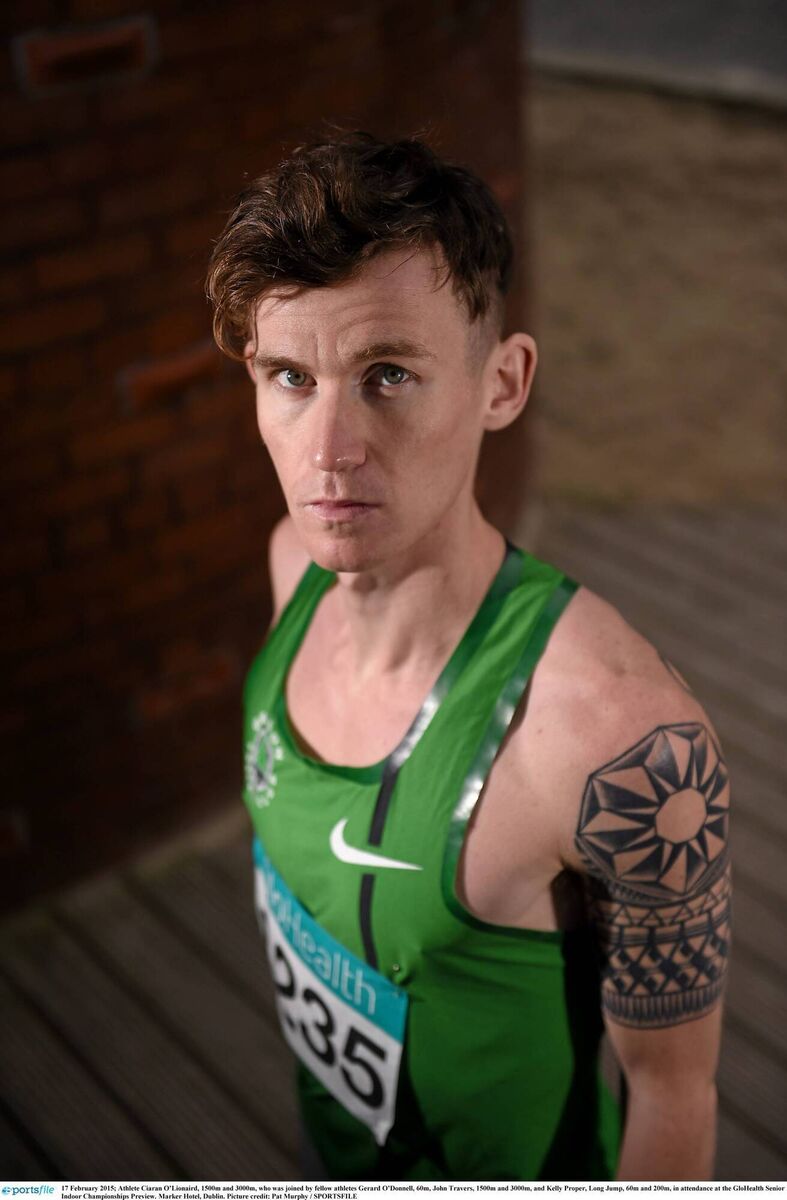
That was a snapshot of Ó Lionáird the athlete. No matter what he’d achieved, he wanted more.
Injuries, however, fleeced him of his brilliance in the years after. In 2016, he called time on his career. Four years after that, during the pandemic, he found his way back, setting his eyes on the rescheduled Tokyo Olympics. But a bout of Covid-19 ended his racing plans in 2020 and he never made it back.
Away from athletics, he built a successful career, spending several years as a product manager at Nike before working for Vizio, a manufacturer of smart TVs. He learned to DJ, played sets, got to know folk from a vastly different world. But something always pulled him back to running, an activity he was still doing in his final days.
When his Olympic dream was still burning, in 2020, he spoke about his why. He was coming back for himself, of course, seeking something healthier, more fulfilling, than the paths he’d gone down before. But he was also doing it for others, sharing his story, in all its fragility, knowing many would take heart from it.
“When you see athletes who run well or play soccer well and you put them on this pedestal, it can sometimes be hard for the kid growing up to feel like it’s them,” he said.
“I do hope there would be just one [athlete] who watches it and says, ‘I could do that. I faced some adversity, but I can do that.’ That would make it worth all the hours of tedious rehab. It would have made all that anxiety and doubt worth it.”
Ó Lionáird never got the chance to truly come back, and now he’s left us for good – a wretched thought to come to terms with. But for those close to him, there’s significant solace in knowing just how much life he packed into his 38 years.
As for the idea that you’re only really dead when you’re forgotten? The impact he created in life means that won’t be an issue.

CONNECT WITH US TODAY



Be the first to know the latest news and updates