Paul Rouse: Cristiano Ronaldo’s commercial power is rooted in modern media
That Ronaldo will be judged by soccer supporters by virtue of what he does on the field is a statement of the obvious. The measure of his success will be both personal and collective
Paul Rouse: Cristiano Ronaldo’s commercial power is rooted in modern media

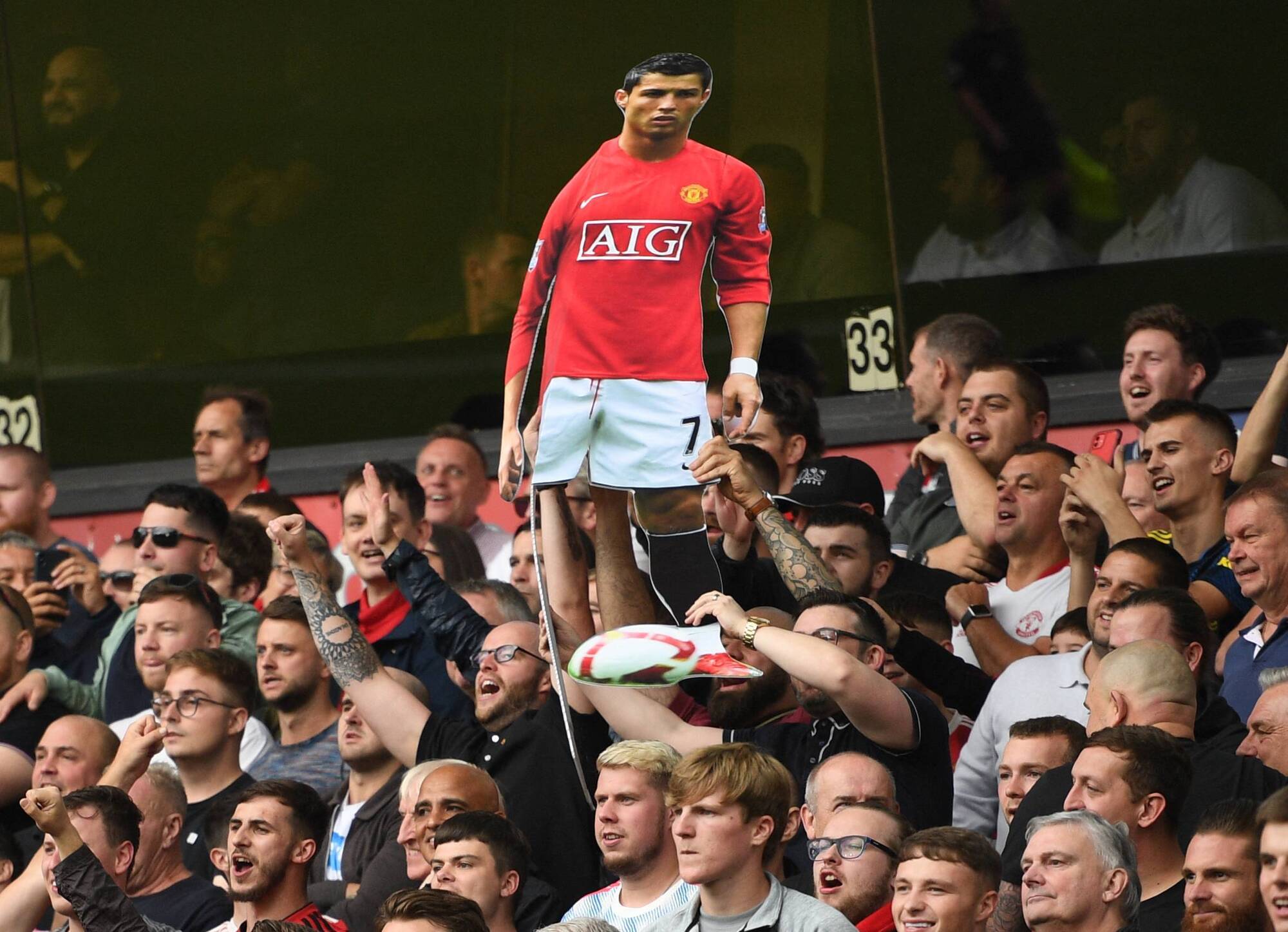
A cardboard cutout of new signing Cristiano Ronaldo is held by Manchester United supporters during the Premier League match against Wolves. Picture: Oli Scarff

Just before 5pm on Friday, August 27, Manchester United announced an agreement to sign Cristiano Ronaldo from Juventus. This is an extraordinary business story. It is a stark reminder of the commercial power of modern professional sport and — more than anything — of the money which attaches itself to a very elite group of international sports stars.
That Ronaldo will be judged by soccer supporters by virtue of what he does on the field is a statement of the obvious. The measure of his success will be both personal and collective.

Firstly, will he score and create goals? Secondly, will he help Manchester United win the Premier League or the Champions League?

These are the bottom line benchmarks by which the sporting merit of this transfer will be judged.

There are other benchmarks also at play, however. These are benchmarks which relate to the business of sport, the power of celebrity and the centrality of modern media (especially social media) to the operation of modern clubs, associations and leagues.

The announcement on Twitter by Manchester United that a deal had been agreed with Juventus for the return of Ronaldo set loose a stunning digital frenzy. Five days on from the tweet, the announcement has received more than two million likes, almost 900,000 retweets and drawn 70,000 comments on the bottom of that one tweet alone.

The tweet carried a link to the manutd.com website, which crashed under the weight of public interest.

The impact of the announcement on Instagram was similarly enormous. Manchester United added more than two million new followers in 24 hours. The official announcement of the transfer garnered more than 12 million likes, almost immediately.

Likes and retweets both create and drive commercial possibilities — they evidence the potential commercial value of something by demonstrating popular interest which can then be monetised. But they also indicate space for the expansion of business by connecting an individual with a product or an institution.

There was much comment on how the impact of Ronaldo signing for Manchester United was a much greater social media phenomenon than the signing by PSG of the other modern soccer icon, Lionel Messi.

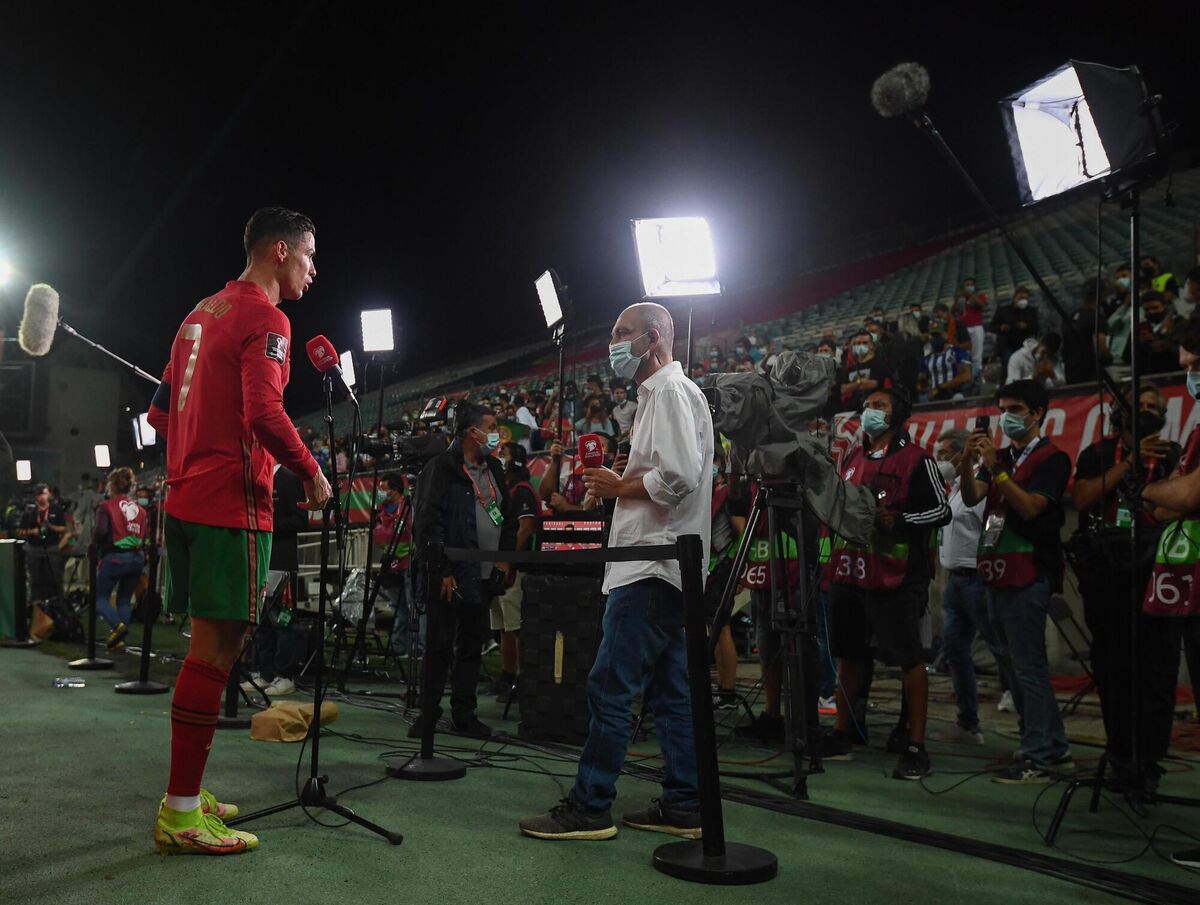
Cristiano Ronaldo of Portugal following the dramatic win over Ireland. Picture: Stephen McCarthy/Sportsfile

And in this case, the social media impact happened in tandem with another phenomenon: the value of Manchester United’s stock rose by more than 8%. For shareholders in the club, this meant their holdings were valued at some €250m higher, more or less overnight.

There are very, very few sports stars who can, on their own, by the stroke of signing their name on a contract, dramatically increase the value of a club.

But Ronaldo’s commercial power is exceptional. This is a power which is not just capable of creating wealth but also destroying it.

A great example of this happened during the summer at the UEFA Euro 2020 championships. During a press conference in Budapest prior to Portugal’s Group F game against Hungary, Ronaldo picked up two Coca-Cola bottles that had been left on the table in front of where he was sitting. He then held up a bottle of water and said in Portugese: “Agua!”

The clear message was that Ronaldo was no fan of Coke.

And the immediate impact of the gesture was that there was an immediate $4bn drop in the company’s share price.

Ronaldo’s commercial power is rooted in modern media. He has more than 336 million Instagram followers. To put that in perspective, that is more Instagram followers than all the Premier League clubs combined (Tottenham Hotspur have 11 million followers, Everton have 2.4 million and Watford have 1 million, for example).

This gives him an immense presence in popular culture, a presence that extends far beyond soccer and even sport.

This can be seen in the CR7 brand. There is the clothing range that mixes an underwear collection with a range of styled shirts. There is the CR7 ‘Play it Cool’ cologne. And there is the “eyewear” range. These are sunglasses, or as the official website cristianoronaldo.com puts it: “A contemporary collection able to masterfully match any type of look: classic colors for everyday style alternate with more eye-catching tones or a style that does not go unnoticed.”

There is also, as the website says, “a new footwear line that further enriches the whole collection and interprets the style of the most demanding and eccentric man.”

Ronaldo's social media accounts drive his followers to these websites, but the accounts also bring great value to the sponsors of the teams that he plays for.

Clubs pay Ronaldo to play football for him, but they also pay him to make a lot of money for them in commercial deals.

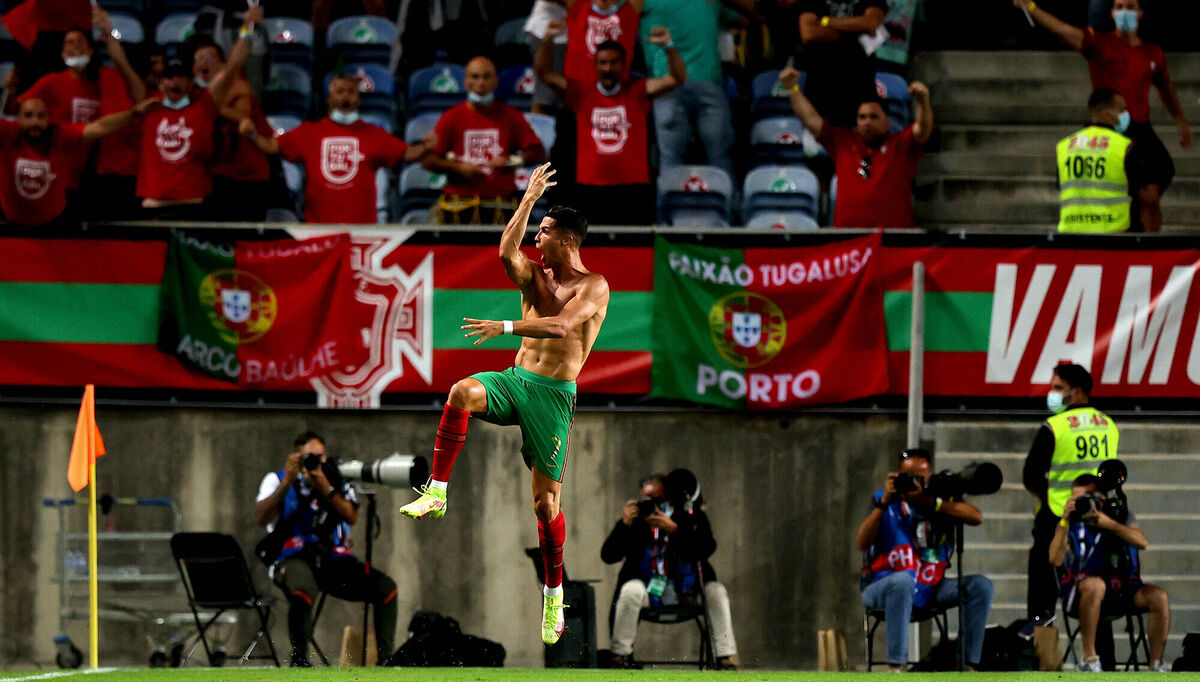
Portugal's Cristiano Ronaldo celebrates scoring his sides second goal of the game. Picture: INPHO/Ryan Byrne

When he was at firstly Real Madrid and then at Juventus, the sponsors of those clubs enjoyed great exposure through the posts of multiple photographs of Ronaldo playing and training.

This is already happening at Manchester United. Amid the nostalgia posts and the dedication of his transfer to his old manager Alex Ferguson (“Sir Alex, this one is for you…”), the cold press of commerce is in full flow. This is most obvious in the photographs of Ronaldo posing in the new Manchester United jersey.

Team Viewer, a form of computer software, is the new sponsor of the Manchester United jersey, which is made by Adidas. Nothing has done more to promote awareness of their brand than the arrival of Ronaldo.

When Manchester United announced Team Viewer as their main jersey sponsor for the next five years during the summer, they said: “Based in Germany, TeamViewer is a leading global software company providing remote connectivity and workplace digitalisation solutions – incorporating cutting-edge technologies in areas such as Augmented Reality, Artificial Intelligence and the Internet of Things.”

It was an announcement that raised nearly no news; it is a brand name that many will have been unaware of.

This was obviously going to change by the very fact of presence on the front of the jersey of one of the biggest clubs in the world. Having that jersey on Ronaldo, brings a whole other dimension to it.

This is something Manchester United’s other commercial partners (as sponsors are now called) will also want a part of. These partners include Aeroflot, Kohler, Apollo Tyres, Gulf Oil International, Cadbury, Canon, Chevrolet, DHL, HCL, HTD, Konami, Marriott, VisitMalta, Ecolab, Remington Steel, Tag Heuer, Renewable Energy Group, and on and on and on across the modern economy.

These sponsors will also want a piece of the action; they are not partnering with Manchester United for charitable purposes.

Of course, if Ronaldo declined to sit behind a bottle of coke, how will he feel about promoting Chivas (“Official Spirits Partner of Manchester United”) and Casillero Del Diablo (“Official Wine Partner of Manchester United”)?

And what are his views on gambling, given that Hua Ti Hui are the “Official Global Betting Partner of Manchester United”?

Either ways, there is about to be an almighty scramble. Ronaldo is a brilliant player whose footballing contribution to Manchester United will be defined by what he does on the field.

But there is more than one way to win, and more than one winner.

- Paul Rouse is professor of history at University College Dublin.

More in this section

Sport

Newsletter

Sign up to our daily sports bulletin, delivered straight to your inbox at 5pm. Subscribers also receive an exclusive email from our sports desk editors every Friday evening looking forward to the weekend's sporting action.

Cookie Policy Privacy Policy Brand Safety FAQ Help Contact Us Terms and Conditions

© Examiner Echo Group Limited