New year but calendar crisis remains the burning question
Now that the furore over the handpass limit in football is over, it’s back to that perennial old January reliable: Fixture overload, player welfare, and possible burnout.
Although we should really be looking forward to the resumption of proper inter-county competition, it now being over five months since Limerick and Galway played the last county hurling game of 2018, and it being roughly the same since Dublin and Tyrone wound up the football year, it still feels wrong; too soon, too much.
Just as driving back from visiting the parents the Saturday after Christmas and hearing on the radio a report from a Clare-Cork Munster hurling league game didn’t fit quite right, national league hurling in January jars as well.
Yesterday’s carried two separate pieces with concerned hurling managers, Waterford’s Paraic Fanning and UCC’s Tom Kingston.
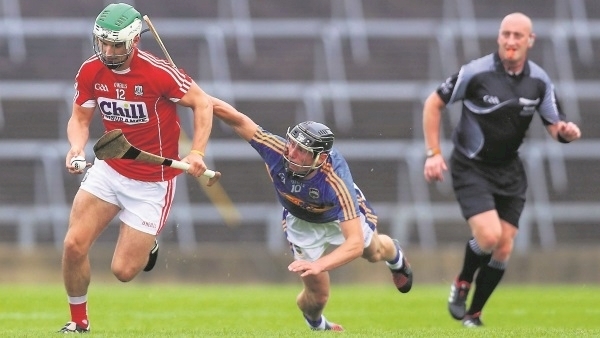
As Eoghan Cormican reported, players such as UL’s and Limerick’s Tom Morrissey and his Fitzgibbon teammate Conor Cleary from Clare could play five games in a 14-day period, a schedule and predicament which both Fanning and Kingston described as “crazy”.
It’s not fair on the players, it’s not fair on the colleges, and it’s not fair on county teams getting ready for the national league when people are expecting them to perform,” noted Fanning.
Kingston, with Cork players like his own nephew Shane Kingston, Mark Coleman, and Robbie O’Flynn also under his care, was also troubled by the demands being placed on them.
Like Fanning, whose day job happens to be in WIT working with students, Kingston promised he would be putting the player first. He would be keeping UCC training “as light as possible” to keep the lads “fresh”. Still, with such a demanding games schedule, something is still likely to give, probably a hamstring.
“Players,” he contended, “will break down with injuries.”
It’s 15 years now since burnout was the key theme at the inaugural GAA coaching conference, and 12 years since Dr Pat O’Neill chaired a committee on the same issue. What’s changed in the meantime?
Actually, a few progressive measures have been brought in to help alleviate the problem. At least first-year college students aren’t having to play both freshers and Fitzgibbon hurling.
At least now an 18-year-old David Clifford isn’t expected to play at least two of minor, U21, and senior with his county anymore.
But still we have third-level players trying to justify or pay back through performance the scholarship they may have received from their college while simultaneously trying to break onto and impress a senior county team. January and February is still mad for those players.
Which should be viewed as madness by everyone.
During their term, O’Neill’s burnout committee received, submitted, and presented a lot of data. The research of Dr Lynette Hughes as part of her PhD was central to the work of that committee, with her study finding that 30% of players were suffering from physical and mental exhaustion, with those players aged 22-24 — in other words, still in or just left college — most exhibiting the symptoms of final-stage burnout.
Eleven years on, and the ESRI report published last September shows that 40% of county players feel like they have no break from the game.
GAA director general Tom Ryan accepted the findings were “very sobering”. “There were details in there that you wouldn’t be thrilled to read when it comes to the pressure imposed on players. You certainly wouldn’t want it amplified over the next five or 10 years,” he said.
Or repeated, says you.
And what’s he going to do about it, asks you again.
Back in December, the GAA held a national club forum in Croke Park which presented some interesting data of its own — for instance, a survey found that 92% of clubs felt that leagues should continue throughout the summer even without county players; 60% did not think club and county should have separate seasons.
Brian Cody also spoke powerfully at the same presentation, even using some of the language of the Club Players Association, calling for headquarters to fix the fixtures and adopt a blank canvas mentality if needs be.
Of course it could be levelled at Cody that he was late to the party to rear up about the inter-county schedule, that Kilkenny didn’t seem to mind there being so many inter-county backdoor games in July when Kilkenny were winning Leinsters and had no need for qualifiers or quarter-finals. But the thrust of his argument resonated with all attendees, along with the heft of his personality and standing.
After other contributions from the floor and before the forum wound up, Tom Ryan addressed delegates, giving them a commitment that in 2019 the GAA would meet with all stakeholders, including the CPA and GPA, to try to come up with a more satisfactory competitions structure and schedule for all members and units of the association.
It was noteworthy how his statement was observed and welcomed by the CPA, who would have had a rather strained relationship with Croke Park up to then. On Twitter they greeted his promise with an applause emoji.
The plight in which the charges of Fanning and Kingston currently find themselves, as encountered by generations of Fitzgibbon and county players before them, brings to light all the more the urgency for Ryan to fulfil
that promise to address the fixtures crisis in 2019.
The clubs, colleges, and counties deserve better, and certainly the players do, because contrary to how they may be made feel at times by a variety of those three parties, they belong to no one, they’re no one’s property.
Ryan has indeed met with various stakeholders since, including CPA chair Michael Briody one to one, and while details from those meetings with various parties are hard to come by, it is believed Ryan will be moving to establish some sort of high-powered committee to review the GAA calendar and games schedule through fresh eyes.
Whether the GAA will be able to announce this committee and its members at Congress next month might be a push but the word is Ryan appears to have a genuine sense of urgency about the matter.
It can’t come too soon. As Fanning and Kingston can attest, we’ve been waiting for too long.