Acknowledging the problem first step to recovery
It’s a few years since I sat down with Dr Con Murphy to chat about Gaelic games in Cork and had him open with a fair trump card.
In 1957 he was the mascot when the Cork footballers lost the All-Ireland final to Louth in dramatic fashion. He described it as the first time he’d seen grown men cry before remarking, tellingly, that it was good preparation for a lifetime following the Cork footballers.
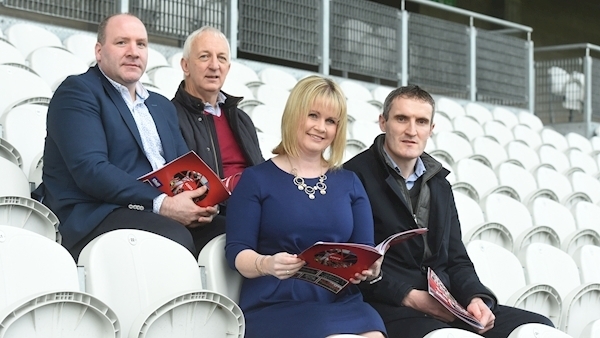
That was lurking in the back of my mind at the launch last week of the five year plan for Cork football in Páirc Uí Chaoimh.
Since then the launch has been overtaken somewhat by a debate about Corkness (which was the point of mentioning Corkness in the first place, you’d hope), but that misses a couple of interesting points which came up last Wednesday.
The rest of the country may appear to love seeing Cork flagellating itself, for instance, but one throwaway reference made last week, for instance, on Leeside resonated with this listener.
Despite everything, Cork remain fourth on the roll of honour in Gaelic football. While that wasn’t presented as a cause for celebration — I think someone at the launch pinpointed it as a barometer of underachievement, which was fair enough — it’s a statistic that always surprises me.
The fact that Cork has as many All-Ireland football titles than Tyrone, Donegal, Armagh and Derry combined is always one that makes you shake your head. Twice as many as Offaly, twice as many as Mayo.
Keep the second-hand bromides about statistics to yourself and ask instead: If some of these counties are football-focused, what on earth have they been doing with their time?
Back to Cork.
It was interesting to hear Graham Canty discuss what happens when a county falls off the back of the peloton nowadays.
There is huge work and effort going in from the current playing group, the same core elements I would have see in some of the more successful groups,” Canty said. “But the landscape has changed — the scene has changed, and it’s much harder to climb back up the ladder now, and that’s why we have brought in this plan.
“It needs a better structured approach, needs more synergies, everyone looking and going in one direction. Before with a little luck and a very good playing crop, you were able to go up the ladder quicker, but the way counties have progressed now, that’s much much harder. A good group of players does not guarantee success. You need more sustainable structures, a bigger squad.”
This isn’t just true of Cork, of course. Other counties with shining records have found themselves in the same situation.
In the recent past a couple of decent forwards and a handy draw in the championship could see you through to an All-Ireland semi-final, changes across the sport have effectively ruled that out as a template for success.
The tactical sophistication and changes in the fixture calendar, taken together, mean that counties everywhere are facing a far more searching test than they did in years past.
The difference for Cork is that the problems have been acknowledged.
Where Saturday’s defeat for the Rebels in the McGrath Cup final fits into the new narrative is one I leave to one side. Acknowledging the size of the problem is a recognisable step to recovery.
The point is not so much that Cork have done so. How many other counties need to do so?
Everyone’s a winner with new TV deal

Last week in media developments: RTÉ announced that it is to cover National League and club championship games live this year, with four simulcasts occurring alongside eir sport Saturday night games, for instance.
First and foremost for many viewers - TG4’s much-admired springtime GAA coverage runs in parallel with this development. People all over Ireland have used TG4’s GAA Beo to track the development of players, managers and teams through the seasons.
Another interesting point: Virgin Media have the rights to the Six Nations, which runs along a parallel track to the national leagues.
The significance of that? Well, consider that Ireland take on England in Dublin on February 2 at 4.45pm. The same evening in the NFL All-Ireland champions Dublin host Galway in Croke Park - at 7pm, and now available on RTÉ.
Convenient, no? But let’s say Virgin Media wanted to retain their audience from the rugby into Saturday evening for a show like . . . Ireland’s Got Talent, coming on after the Six Nations games. Would your casual floating-voter sports fan be inclined to hang in there for 12 versions of ‘Shallow’ from A Star Is Born, or are such fans more likely to poke the remote to see the Dubs?
Could be a very good move from RTÉ, and sports boss Declan McBennett.
Murray an ace, on and off the court

Andy Murray’s impending retirement from professional tennis has sparked what seems, on first impression, an oddly emotional reaction.
He gave notice of his decision at a pretty raw press conference, but people’s responses and tributes . . . are they a tad overblown?
Tennis is a great game to watch when Wimbledon is on, but be honest — do you pay that much attention the rest of the year? Well, whether you do or you don’t this column is firmly in Team Andy’s corner.
Murray’s 2013 victory at Wimbledon, the first Briton to do so since 1936, was enough to put him in the pantheon: consider the years of pining after Tim Henman if you need some context. In addition, his withering putdowns of unthinking sexism have made him a hero to anyone with a casual interest in sport, or life itself. The delivery of the latter — with that trademarked Caledonian asperity — only add to the aura.
So has his background. Murray and his brother Jamie were pupils in their home village of Dunblane when mass murderer Thomas Hamilton entered their school and killed 16 children and a teacher there back in 1996. Murray spoke about the killings in his autobiography a decade ago and in a BBC documentary back in 2013 but has rarely discussed them apart from those occasions. Another example of his ability to strike the right note.
His transformation from petulant kid to sure-footed star was interesting to see. Enjoy the retirement.
Dismantling and dismay across water
Only picked up a copy the other day but What We Have Lost: The Dismantling of Great Britain by James Hamilton-Paterson is already a winner.
Hamilton-Paterson’s tome asks why a country which, in living memory, had indigenous industries supplying most of its needs now has few such home-grown companies doing so.
The social and economic changes, the power of international finance, takeovers and buyouts, the false nostalgia, the commandeering of sentiment — all angles are covered in H-P’s brisk, astringent style.
He skewers the “hastily taken, ill-informed and unthought-through decision to leave the European Union after 44 years” by pointing out World War II is “trotted out like a fetish by adults who missed the entire thing by decades.”
A bracing read, and an entertaining one.