Why true great Sonia O'Sullivan deserves to get her dues


The cheats, as we can now call them.
If you have any ambivalence about doping and performance-enhancing drugs, or if you feel some variation of‘ “aren’t they all at it, sure leave them off”, then this is the story to show you what is at stake.
Sonia O’Sullivan is Ireland’s greatest athlete. That’s clear enough. Serious challengers? Ireland has produced great golfers, outstanding soccer players, superb boxers, but O’Sullivan stands alone. Running is the pursuit common to all.
It’s a sport that produces serious contenders from every corner of the globe, challengers and champions from every continent: how many other sports can say that?
There were a couple of years when O’Sullivan was better than anyone. Her ability, outlook, dedication, and strength meant there was nobody on the planet who could match her, and she deserved the ultimate accolade.
Jerry Kiernan put it well on the radio last week. The cheats from China robbed her of the full panoply, the entire pageant associated with ultimate success — as Kiernan said, they took her day away from her.
The flag, the anthem, and the adulation were her due but a well-orchestrated and minutely managed conspiracy deprived her of that. Getting a gold medal delivered by courier, or in some sort of buckshee ceremony held off-Broadway — neither of those measure up.
Sonia O’Sullivan deserves better than that. Like many of us, she had to deal with frustration and disappointment, but unlike most of us she had to do so in the spotlight, and was asked to articulate her frustration and disappointment for the public at large — and to do so when she knew full well, as did those in power, that those who were frustrating her were doing so illegally.
Handling that without losing one’s temper requires restraint bordering on the superhuman.
Before leaving this matter, consider this — it was the direct admission by one of those Chinese athletes which has brought this to light and raised the possibility of O’Sullivan getting her due, not dazzling work by the governing body in athletics, the IAAF.
Worth bearing in mind before you settle down to take in this year’s Olympic Games, maybe?
Tip-toeing around the real question for future of GAA
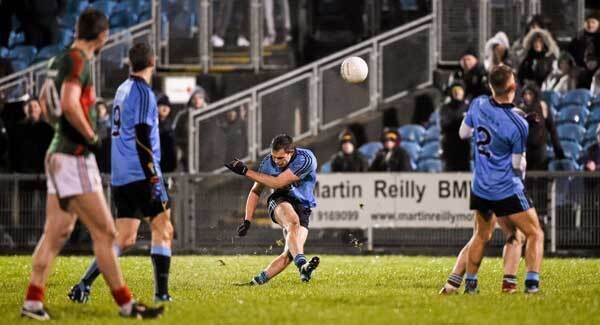
I was on the radio for a few minutes last week defending the Dublin County Board.
Just kidding. The lads on Off The Ball were discussing the size of the grant for games development given to Dublin, I pitched in as devil’s advocate.
A few people were in touch asking me about my reference to the GAA’s existential crisis at the end of the piece, and once we got past the references to Les Deux Magots and stroking your (black polo-necked) chin, most of them agreed with me.
The point is still worth considering, though. We can revisit the Dublin funding issue next year, and the ‘B’ championship; ring me next January and we can wring our hands about the plight of the club player and fixtures, or inter-county player burnout.
Those are symptoms, not causes. The real issue is the GAA’s root purpose — a system organised from the bottom up to support an elite amateur cohort, or a laterally orchestrated network designed to maximise participation in the games at all levels?
That’s why I’ve said you can call me next year, because the basic question remains unanswered. Until it’s tackled, we’re going around in circles.
Unearthing treasures from Cork hurling past
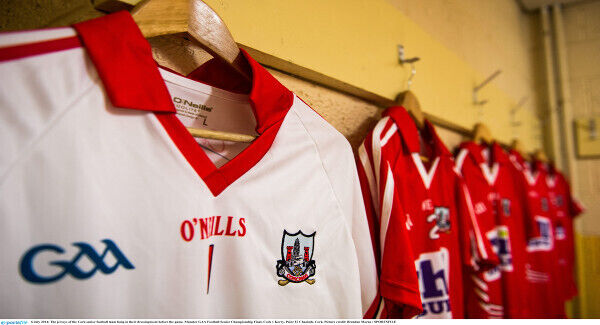
You probably read here last week about a new documentary which will air in a few months’ time on TG4, An Fhuil agus Bindealan, or Blood and Bandage, about the Cork jersey.
The programme, presented by Irish Examiner columnist Donal O’Grady, will examine the history of the Cork colours, among other matters. Cork will wear the colours they wore 100 years ago in this season’s NHL clash with Kilkenny.
The programme-makers, Focas Films, have been in touch to ask if people have any stories from the era — yarns involving the players of the 1919 Cork hurling team, especially those with links to local IRA, stories about the local Flying Columns in Cork and their activities as well as information about the original blue jersey worn at the time — or information about Fr O’Leary Temperance Hall, the club whose red and white colours were eventually co-opted by the Leesiders.
If you do, get in touch with bloodandbandagetg4@gmail.com.
Shining a light on the darker side of NFL
Did you stay up for the Super Bowl? I was at Nowlan Park, Kilkenny, last Friday and committed defenders Paul Murphy and Jackie Tyrrell’s forecasts to memory with a view to tormenting them later in the season about their accuracy, or not.
A pal forwarded on a piece from The New York Times about the first edition, back in 1967. Kansas City Chiefs quarterback Len Dawson threw a crucial interception to help their opponents, the Green Bay Packers, to victory. Dawson went on to present Inside The NFL on HBO for 24 years after he retired — as he said himself, the game was good to him.
The man who intercepted the ball was Willie Wood of Green Bay. He lives in assisted-living home and has no memory of his time as a football star, never mind the crucial intervention . His doctors can’t be sure if his dementia is due to his career, as CTE (chronic traumatic encephalopathy), which many pros have suffered, can only be diagnosed posthumously. His son said: “It’s difficult to not be able to talk to him. He was a great father. As good an athlete as he was, he was 10 times that as a father.”