Time for IRFU to state its intention for provinces
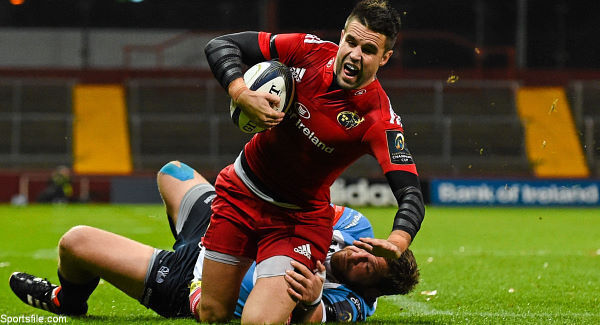
Call it coincidence, but there was a prescient air of doom and gloom — amongst media and supporters at any rate — among the Pro12 sides heading into Round 2 of the Champions Cup. With good reason, as it transpired.

Time for IRFU to state its intention for provinces

The only comfort, if that is the right word, in Munster’s postponed trip to Paris to play Top 14 champions Stade Francais is that it prevented a Pro12 whitewash.

Since the World Cup, much has been made of the gulf between the northern and southern hemisphere’s best at that tournament and, even more recently, the growing disparity on the European stage between the English and French clubs against the rest.


It is very difficult to argue on the basis of the opening rounds of the Champions Cup, even if the sample size is comparatively small but nonetheless convincing — eight games played with only one win for a Pro12 side, a 25-13 home win for Ospreys over Exeter Chiefs.

That win looks even more creditable now after Exeter’s excellent 41-27 away win over Wasps at the weekend, given what Dai Youngs’ men did to Leinster and Toulon in Europe.

A chink of light perhaps for the Pro12 but the next fortnight, with those key back-to-back fixtures, will prove even more revealing.

Rounds 3 and 4 include 10 head-to-heads between representatives of the Pro12 and their counterparts from the Top 14 or Aviva Premiership.

It will be interesting to see just how many representatives from Ireland, Wales or Scotland are left standing at that stage. Treviso don’t even come into the equation.

Our attention focuses solely on the three Irish provinces and right now Munster, despite that very disappointing performance and result against the Dragons last Sunday, appear the only ones with genuine aspirations for knockout rugby next April. Even that is due in no small measure to the presence of Treviso in their pool.

On successive weekends, Leinster face the might of Toulon, Munster meet old foes Leicester while Ulster take on former European giants, Toulouse, who are slowly reclaiming their heritage with a return to an expansive style under the direction of former players Ugo Mola, William Servat, Jean-Baptiste Elissalde and Fabien Pelous.

The next two weeks will tell us a lot about where Munster sit at the moment, given Leicester have also began to show form after a few disappointing seasons by their standards.

With five wins from six outings in the Premiership, they currently sit in third position behind Saracens and Exeter.

A much-coveted Saturday evening kick-off time will hopefully result in a rare sell-out crowd and Munster must avail of the atmosphere to make a statement. It’s not that long ago since the very best of sides in Europe hated travelling to Thomond Park.

Like it or not, that air of invincibility has begun to evaporate with teams now relishing the opportunity to play in one of the great club rugby grounds the game has to offer.

It is now seen more as a welcome challenge rather than the ordeal that several highly rated English and French clubs viewed it throughout the noughties.

I still recall standing on the city end terracing when Harlequins came calling in 2002. Will Greenwood was a double Lion by that stage, having toured South Africa and Australia but looked utterly bewildered and unable to cope with the intensity applied on and off the field. Mark Mapletoft came off the bench to fill in at full-back but spent his time looking back at the terrace and shaking his head in disbelief at some of the hilarious comments directed his way.

Then again there was never any shortage of characters on the Thomond terraces and the pitch was no place for the faint hearted.

In my experience you were treated as a hero playing for Munster, while lining out for Cork Constitution attracted a different type of response.

After Ireland had been whitewashed in 1984, I heard one particularly boisterous Young Munster supporter telling me I would perform better if I took the wooden spoon out of my pocket.

The Five Nations championship successes of the previous two seasons no longer held any currency in that unforgiving environment. You could only laugh.

Munster scored six tries against Harlequins that day in 2002 in a 51-17 rout. The Thomond legend gained legs as players from the English and French clubs shared stories about their visits when meeting up on domestic duty.

As a consequence many a fancied team were beaten even before they arrived in Limerick.

Munster weren’t exactly world beaters in the years building up to 2006 but had some exceptional characters that set the agenda for the day. Visiting teams found it impossible to cope with the unique combination of forces that greeted them on the pitch and from the terraces and when they arrived in Thomond Park. For this Munster squad to prevail, those key ingredients need to be brought back into the mix. That responsibility starts on the field.

Much more than that is required, however, for the Irish provinces to become genuine contenders for European honours once again. Leinster’s campaign is hanging by a thread at present and Toulon have so much firepower that you just knew there would be a reaction to that shock 32-6 defeat away to Wasps in Round 2.

Since then, they have accounted for Clermont at the impregnable Stade Marcel-Michelin, scoring four tries in a 35-9 victory, and followed that up with an eight-try 53-23 demolition of Agen last Saturday.

In addition, they have welcomed three World Cup finalists in Matt Giteau, Drew Mitchell and their latest marquee signing in Ma’a Nonu along with another new face in outstanding Springbok No 8 Duane Vermeulen and Georgian powerhouse Mamuka Gargodze back to their line-up since that reversal in Coventry. If that defeat didn’t appear great news for Leinster at the time, it looks even worse now.

With home games, Munster and Ulster simply have to win, especially as Leicester have 10 points in the bag already from their two outings and Ulster have already lost at home to Saracens. Current form suggests it could be another bleak fortnight for the Pro12 sides which will lead to more recriminations and self examination.

Regardless of the fate of the Irish provinces over the next two weeks there is, in my opinion, a pressing requirement on the IRFU, as the controller in chief of the aspirations of all the Irish sides, to state exactly what their mission statement is for the provinces as we enter the four-year cycle to the next World Cup in Japan.

If all their policy decisions are geared exclusively towards the success of the national side as opposed to putting a structure in place to seriously compete once again for a Champions Cup, then come out and say so. The big question, and one that I will return to once this back-to-back phase is complete, is whether or not those twin ambitions run parallel or whether they have become mutually exclusive?

More in this section

Sport

Newsletter

Sign up to our daily sports bulletin, delivered straight to your inbox at 5pm. Subscribers also receive an exclusive email from our sports desk editors every Friday evening looking forward to the weekend's sporting action.

Cookie Policy Privacy Policy Brand Safety FAQ Help Contact Us Terms and Conditions

© Examiner Echo Group Limited