Survival or stardom? What is the bottom line for inter-county success?
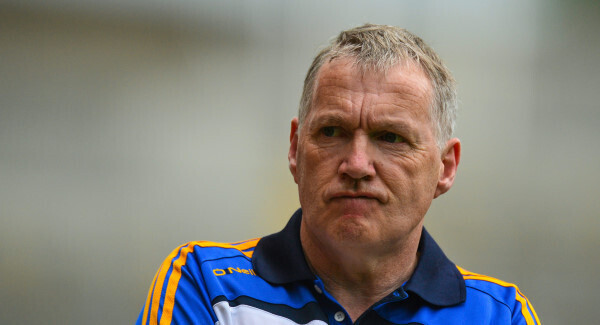
Why? Because they’re appointing, or about to appoint, managers.
O’Shea spoke in those stark terms when contributing to a book of mine a couple of years ago, but the point still holds.
One of the key considerations which clubs and counties never seem to make when appointing managers is what they actually want: What constitutes success for their particular outfit? A trophy or consolidation? Survival or stardom?
This musing was sparked by a recent snippet about the Kildare County Board regaining their financial independence last week, the freedom to sign their own cheques again after a period of strict control which included a memorable description of the man sent by Croke Park to oversee that period: One Kildare GAA delegate described him as the Ajay Chopra of the GAA, a sally that was the funnier for being so acute.
The other reason for picking a county rather than a club is the slight but significant distance in financial appreciation. When a club spends big money the members know it better than anyone else: When they pick up their Irish Examiner in the service station or meet for a coffee they’re always aware of their outlay.
They raised those funds and if things go wrong, they’ll have to raise more to replace it.
A county is different: There can be a sense that the money at a board’s disposal, while also generated for the most part by the GAA members in that county, is part of an inexhaustible river running through the Association as a whole. If things go wrong then Croke Park, with its mythical caverns of molten gold under the Hogan Stand, can always step in. Sure just look at Kildare!
Too bad reality doesn’t conform to this cosy notion. A lot of counties — and clubs — have performed heroics to stay in the black in recent years; a lot of them should bear that hard work in mind when being dazzled by someone looking for more than they feel they can give.
A brief word here about bravery. In sport there’s a good deal of hot air exhaled about guts and courage and moral fibre, but it isn’t often that those are the correct terms.
More often than not, if you look closely, those descriptions are of the circumstances of a pressure kick, or underscoring an athlete’s faith in his or her own ability, their dogged determination, their blinkered focus on themselves.
Not so Maurice Shanahan’s comments last Friday. The big man from Waterford spoke candidly about his struggles and was courageous in the real sense, facing up to real problems as opposed to the fleeting disappointment of a lost game or a missed score.
Shanahan’s honesty about depression offered people the kind of example that is worth more than a thousand comments in the abstract.
He collected an All-Star award for Lismore and Waterford last Friday, but Maurice’s openness earlier that evening was worth a good deal more to a good many people.
Ask and you shall receive.
Last week I mentioned being in Waterford and overhearing a discussion which suggested that Anfield, the home of Liverpool FC, owed its name to a family originating in the southeast.
Lo and behold, Cian Manning was in touch by e-mail to say he attended the talk at the Imagine Festival recently in Waterford which brought this to the fore. Kieran Cronin of WIT was the man who gave the talk, which referred to the history of the Graves family, originally from New Ross.
Did we see the prospect of a Rugby World Cup flit off with the entrepreneurs, start-up promoters of the Web Summit? Yours truly rocked up to the RDS for the tech conference last week, but it was a close-run thing – I’d estimate a 45-minute journey by taxi from Heuston
to Simmonscourt, and that was the start of a few days of queueing for coffee, shlepping around looking for taxis, and general discomfort.
Don’t cry for me: that’s not my intention. It was disconcerting, though, to see the extent to which main arteries of the capital city clogged up under the stress of what was, after all, less than half the capacity of Croke Park. I’m aware the Luas connection works are a long-running issue for transport in Dublin, but still: it’s not encouraging that the area of Ireland with by far the best infrastructure in the country couldn’t cope with a relatively small crowd, let alone a couple of relatively small crowds going to two or three different venues, as would be the case if Ireland were awarded the tournament.
All of that without getting into the likelihood of, shall we say, costs being raised if the tournament lands on these shores. There were contradictory reports about hotel prices for last week’s summit which reminded me of the mythical €1,000 tickets one hears about the morning of an All-Ireland final. Whether modest establishments were or weren’t charging an arm and a leg for bed only, without throwing in a couple of rashers in the morning as part of the price, is neither here nor there. It’s sufficient that the mythology says they do, because that’s what people remember, unfortunately.
As for the Summit itself, over the coming weeks you’ll see the fruits of my labour, a couple of terrific interviews worth reading, particularly if you’re interested in, for instance, how data and analytics now influence contract negotiations. More on that soon. Does my praise for the tech conference constitute a come-and-send-me plea in advance of its relocation to Portugal? More on that soon, too.