Balance needed as penalties for some fouls outweigh the crime in GAA
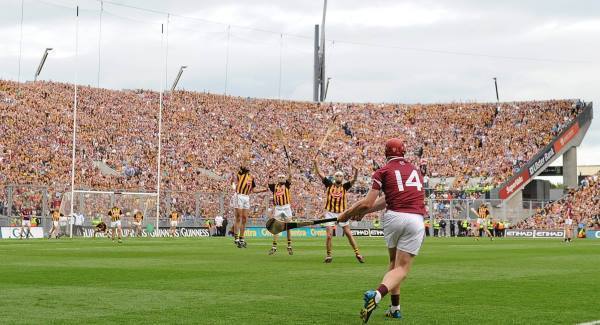
With the great and wise of the GAA congregating next Saturday in Cavan, a recent conversation among a gathering of other minds down here in Clare is worth sharing, writes Kieran Shannon.

Balance needed as penalties for some fouls outweigh the crime in GAA

In recent months I’ve attended weekly classes on philosophy. All the big ones and many more have been discussed. What is it about? What is just? In your given circumstance, what would a wise man or woman do? And given the part of the world we inhabit, where hurling is a way of life, over tea break we’ve ended up philosophising about it too.

One of our number is particularly reflective and insightful. He even has the beard to go with it. And something he remarked on would have you thinking deeply and differently about aspects of hurling, and not just life. Namely the ‘65. And the lineball whereby now a Joe Canning can punish you by cutting the ball straight over the bar, just because you may accidentally have touched the ball last — if you touched it last at all. Is that just, he wonders? If you were a rule-maker, what would a wise person in that position do?


For him it’s an excessive penalty. It needs to be reviewed, re-balanced, changed. Because the weight and the flight of the ball has.

Back in the old days of the heavier ball, a point straight from a 65 was a rarity. An achievement at any rate. Now for a Colin Ryan it is an automatic point. The same punishment whereby if you pulled someone’s jersey from that range. “The punishment far outweighs the crime.”

In other sports, he notes, it’s different. In soccer there are indirect free-kicks for non-aggressive fouls. Back in the old days, a 65 or sideline ball was essentially an indirect free. You hardly ever conceded a direct score. But now?

“In the last minute two fellas could be going for a clash, the ball accidentally goes over the line, it’s not even certain who touched it last, yet it could be the winning or drawing of a game. That’s unfair. Now, if a fella does it deliberately to bring by a cessation of play, by all means penalise him. But you rarely see anyone putting the ball out over the end-line or touchline deliberately. Players just don’t think like that.”

We’ve argued the case with him that is for a reason; the deterrent of conceding a 65 to a Colin Ryan has led to players wanting to keep the ball play in more. Take the 2002 All Ireland semi-final. Peter Queally takes the ball along the end-line before trying to clear his lines rather than just put the ball out over his own line. He knows Sean McMahon will likely point any resultant ‘65. Queally is blocked. Clare turn the ball over, recycle it to Alan Markham who buries it to the net for the goal that changes that game.

Our bearded friend is all for everyone trying to keep the ball in play. If you deliberately play the ball over the line, you should be punished by a 65 as is currently the case. But for an accidental touch, it is excessive. He would make the same case about the sideline ball. We differ with him on that. Seeing a Canning cut the ball over the bar from 50 yards outweighs the injustice of someone conceding a score for accidentally touching the ball last. But what his argument does seal for us is that two points for a successful sideline ball would be excessive. Especially when an overly-aggressive foul 30 yards out would result in just half the punishment on the scoreboard.

Our bearded friend wouldn’t be a big fan of the big ball but his reflections have got us thinking about it as well. A few years ago I was involved with a club team that were a point ahead entering injury time in a county semi-final when our corner-back played a fist pass to a teammate. The referee contentiously adjudged he had fouled the ball. It was a free right in front of goal for the opposition, the same punishment were he to have pulled his man to the ground.

In other sports there would be no direct free or score. In basketball if you double dribble or travel, the ball is put in from the side. In rugby if you knock the ball forward it’s a scrum, not a penalty. While our hurling bearded friend is still in favour of technical fouls in hurling being punished the same as aggressive ones when it comes to frees because there is nothing accidental about it, he’s in the minority in our group, especially this committee of one here.

It’s worth reviewing how we think about all frees. There’s an obsession in some quarters all scoreable frees in football be taken from the ground. Or that they should all be taken from where the offence was committed. But is it sufficiently punishing a football player and team that hauls a man down out by the touchline when acres of space were opening up for him, when dubious technical fouls right in front of goal result in automatic points? Or if someone is fouled and still has the ball, why should they backtrack their momentum instead of being allowed to go forward?

Let such a player be able to take a free from anywhere inside a five-metre radius of where the foul was committed (outside the 20m line). Consider indirect frees for technical, non-aggressive fouls like virtually every other sport on the planet. Maybe bring a ‘65 back to the 80-metre line or discuss some form of indirect free.

At least reflect, review. With Congress and the GAA in its wisdom not allowing for any more playing rules changes for another five years time, there is enough time — and cause — to ponder.

More in this section

Sport

Newsletter

Sign up to our daily sports bulletin, delivered straight to your inbox at 5pm. Subscribers also receive an exclusive email from our sports desk editors every Friday evening looking forward to the weekend's sporting action.

Cookie Policy Privacy Policy Brand Safety FAQ Help Contact Us Terms and Conditions

© Examiner Echo Group Limited