Why football will continue to fascinate and infuriate
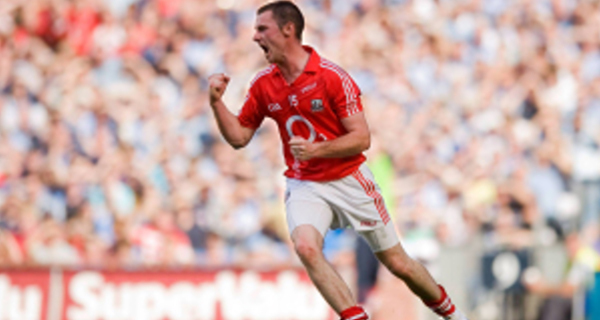
When reflecting the other day on the fact that we’ve just passed the halfway point of the football decade, the mind soon turned to the journey home from the heart-stopping, Croker-packed 2010 All-Ireland semi-final between Cork and Dublin.

Why football will continue to fascinate and infuriate

In the car we did what many GAA followers do after such a rollercoaster of a game: we turned on the radio, wanting more of it and to make more sense of it.

A lot of the points made on the post-match show concurred with our own observations. The Cork bench, especially Colm O’Neill, had turned and won the game. Donncha O’Connor had shown remarkable poise and concentration in putting away a penalty that had been delayed as Ross McConnell was treated for an injury. And Dublin, for all their progress that season under Pat Gilroy, should really have made it through to the All-Ireland final. Instead Alan Brogan and Stephen Cluxton were for a fourth time after losing an All-Ireland semi-final by a kick of a ball.


Then there was a curious text in from a listener. Did the panel know that this loss meant this was the first decade since the 30s that Dublin had gone without winning Sam Maguire?

They’d won it in 1942, 1958, 1963, three titles in the 70s, then again in ’83 and ’95. But there had been nothing in the noughties, not even a final appearance, and now Dublin’s last game in that decade had just passed.

It seemed to escape the listener, presenter and analysts — one of whom was Tommy Carr, we can recall — that the noughties had expired the previous year. They were now in 2010, a different decade.

But now at this remove that 2010 season does indeed seem to belong to another decade and era.

Forget how much Dublin have progressed since then and Cork have regressed.

Louth that year almost won Leinster. Meath — amazingly, controversially, wrongly — did win it, blitzing Dublin for five goals en route.

Limerick very nearly won Munster, being level with Kerry with five minutes to go. They also very nearly beat Cork in the qualifiers, taking them to extra time. Roscommon would win the Connacht title. The previous month Sligo beat Mayo. In the qualifiers Longford would beat Mayo. The same day Donegal were also dumped out in the first-round of the backdoor, hammered by Armagh.

All four provincial champions were beaten in the All-Ireland quarter-final.

You look at what’s happened since. The following year Donegal, Mayo, Kerry and Dublin would all win their provinces. They would do so again in 2014. Only Cork and Monaghan would upset their provincial dominance in 2012 and 2013 respectively.

Can you picture a Louth now getting within seconds of winning Leinster? A Limerick going so close to winning Munster? Donegal and Mayo being the first two teams dumped out of the championship? All four provincial winners wiped out in the All-Ireland quarter-finals? We all had an idea at the time the 2010 season was a special season, for its romance and novelty. But little did we know that it was less an outlier as a farewell to an era that is now long gone and hardly coming back.

It was more in the keeping of the noughties, an era when a Westmeath won Leinster, a Sligo won Connacht, Limerick were repeatedly close to winning Munster and the Fermanaghs and Wexfords could make All-Ireland semi-finals.

Put it this way. In the first five years of the noughties, 12 different counties reached an All-Ireland football semi-final. In the first five years of this decade, only eight counties have reached that far — and that includes the novel 2010 pairing of Down and Kildare.

Of the last 16 All-Ireland quarter-finals, only once has a provincial champion been beaten — Monaghan in 2013, to Tyrone.

In the 16 quarter-finals previous to those, the provincial champions had been beaten 11 times.

So, as we’re halfway through this decade and we take stock of where football is and how it’s changed in that time, that’s the biggest thing that jumps out.

The dominance of the top four or five counties in their own province and beyond (especially in the All-Ireland quarter-final round).

How uncompetitive the mid-tier counties have been. How pedestrian and predictable the provincial championships and the qualifiers have become.

But a lot else has changed.

Such as...

The massed defence

For as much as Armagh and Tyrone redefined defensive play, Donegal under Jim McGuinness would take it not just a step further but a couple of more beyond, putting not just nine but 11, 12, sometimes 13 men behind the ball. It’s not just a Donegal thing now either. Look at the Ulster club championship just past. Or Oliver Plunkett’s progression to the Dublin county final. Instead of defending like hurling teams, football sides are now more set up like sides in soccer, rugby, basketball: why have men up the field on defence when the opposition can’t score out there? A huge upside of the game in the last 10 years is that corner backs can no longer survive on pulling and dragging (which is why we fundamentally disagree with Joe Brolly’s thesis that a win- at-all-costs attitude is something new to football; didn’t he watch, even face, Boylan’s Meath? Go read Shane Curran’s book, Joe, and its chapter Crime and Punishment for a reminder of how lawless football was back in your own day).

The downside is that it has been offset by the extra — excessive — cover those backs are now provided with. That is how the ruthlessness of managers is manifested now.

The short kick-out

As much as the aforementioned 2010 season was less in line with the decade it initiated but rather the one that preceded it, it did represent and witness some significant change.

That year’s All-Ireland quarter-final between Dublin and Tyrone as not just a watershed in the fortunes of both sides — Tyrone’s farewell as a major All-Ireland force and Dublin’s emergence as one — but it saw both teams take and concede short kick-outs.

It’s been all the more en vogue since. Traditionalists will bemoan the lack of aerial play around midfield but the emphasis on possession has meant goalkeepers’ kick-outs have needed to be more precise, backs have to show for, carry and use more ball, while the game itself has speeded up. But after the International Rules experiment of all kick-outs having to pass the 45, there could be a clamour for something similar in football to preserve/increase aerial midfield play.

Goalkeepers from deadballs

Another example of how Cluxton in 2010 changed the game. Prior to that summer, only Shane Curran at his boldest and maddest would venture upfield to take a long-range free. But in the qualifiers of 2010 Cluxton would make it routine, prompting a string of keepers to follow his

The mobility of midfielders

In Dublin’s last game of the noughties — the day Kerry made them appear like startled earwigs — their starting midfield were the twin towers of Darren Magee and Ross McConnell. The following year Pat Gilroy would go with a runner in Michael Darragh Macauley around the middle, and when they would win the All-Ireland in 2013 his partner would be a former corner back, Cian O’Sullivan. Nowadays when it comes to midfield play, the capacity to go box to box rather than reach for the clouds is a greater prerequisite.

So, based on the above, what changes will we see over the next five years? Or at least what changes would we like to see or that we can possibly anticipate? Some new teams are going to have to emerge to give the provincial championships relevance — and even then that may not be enough to excuse the retention of the current competitive structures and the current, inexcusable doldrums-like state of the likes of Galway and Meath. Some legislation curbing the massed defence has to be considered if, as Sean Cavanagh pointed out in Setanta’s review of the past football year, there is to be a primacy on rewarding skill.

Right now it’s a lot easier and rewarding to coach a massed defence than coach your players how to improve their kicking. Football has been getting by on how the likes of Dublin, Mayo and for the most part Kerry have played such an attacking style, but 2014 taught those teams in one way or another that pleasing the purists isn’t always the best way of going about pleasing yourself.

Yet look out for others and not just legislators coming up with imaginative ways to favour creative attacking play. Sooner or later a Cluxton or some other goalkeeper will further transform the game by playing as an extra attacker; the aforementioned Shane Curran in his pomp would have been ideal.

In a game where all other 14 outfield players can also handle the ball, some coach sooner or later is going to try it out and implement a basketball-style rotation defensive system where one of the full-back line slot back to cover the goals while their unconventional number one is bombing up the field trying to create an overlap.

Curran himself is now a club manager. Will he be the one to try, the way years ago Jimmy was trying out his extreme version and vision of the massed defence with Glenties? Take it, for as much as things remain the same and change in football, the game will continue to fascinate and infuriate over the next five years.

More in this section

Sport

Newsletter

Sign up to our daily sports bulletin, delivered straight to your inbox at 5pm. Subscribers also receive an exclusive email from our sports desk editors every Friday evening looking forward to the weekend's sporting action.

Cookie Policy Privacy Policy Brand Safety FAQ Help Contact Us Terms and Conditions

© Examiner Echo Group Limited